
Victorian Pink Satin Glass Scent Bottle
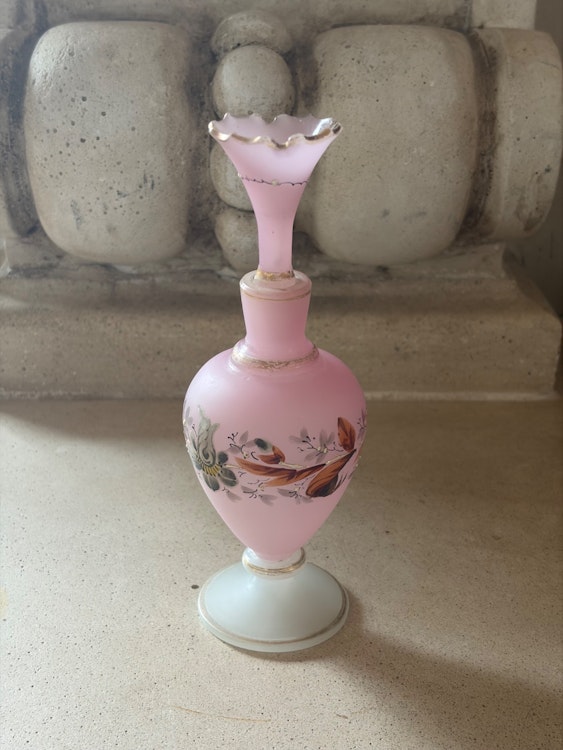
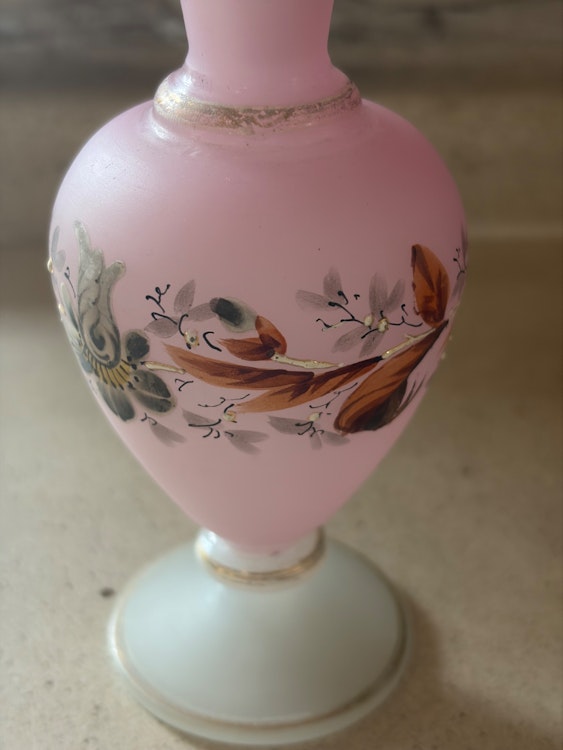
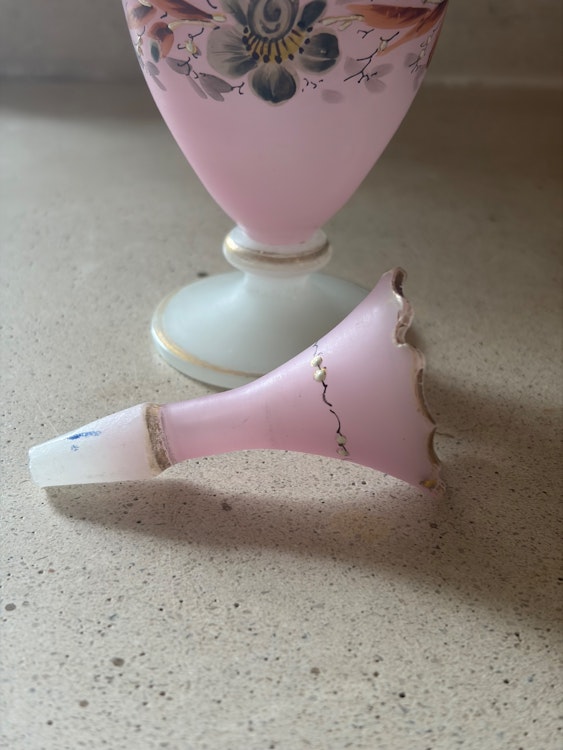
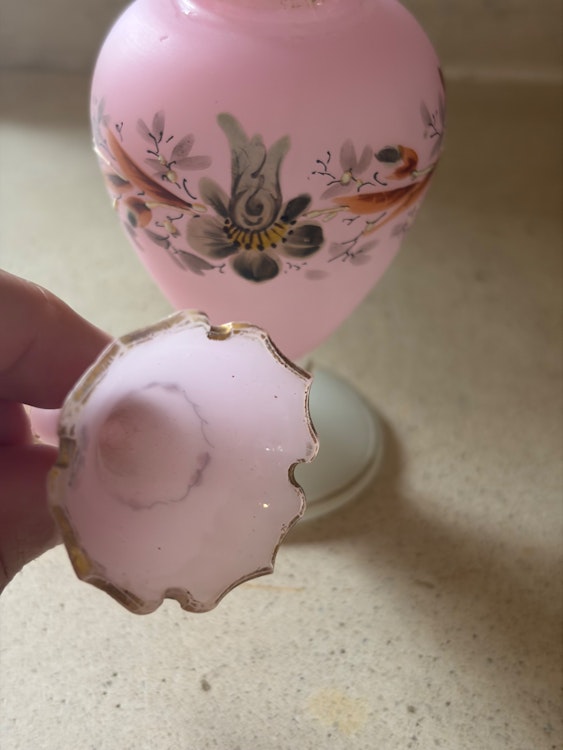
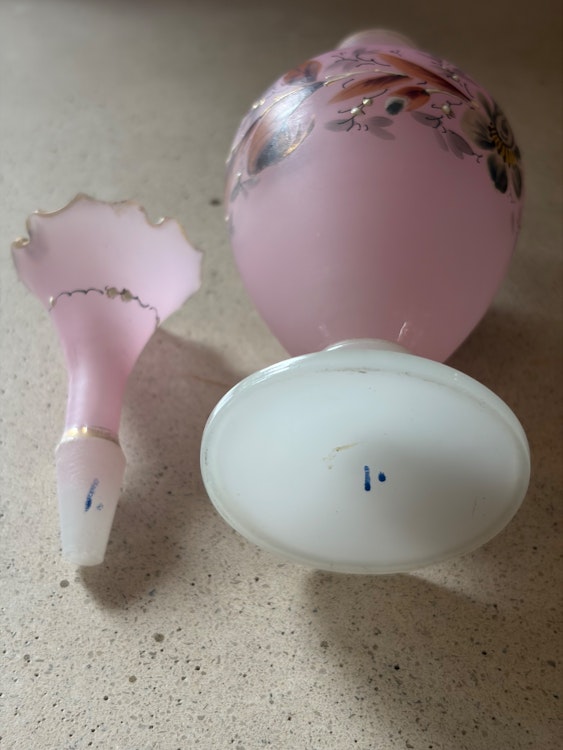
About product: A Victorian pink satin glass scent bottle of baluster form, featuring a hand-painted enamel floral band around the body and supported by a white opal glass pedestal foot. The bottle is accompanied by its original matching ruffled-rim stopper, which features a ground peg numbered to match the base. Historical & Style Details - Period: Victorian (circa 1880–1900) - Origin: Likely England or Bohemia - Material / Technique: Hand-blown satin glass, hand-painted enamel, gilding, ground glass stopper - Materials: Glass, enamel, gilt - Markings: Handwritten "10" in blue ink to the ground stopper peg and the underside of the base - Condition: Minor wear to the gilded rims and enamel decoration consistent with age; stopper and neck ground joint intact with no visible chips History: Scent bottles of this type, featuring satin or frosted glass with hand-painted enamel florals, were highly popular luxury dressing table accessories during the late Victorian era. The matching hand-written numbers on the stopper and base indicate a hand-ground fit, typical of high-quality European glass workshops in Bohemia and England during the late 19th century.
$115.00+ shipping
A Victorian pink satin glass scent bottle of baluster form, featuring a hand-painted enamel floral band around the body and supported by a white opal glass pedestal foot. The bottle is accompanied by its original matching ruffled-rim stopper, which features a ground peg numbered to match the base.
Historical & Style Details
- Period: Victorian (circa 1880–1900)
- Origin: Likely England or Bohemia
- Material / Technique: Hand-blown satin glass, hand-painted enamel, gilding, ground glass stopper
- Materials: Glass, enamel, gilt
- Markings: Handwritten "10" in blue ink to the ground stopper peg and the underside of the base
- Condition: Minor wear to the gilded rims and enamel decoration consistent with age; stopper and neck ground joint intact with no visible chips
History
Scent bottles of this type, featuring satin or frosted glass with hand-painted enamel florals, were highly popular luxury dressing table accessories during the late Victorian era. The matching hand-written numbers on the stopper and base indicate a hand-ground fit, typical of high-quality European glass workshops in Bohemia and England during the late 19th century.