
Victorian French glazed stoneware potted meat crock with green base mark
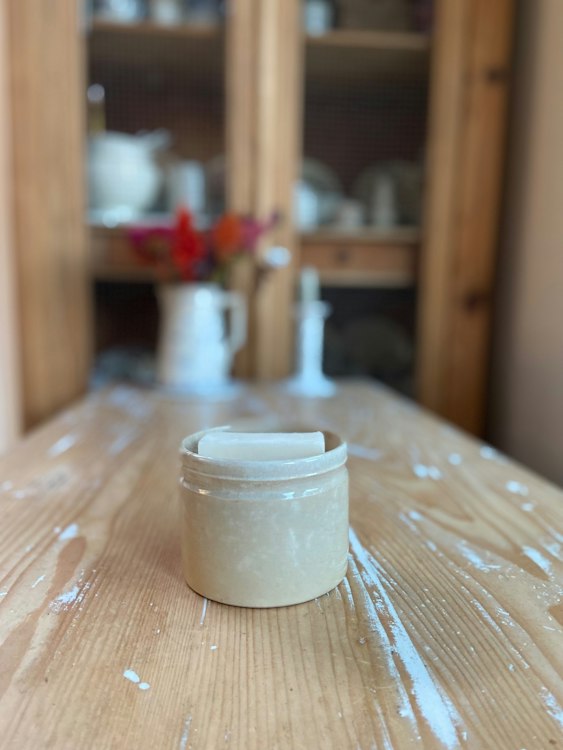
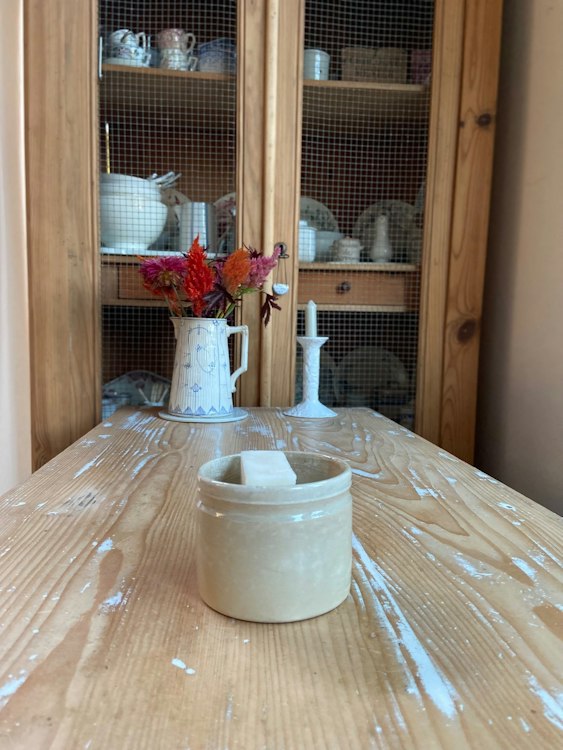
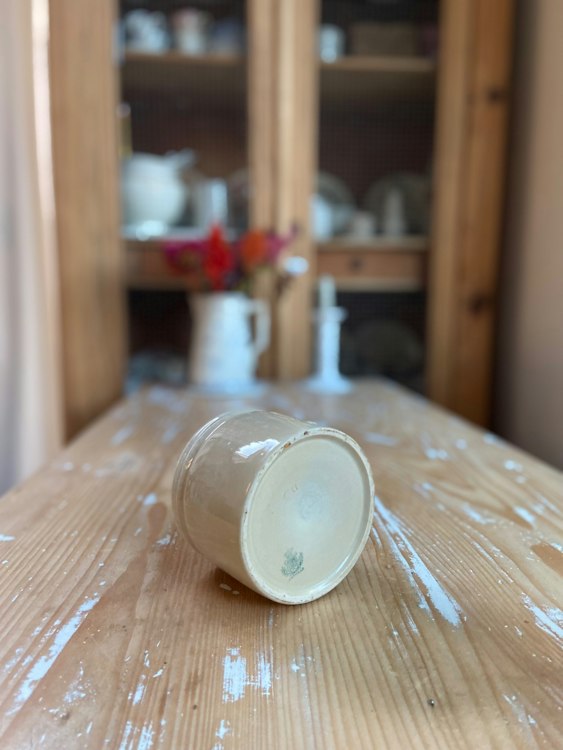
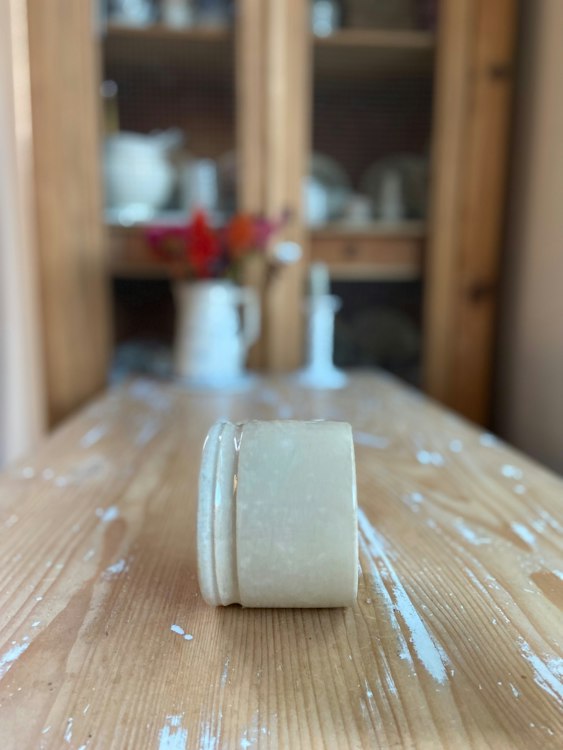
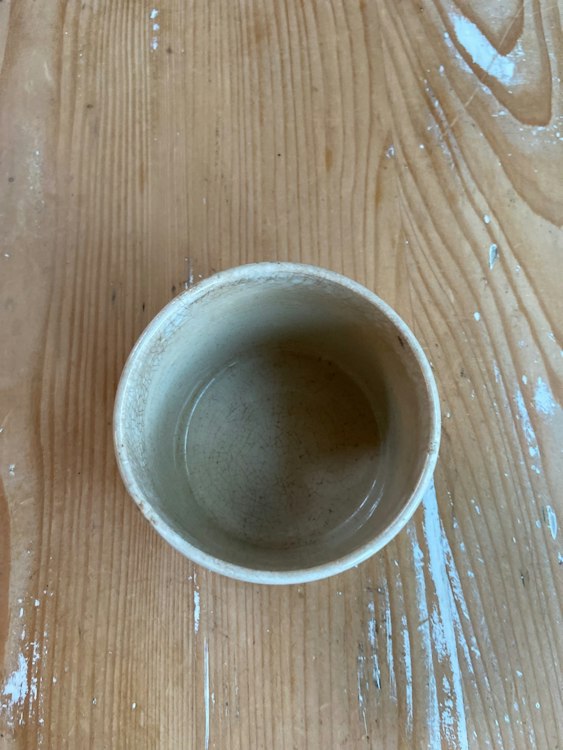
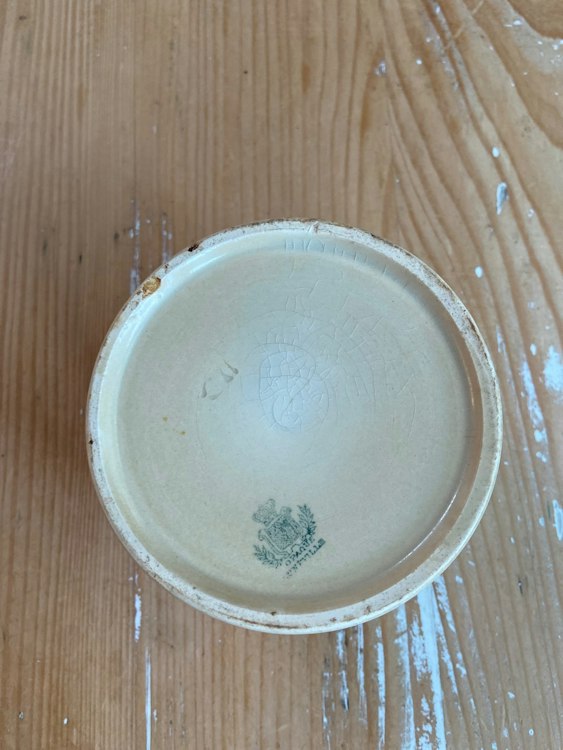
About product: A Victorian ceramic stoneware jar or potted meat crock, featuring a classic heavy cylindrical body with a double-beaded collar rim. Finished in a warm off-white glaze, the underside features a green underglaze transfer mark bearing the marker Luneville with lion and unicorn supporters above a maker banner, alongside an impressed tally mark. Historical & Style Details - Period: Victorian (1837–1901) - Origin: France - Material / Technique: glazed stoneware with underglaze. - Colour & Surface: cream/buff glaze with fine crazing and natural age staining - Condition: minor flea bites/small chip to the upper rim edge, light surface wear, glaze crazing and discolouration consistent with age History: Commercial utility crock jars of this type were manufactured extensively across Staffordshire and French pottery centres during the 19th century to package preserved meats, pastes, ointments, and condiments. Today, these Victorian stoneware vessels are sought after by collectors of antique advertising ceramics and country house kitchenalia.
$98.00· Free shipping
A Victorian ceramic stoneware jar or potted meat crock, featuring a classic heavy cylindrical body with a double-beaded collar rim. Finished in a warm off-white glaze, the underside features a green underglaze transfer mark bearing the marker Luneville with lion and unicorn supporters above a maker banner, alongside an impressed tally mark.
Historical & Style Details
- Period: Victorian (1837–1901)
- Origin: France
- Material / Technique: glazed stoneware with underglaze.
- Colour & Surface: cream/buff glaze with fine crazing and natural age staining
- Condition: minor flea bites/small chip to the upper rim edge, light surface wear, glaze crazing and discolouration consistent with age
History
Commercial utility crock jars of this type were manufactured extensively across Staffordshire and French pottery centres during the 19th century to package preserved meats, pastes, ointments, and condiments. Today, these Victorian stoneware vessels are sought after by collectors of antique advertising ceramics and country house kitchenalia.