
Victorian Bristol Glazed Stoneware Ink Bottle with Rolled Lip
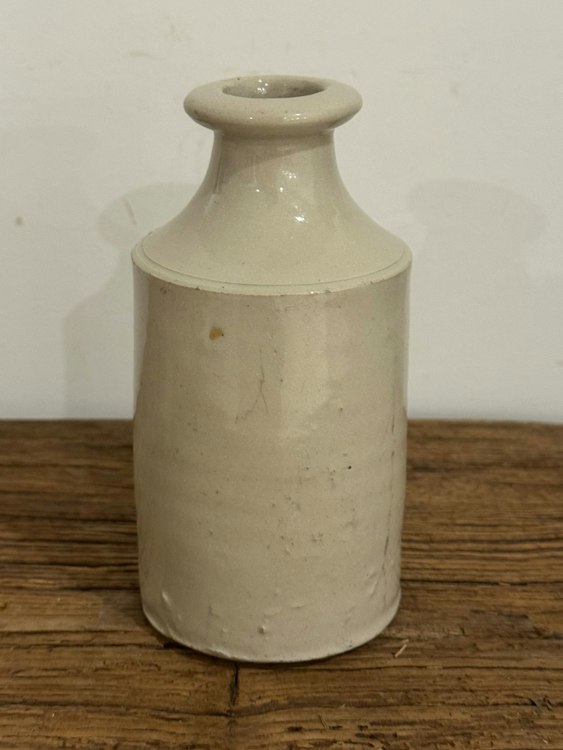
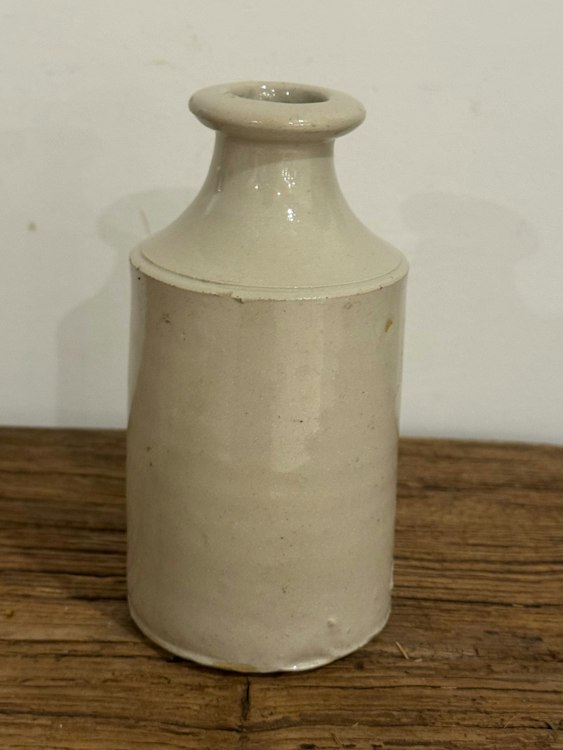
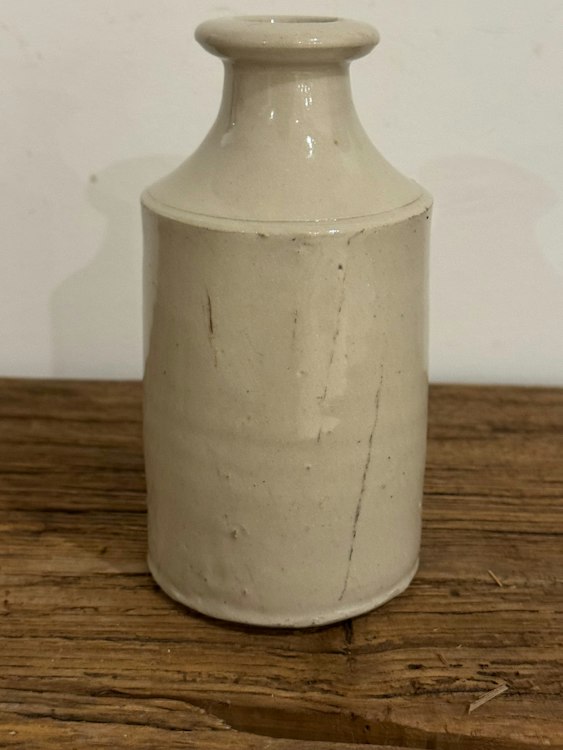
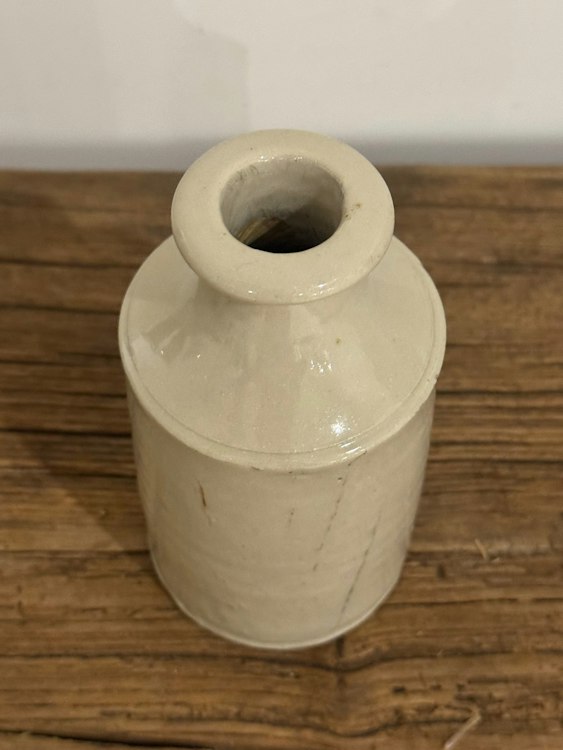
About product: A late 19th-century English Bristol glazed stoneware bottle, characteristic of industrial utilitarian pottery of the Victorian era. The wheel-thrown piece features a cylindrical body with subtle potting rings, sloping shoulder, and a prominent rolled collar lip designed for corking or controlled pouring. Condition Report & Provenance - Period: Victorian (1837–1901) - Origin: England - Material / Technique: wheel-thrown stoneware, Bristol glazed - Decorative Details: cylindrical body, sloping shoulder, poured/dipped buff glaze, rolled lip rim - Colour & Surface: cream/buff monochrome glaze finish over dense stoneware body - Condition: visible vertical hairline crack running up the side of the lower body; unglazed flat base with firing/use staining; minor surface pitted glaze spots inherent to manufacture History: Utilitarian stoneware bottles of this form were widely manufactured across major British potteries—including Doulton Lambeth, Pearson & Co., and Bourne Denby—from the mid-19th into the early 20th century. Primarily produced to hold ink, liquids, or apothecary goods, their impervious Bristol glaze and robust stoneware body made them indispensable everyday objects of the Industrial Age.
$48.00+ shipping
A late 19th-century English Bristol glazed stoneware bottle, characteristic of industrial utilitarian pottery of the Victorian era. The wheel-thrown piece features a cylindrical body with subtle potting rings, sloping shoulder, and a prominent rolled collar lip designed for corking or controlled pouring.
Condition Report & Provenance
- Period: Victorian (1837–1901)
- Origin: England
- Material / Technique: wheel-thrown stoneware, Bristol glazed
- Decorative Details: cylindrical body, sloping shoulder, poured/dipped buff glaze, rolled lip rim
- Colour & Surface: cream/buff monochrome glaze finish over dense stoneware body
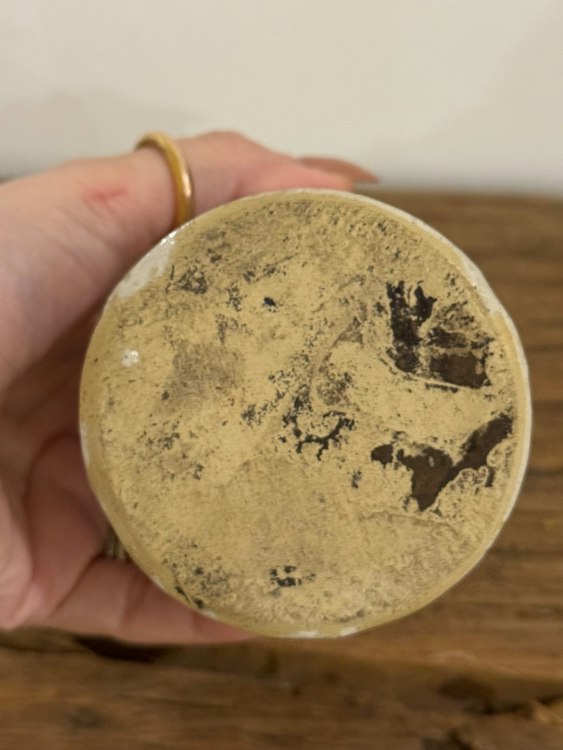
- Condition: visible vertical hairline crack running up the side of the lower body; unglazed flat base with firing/use staining; minor surface pitted glaze spots inherent to manufacture
History
Utilitarian stoneware bottles of this form were widely manufactured across major British potteries—including Doulton Lambeth, Pearson & Co., and Bourne Denby—from the mid-19th into the early 20th century. Primarily produced to hold ink, liquids, or apothecary goods, their impervious Bristol glaze and robust stoneware body made them indispensable everyday objects of the Industrial Age.