
Victorian amethyst glass pedestal pincushion with metallic lace trim
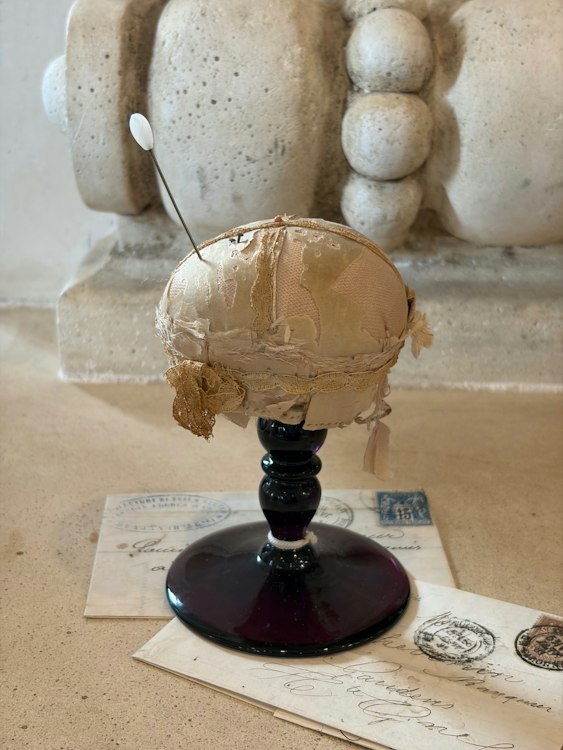
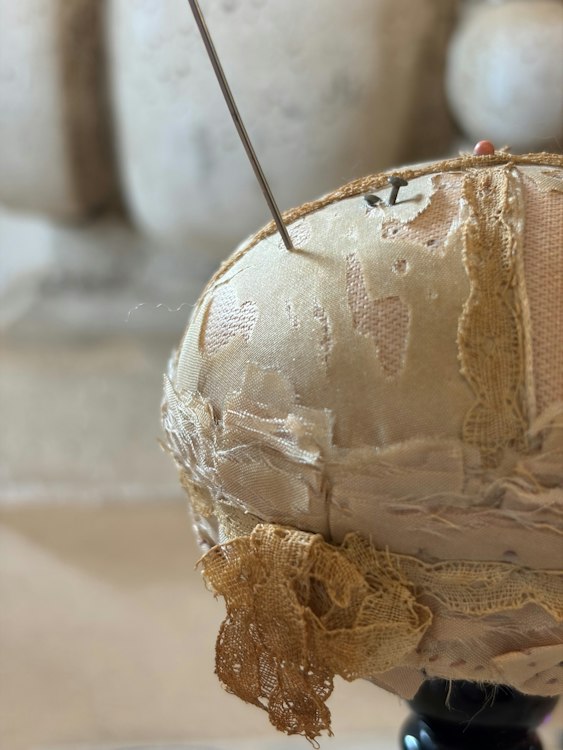
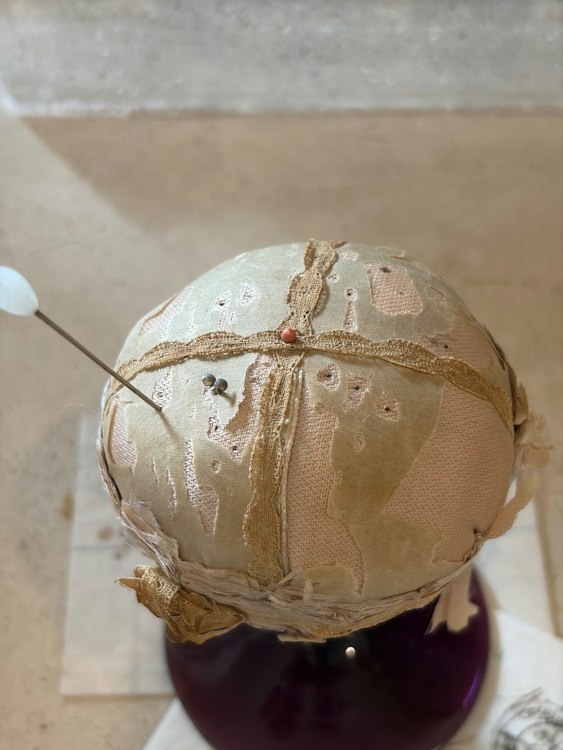
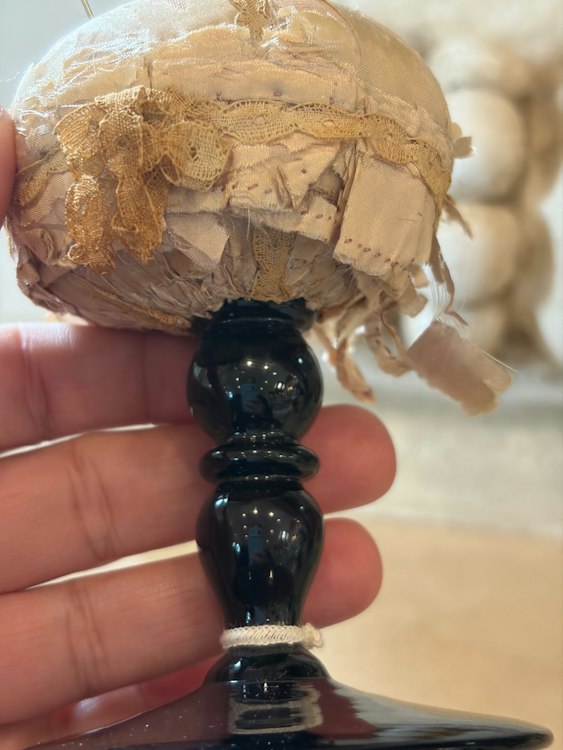
About product: A Victorian pedestal sewing pincushion, mounted on an amethyst glass baluster stem with a spreading circular foot. The dome-shaped cushion is upholstered in silk satin quartered by gold metallic lace trim, anchored at the top with a coral-coloured pin head and featuring an antique white glass-headed hatpin. Condition Report & Provenance - Period: Victorian (circa 1880–1900) - Origin: Unknown - Materials: blown amethyst glass, silk satin, metallic lace, steel pins, glass-headed hatpin - Decorative Details: turned baluster stem in rich deep purple glass, cross-patterned metallic lace trim, includes white oval pin - Condition: silk exterior exhibits significant shattering and shredding consistent with weighted silk age, exposing the underlying woven base fabric; glass pedestal intact with minor surface wear History: Pedestal pincushions mounted on turned glass stems or porcelain bases were popular decorative sewing accoutrements in the late 19th century. Positioned on a seamstress's worktable, they provided both functional utility and an elevated display of glasswork and textiles. The pronounced tearing of the silk surface is a characteristic result of 19th-century fabric weighting processes, in which metallic salts were introduced during dyeing, causing silk fibers to shatter fragilely over time.
$60.00+ shipping
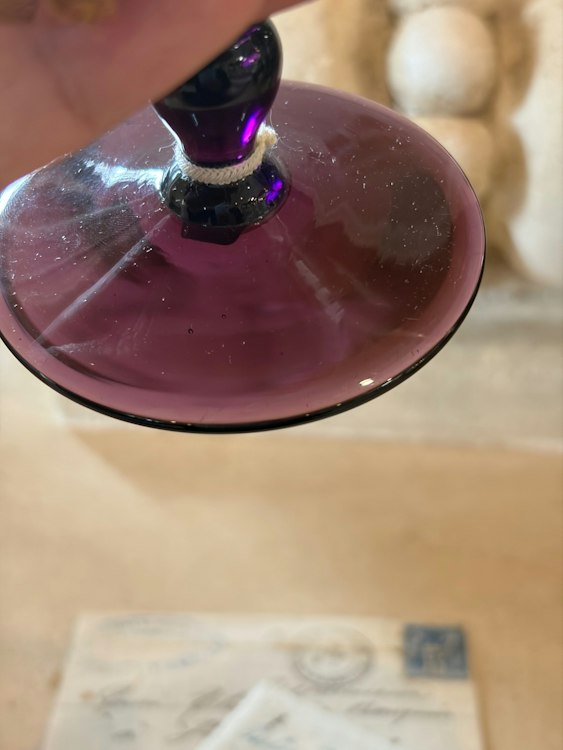
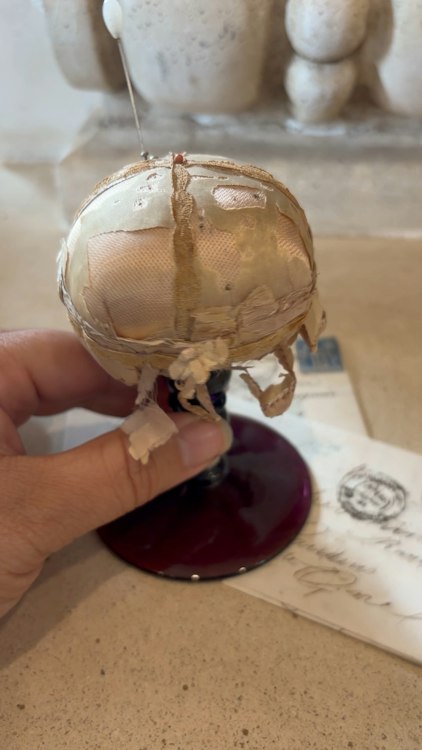
A Victorian pedestal sewing pincushion, mounted on an amethyst glass baluster stem with a spreading circular foot. The dome-shaped cushion is upholstered in silk satin quartered by gold metallic lace trim, anchored at the top with a coral-coloured pin head and featuring an antique white glass-headed hatpin.
Condition Report & Provenance
- Period: Victorian (circa 1880–1900)
- Origin: Unknown
- Materials: blown amethyst glass, silk satin, metallic lace, steel pins, glass-headed hatpin
- Decorative Details: turned baluster stem in rich deep purple glass, cross-patterned metallic lace trim, includes white oval pin
- Condition: silk exterior exhibits significant shattering and shredding consistent with weighted silk age, exposing the underlying woven base fabric; glass pedestal intact with minor surface wear
History
Pedestal pincushions mounted on turned glass stems or porcelain bases were popular decorative sewing accoutrements in the late 19th century. Positioned on a seamstress's worktable, they provided both functional utility and an elevated display of glasswork and textiles. The pronounced tearing of the silk surface is a characteristic result of 19th-century fabric weighting processes, in which metallic salts were introduced during dyeing, causing silk fibers to shatter fragilely over time.