
Traditional stoneware French butter crock with rouletted beaded decoration
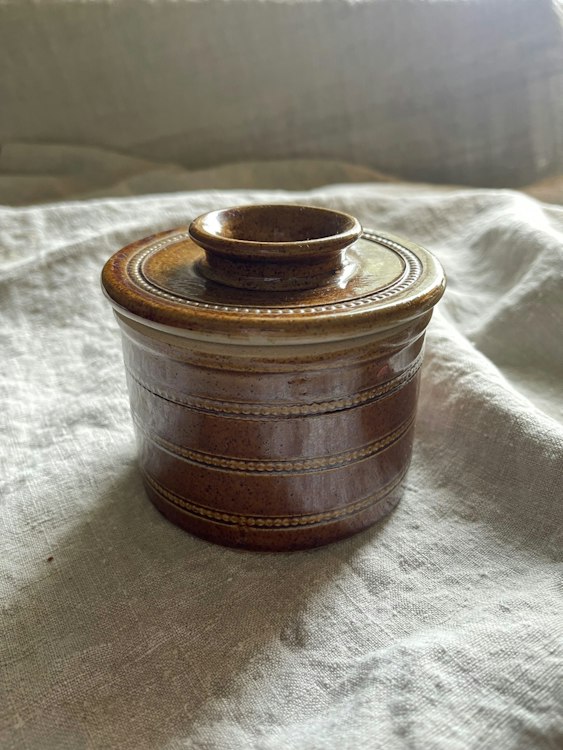
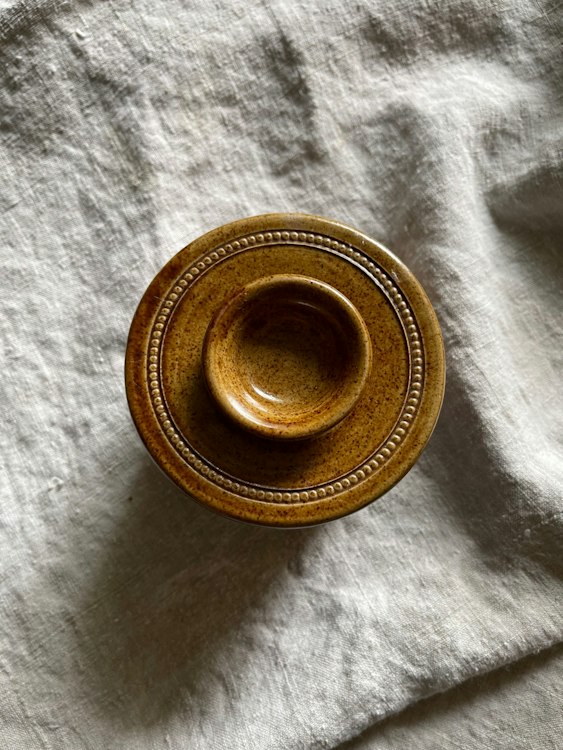
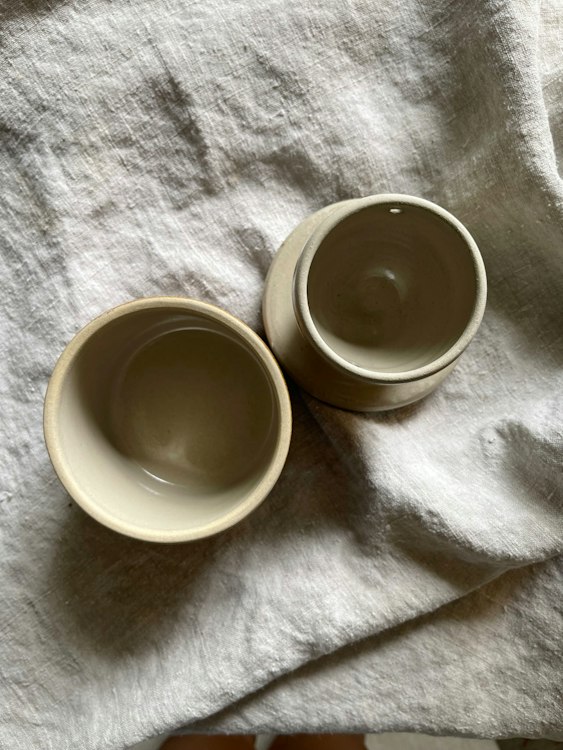
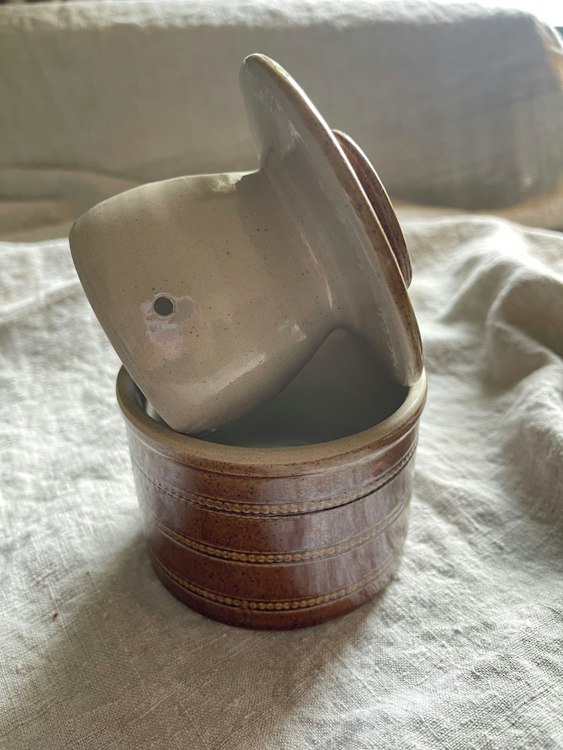
About product: A traditional wheel-thrown stoneware French butter crock (beurrier à eau) of cylindrical form. The exterior is finished in a rich, speckled brown glaze decorated with three horizontal bands of rouletted beadwork, mirrored by a matching beaded border on the lid. The lid features an integral central cup designed to hold butter, complete with a small lateral air vent hole, which fits inverted into the water-filled base to create an airtight seal. Historical & Style Details - Subject / Sitter / Source: Butter crock (beurrier à eau) - Artist / Maker: Unknown studio or traditional pottery - Period: Early to mid-20th Century - Origin: France - Material / Technique: Wheel-thrown stoneware, slip-glazed, rouletted decoration - Materials: Stoneware, glaze - Markings: Unmarked - Decorative Details: Three rouletted beaded bands on body, one on lid; speckled iron-brown glaze exterior, cream-glazed interior - Condition: Excellent vintage condition with no visible chips, cracks, or restoration; minor firing imperfections typical of utilitarian stoneware. History: The "beurrier à eau" or water-well butter crock is a traditional French design dating back to the late Middle Ages, particularly associated with regions like Brittany and Normandy before the widespread adoption of refrigeration. By packing butter into the lid and inverting it into a small amount of water in the base, an airtight seal is created that prevents spoilage while keeping the butter soft and spreadable. This example, with its rustic brown glaze and simple rouletted decoration, represents the enduring appeal of functional, traditional European kitchen stoneware.
$86.00· Free shipping
A traditional wheel-thrown stoneware French butter crock (beurrier à eau) of cylindrical form. The exterior is finished in a rich, speckled brown glaze decorated with three horizontal bands of rouletted beadwork, mirrored by a matching beaded border on the lid. The lid features an integral central cup designed to hold butter, complete with a small lateral air vent hole, which fits inverted into the water-filled base to create an airtight seal.
Historical & Style Details
- Subject / Sitter / Source: Butter crock (beurrier à eau)
- Artist / Maker: Unknown studio or traditional pottery
- Period: Early to mid-20th Century
- Origin: France
- Material / Technique: Wheel-thrown stoneware, slip-glazed, rouletted decoration
- Materials: Stoneware, glaze
- Markings: Unmarked
- Decorative Details: Three rouletted beaded bands on body, one on lid; speckled iron-brown glaze exterior, cream-glazed interior
- Condition: Excellent vintage condition with no visible chips, cracks, or restoration; minor firing imperfections typical of utilitarian stoneware.
History
The "beurrier à eau" or water-well butter crock is a traditional French design dating back to the late Middle Ages, particularly associated with regions like Brittany and Normandy before the widespread adoption of refrigeration. By packing butter into the lid and inverting it into a small amount of water in the base, an airtight seal is created that prevents spoilage while keeping the butter soft and spreadable. This example, with its rustic brown glaze and simple rouletted decoration, represents the enduring appeal of functional, traditional European kitchen stoneware.