
Thomas Mayer 'Canova' pattern earthenware plate, circa 1830
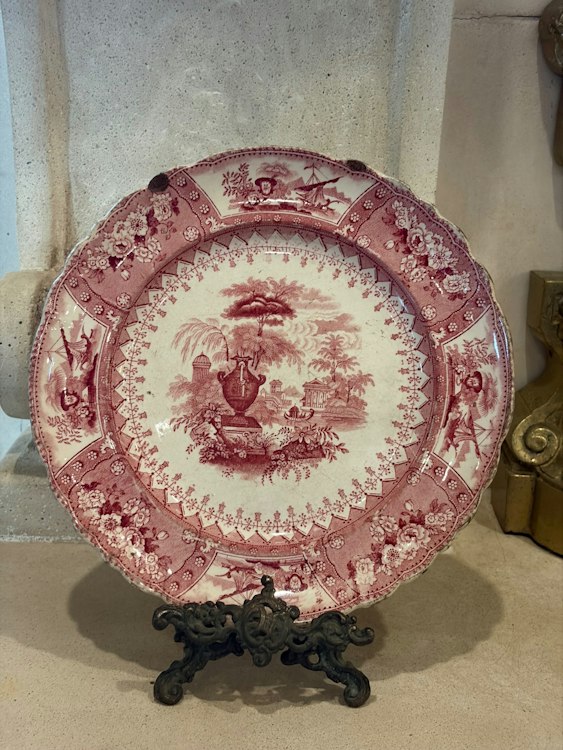
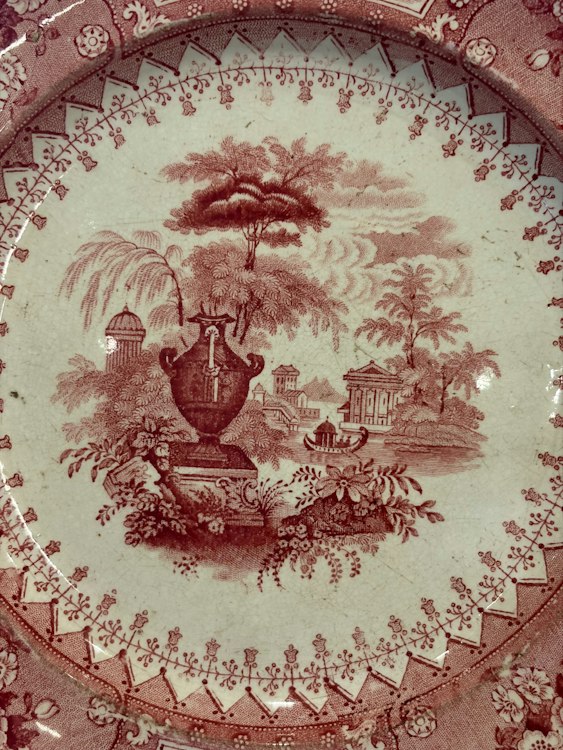
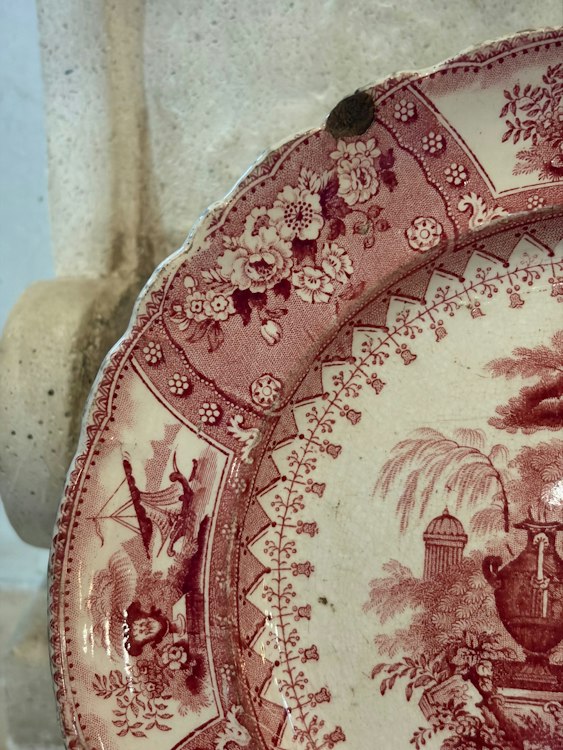
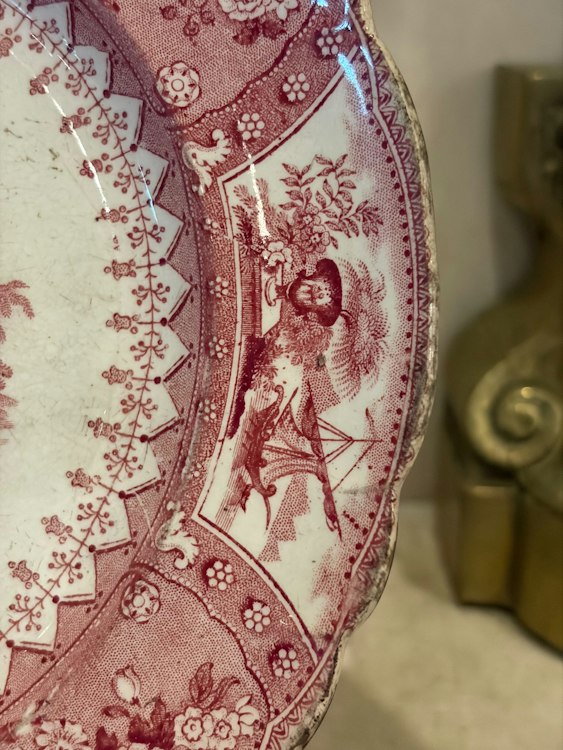
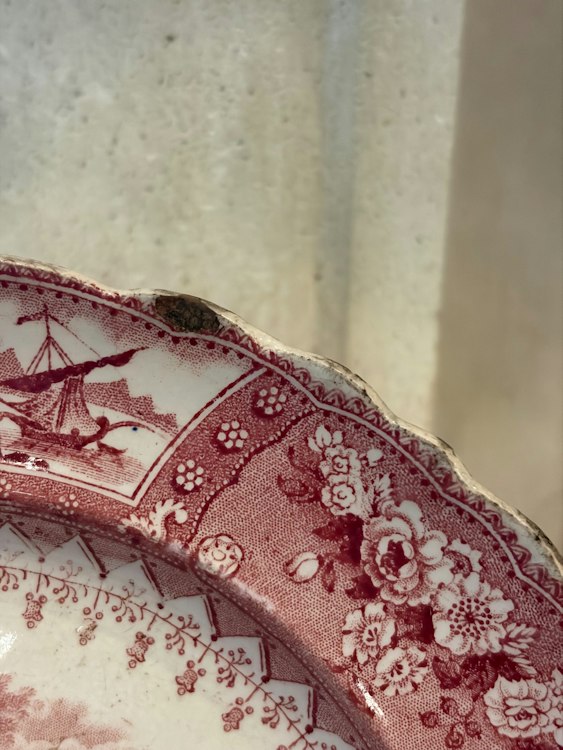
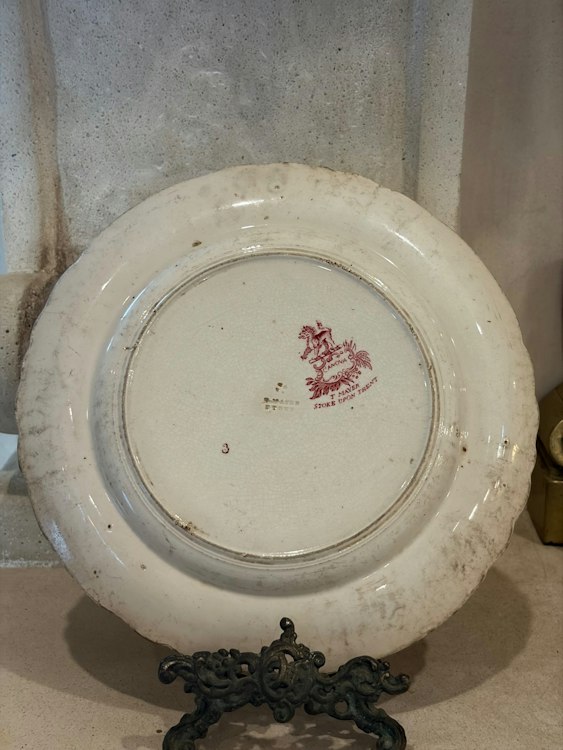
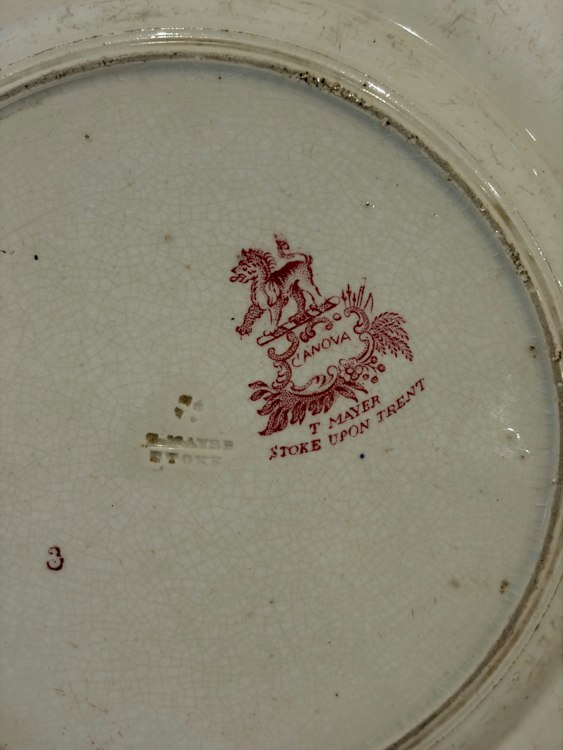
About product: A late Georgian darker pink transfer-printed earthenware plate in the celebrated "Canova" pattern, manufactured by Thomas Mayer at Stoke-upon-Trent, Staffordshire, circa 1830. The central reserve depicts a romanticized neoclassical landscape featuring a prominent urn on a pedestal, a weeping willow, a classical temple, and a gondola on a river, all enclosed by a wide border of floral clusters and alternating vignettes of sailing vessels. Named in tribute to the famous Italian neoclassical sculptor Antonio Canova (1757–1822), this pattern is one of the most highly collected examples of Staffordshire romantic transferware, showcasing the early 19th-century British fascination with classical antiquity and Italianate landscapes. Condition Report & Provenance - Subject / Sitter / Source: "Canova" pattern, depicting a romanticized neoclassical Italianate landscape - Artist / Maker / Author: Thomas Mayer - Period: Georgian (1714–1837) - Origin: Stoke-upon-Trent, Staffordshire, England - Material / Technique: Transfer-printed earthenware (pink/red transferware) - Materials: Earthenware, glaze - Markings: Reverse features a red transfer-printed maker's mark showing a lion rampant above a scroll reading "CANOVA", with "T. MAYER / STOKE UPON TRENT" below; also bears an impressed "T. MAYER / STOKE" mark and a hand-painted red numeral "3" - Condition: Notable chip/loss to the upper rim with dark staining/old residue; overall fine glaze crazing consistent with age; minor surface wear and light staining to the reverse History: Thomas Mayer operated the Cliff Bank Works in Stoke-upon-Trent from 1826 to 1838, during which he produced some of the finest transfer-printed wares of the Staffordshire potteries. The "Canova" pattern, introduced around 1830, reflects the Regency and late Georgian taste for romanticized classical ruins and picturesque landscapes. Highly prized by collectors of English transferware, pieces bearing Mayer's distinct lion mark represent a peak of technical refinement in multi-toned underglaze printing.
$45.00+ shipping
A late Georgian darker pink transfer-printed earthenware plate in the celebrated "Canova" pattern, manufactured by Thomas Mayer at Stoke-upon-Trent, Staffordshire, circa 1830. The central reserve depicts a romanticized neoclassical landscape featuring a prominent urn on a pedestal, a weeping willow, a classical temple, and a gondola on a river, all enclosed by a wide border of floral clusters and alternating vignettes of sailing vessels.
Named in tribute to the famous Italian neoclassical sculptor Antonio Canova (1757–1822), this pattern is one of the most highly collected examples of Staffordshire romantic transferware, showcasing the early 19th-century British fascination with classical antiquity and Italianate landscapes.
Condition Report & Provenance
- Subject / Sitter / Source: "Canova" pattern, depicting a romanticized neoclassical Italianate landscape
- Artist / Maker / Author: Thomas Mayer
- Period: Georgian (1714–1837)
- Origin: Stoke-upon-Trent, Staffordshire, England
- Material / Technique: Transfer-printed earthenware (pink/red transferware)
- Materials: Earthenware, glaze
- Markings: Reverse features a red transfer-printed maker's mark showing a lion rampant above a scroll reading "CANOVA", with "T. MAYER / STOKE UPON TRENT" below; also bears an impressed "T. MAYER / STOKE" mark and a hand-painted red numeral "3"
- Condition: Notable chip/loss to the upper rim with dark staining/old residue; overall fine glaze crazing consistent with age; minor surface wear and light staining to the reverse
History
Thomas Mayer operated the Cliff Bank Works in Stoke-upon-Trent from 1826 to 1838, during which he produced some of the finest transfer-printed wares of the Staffordshire potteries. The "Canova" pattern, introduced around 1830, reflects the Regency and late Georgian taste for romanticized classical ruins and picturesque landscapes. Highly prized by collectors of English transferware, pieces bearing Mayer's distinct lion mark represent a peak of technical refinement in multi-toned underglaze printing.