
Saint Uze Blue and white ceramic pedestal crocus pot with five apertures
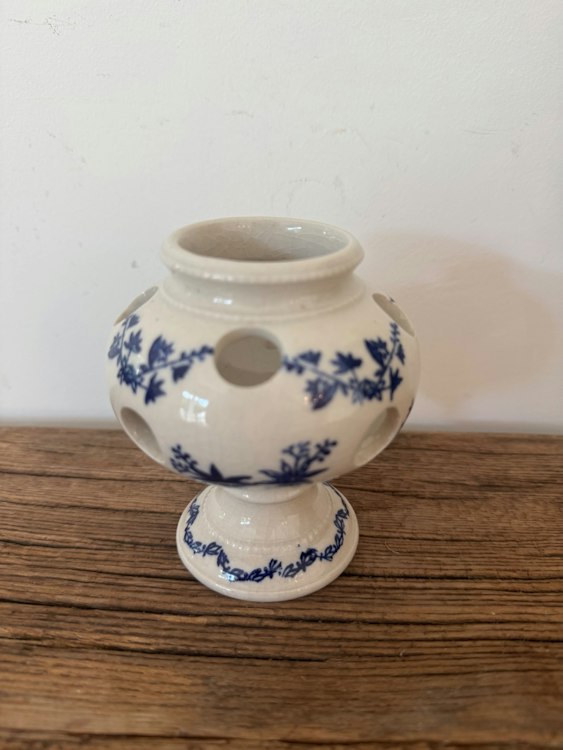
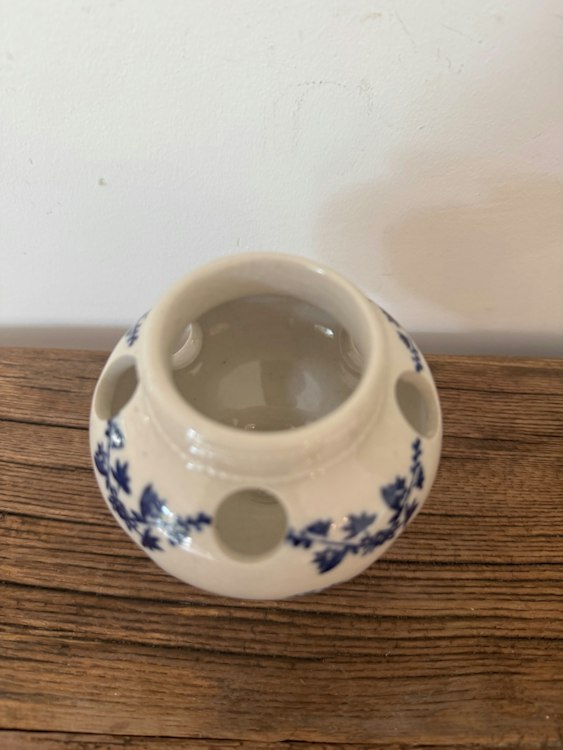
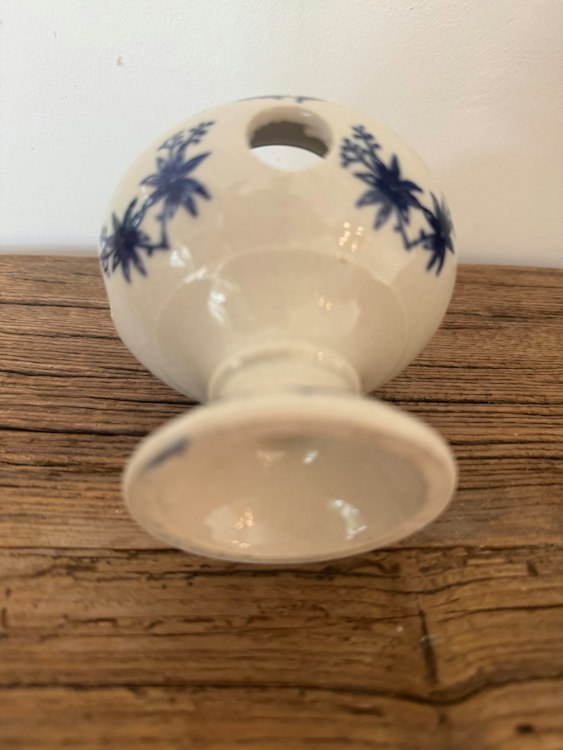
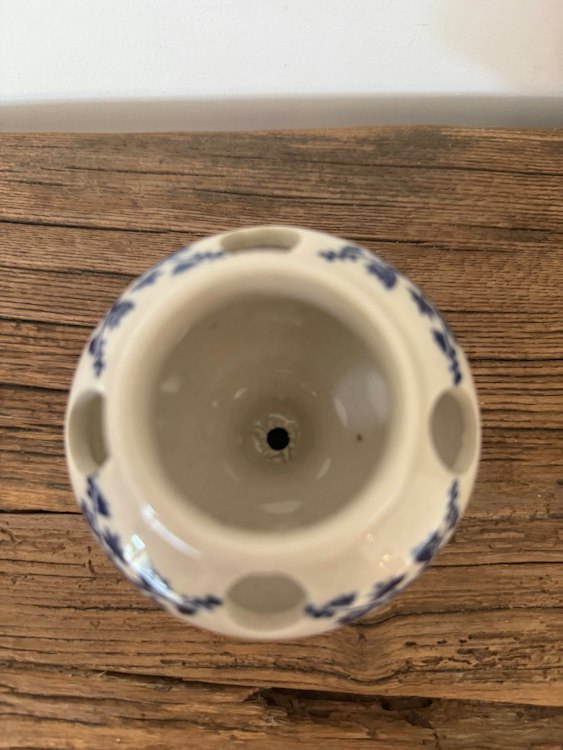
About product: A French Saint-Uze blue and white stoneware pedestal crocus pot (bouquetier) of bulbous form, designed for forcing bulbs or arranging short-stemmed flowers. The rounded body features five circular apertures positioned around the shoulder, surrounding a central flared neck, all supported by a flared pedestal foot. It is decorated with underglaze blue floral sprigs and a coordinating foliate border around the base, finished with a characteristic salt-glazed or feldspathic cream-colored glaze showing fine overall crazing. The interior well features a small central drainage hole at the base. Historical & Style Details - Artist / Maker: Saint-Uze (attributed) - Period: Early 20th Century - Origin: France - Material / Technique: Glazed stoneware (grès cérame) with underglaze blue stenciled decoration - Materials: stoneware, glaze - Markings: Unmarked - Condition: Fine overall glaze crazing consistent with age; light interior residue and minor staining to the neck; base rim is stable with minor shelf wear. History: Stoneware from the Saint-Uze region in the Drôme department of France is highly collected for its durable 'grès cérame' body and distinctive cobalt blue stenciled decorations on a cream ground. Popularized in the late 19th and early 20th centuries, these multi-apertured vessels, known locally as 'bouquetiers', allowed households to display spring blooms and force crocus bulbs indoors, reflecting the period's passion for domestic horticulture.
$96.00+ shipping
A French Saint-Uze blue and white stoneware pedestal crocus pot (bouquetier) of bulbous form, designed for forcing bulbs or arranging short-stemmed flowers. The rounded body features five circular apertures positioned around the shoulder, surrounding a central flared neck, all supported by a flared pedestal foot. It is decorated with underglaze blue floral sprigs and a coordinating foliate border around the base, finished with a characteristic salt-glazed or feldspathic cream-colored glaze showing fine overall crazing. The interior well features a small central drainage hole at the base.
Historical & Style Details
- Artist / Maker: Saint-Uze (attributed)
- Period: Early 20th Century
- Origin: France
- Material / Technique: Glazed stoneware (grès cérame) with underglaze blue stenciled decoration
- Materials: stoneware, glaze
- Markings: Unmarked
- Condition: Fine overall glaze crazing consistent with age; light interior residue and minor staining to the neck; base rim is stable with minor shelf wear.
History
Stoneware from the Saint-Uze region in the Drôme department of France is highly collected for its durable 'grès cérame' body and distinctive cobalt blue stenciled decorations on a cream ground. Popularized in the late 19th and early 20th centuries, these multi-apertured vessels, known locally as 'bouquetiers', allowed households to display spring blooms and force crocus bulbs indoors, reflecting the period's passion for domestic horticulture.