
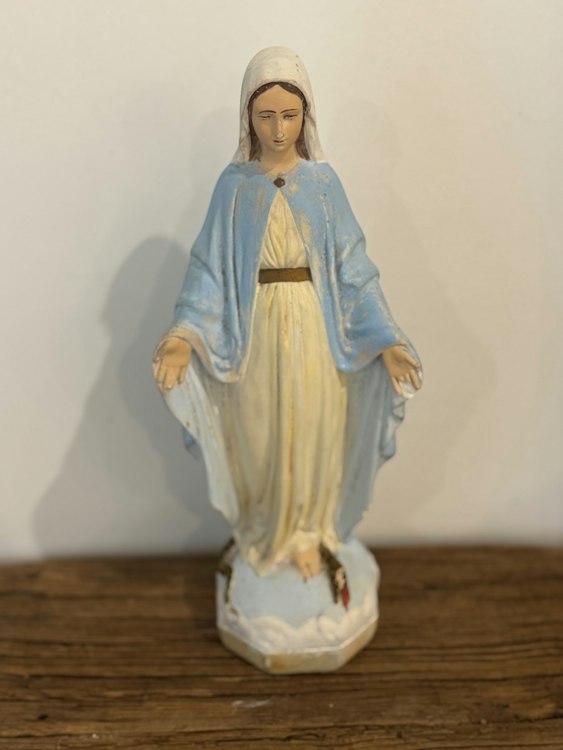
Polychrome painted plaster figure of Our Lady of Grace crushing the serpent
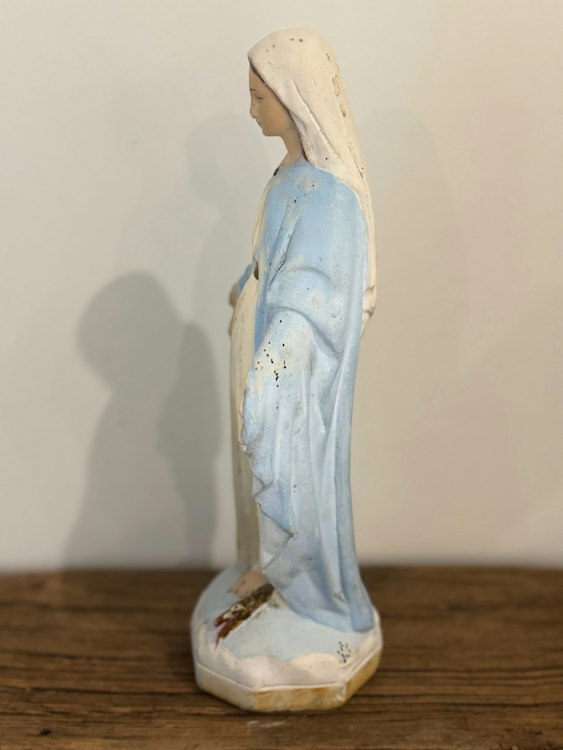
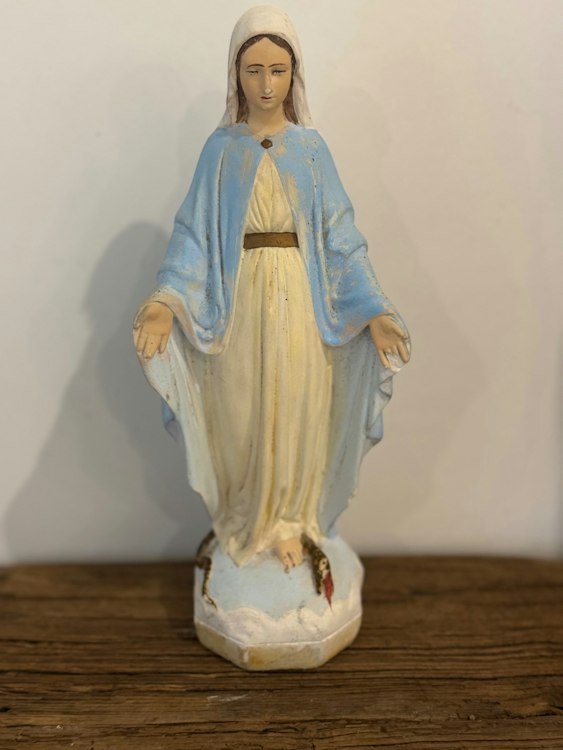
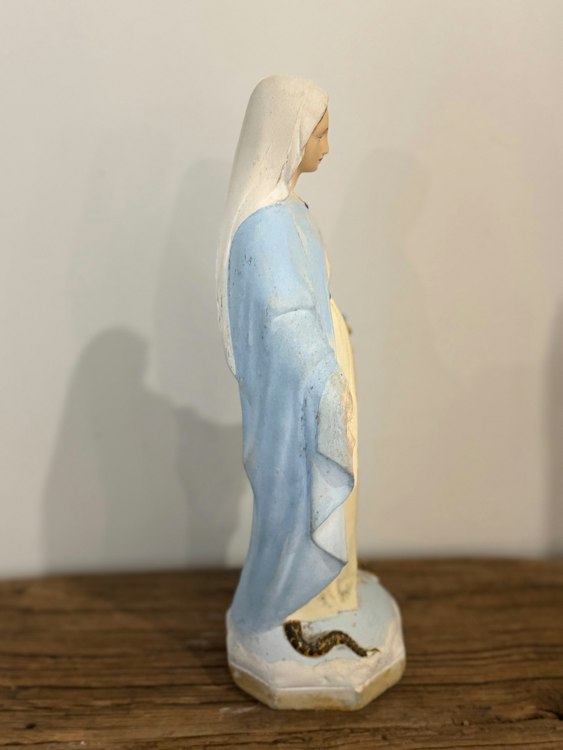
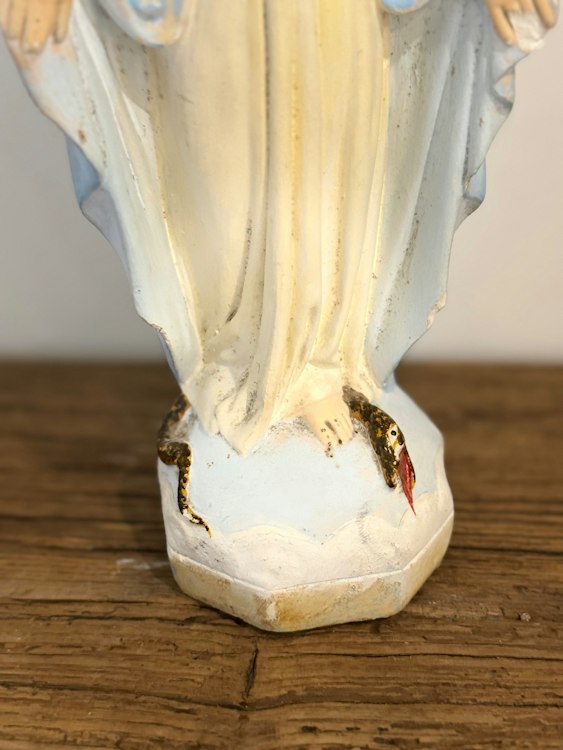
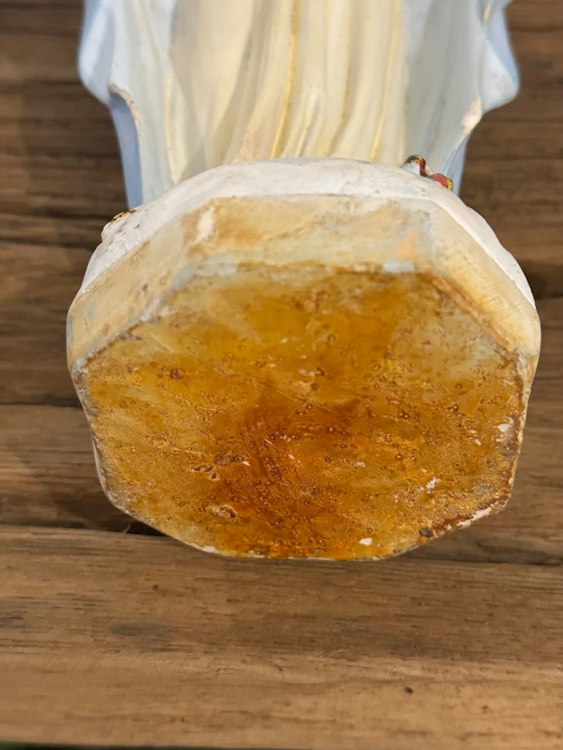
About product: A devotional polychrome painted cast plaster figure depicting Our Lady of Grace, representing the Immaculate Conception. Rendered in classic Marian iconography, the Virgin Mary stands atop a cloud-form base set on an octagonal plinth, her foot crushing the head of a coiled serpent with a red tongue to symbolize the victory of virtue over evil. She is clad in an off-white draped tunic gathered at the waist with a tan sash, beneath a soft blue mantle and white head veil, her hands open and extended downward in a traditional gesture of dispensing grace. Condition Report & Details - Subject: Our Lady of Grace / The Immaculate Conception - Period: Early 20th Century (1900s–1940s) - Material / Technique: Cast plaster (chalkware), hand-painted polychrome finish - Base: Integrated octagonal plinth base - Markings: Unmarked; underside exhibits unpainted plaster with aged yellowed resin residue - Colour & Surface: Pastel blue mantle, cream tunic, white veil, brown sash, and red accent on the serpent tongue - Condition: Flaking and scattered paint loss across the veil, mantle, torso, and base edge; surface wear and minor discoloration consistent with age History: The iconography of the Virgin Mary crushing the serpent derives from traditional interpretations of Genesis 3:15, a motif that saw widespread popularity following the 1830 Marian apparitions to St. Catherine Labouré in Paris and the subsequent propagation of the Miraculous Medal. Throughout the late 19th and early 20th centuries, plaster and chalkware devotional statuettes were produced across Europe and North America for home altars, parish institutions, and private veneration.
$118.00+ shipping
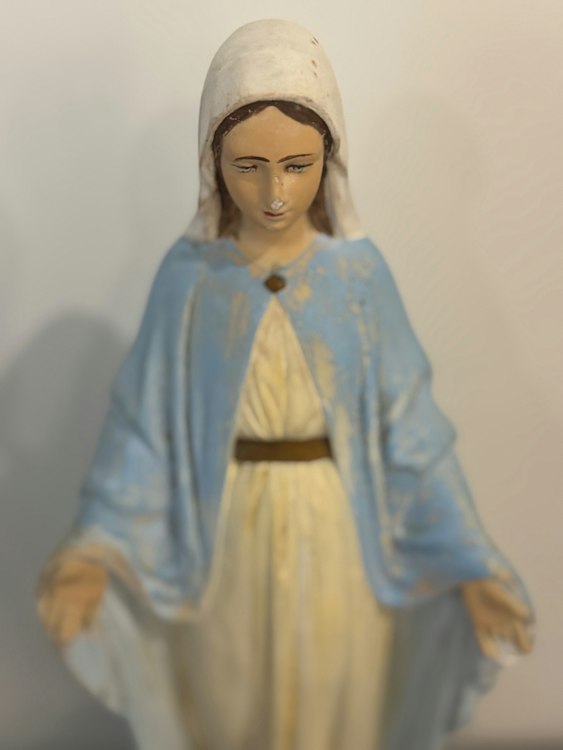
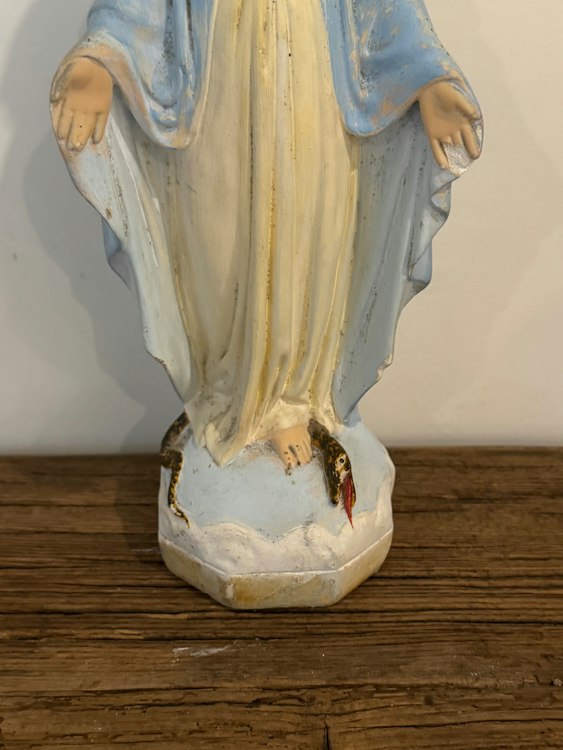
A devotional polychrome painted cast plaster figure depicting Our Lady of Grace, representing the Immaculate Conception. Rendered in classic Marian iconography, the Virgin Mary stands atop a cloud-form base set on an octagonal plinth, her foot crushing the head of a coiled serpent with a red tongue to symbolize the victory of virtue over evil. She is clad in an off-white draped tunic gathered at the waist with a tan sash, beneath a soft blue mantle and white head veil, her hands open and extended downward in a traditional gesture of dispensing grace.
Condition Report & Details
- Subject: Our Lady of Grace / The Immaculate Conception
- Period: Early 20th Century (1900s–1940s)
- Material / Technique: Cast plaster (chalkware), hand-painted polychrome finish
- Base: Integrated octagonal plinth base
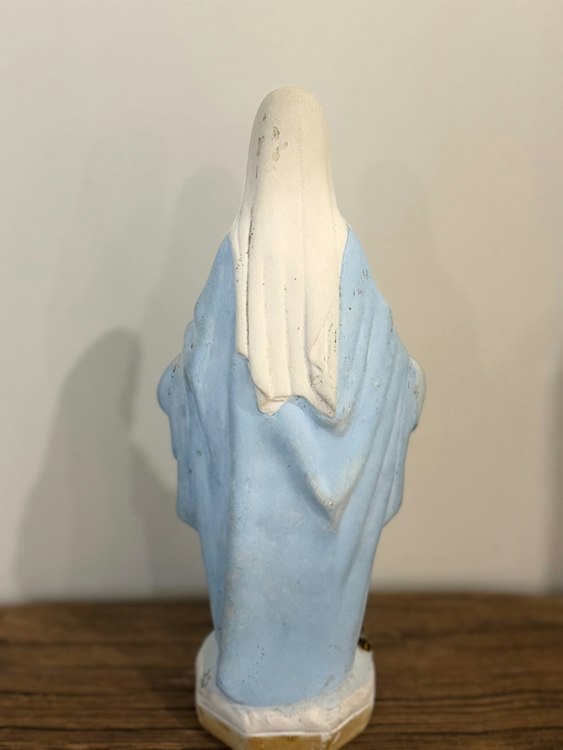
- Markings: Unmarked; underside exhibits unpainted plaster with aged yellowed resin residue
- Colour & Surface: Pastel blue mantle, cream tunic, white veil, brown sash, and red accent on the serpent tongue
- Condition: Flaking and scattered paint loss across the veil, mantle, torso, and base edge; surface wear and minor discoloration consistent with age
History
The iconography of the Virgin Mary crushing the serpent derives from traditional interpretations of Genesis 3:15, a motif that saw widespread popularity following the 1830 Marian apparitions to St. Catherine Labouré in Paris and the subsequent propagation of the Miraculous Medal. Throughout the late 19th and early 20th centuries, plaster and chalkware devotional statuettes were produced across Europe and North America for home altars, parish institutions, and private veneration.