
French stoneware double handled confit pot
About product: A French doublehandled stoneware confit pot, The ovoid body is thrown from a robust buff clay, featuring two pulled loop handles applied to the shoulders, beneath a short collar rim detailed with incised horizontal banding. The exterior is finished with a characteristic salt or ash glaze in shades of olive-grey and celadon, stopping short of the base to reveal the coarse, unglazed earthenware body beneath. Historical & Style Details - Artist / Maker / Author: Unknown Potter - Period: 19th Century - Origin: France (likely Puisaye or Berry region) - Material / Technique: Wheel-thrown stoneware, salt-glazed - Markings: Faint, illegible incised mark or potter's scribble to the underside of the base - Decorative Details: Double pulled loop handles, incised horizontal banding near collar rim - Colour & Surface: Varied olive-grey, celadon, and buff tones with natural glaze runs, kiln drips, and pitting - Condition: A vertical hairline crack extending approximately 5 cm down from the rim; typical firing imperfections including glaze pops, kiln scars, and minor surface abrasions consistent with age and utilitarian use History: Stoneware jars of this double-handled form were staple utilitarian vessels in 19th-century French rural households, primarily used for preserving lard, butter, or confit. Regions like La Puisaye and Berry became renowned for their high-quality clay deposits, producing durable, salt-glazed grès vessels that were distributed widely across France. Today, these rustic pots are highly collected for their robust forms, earthy textures, and honest, functional design.
$116.00· Free shipping
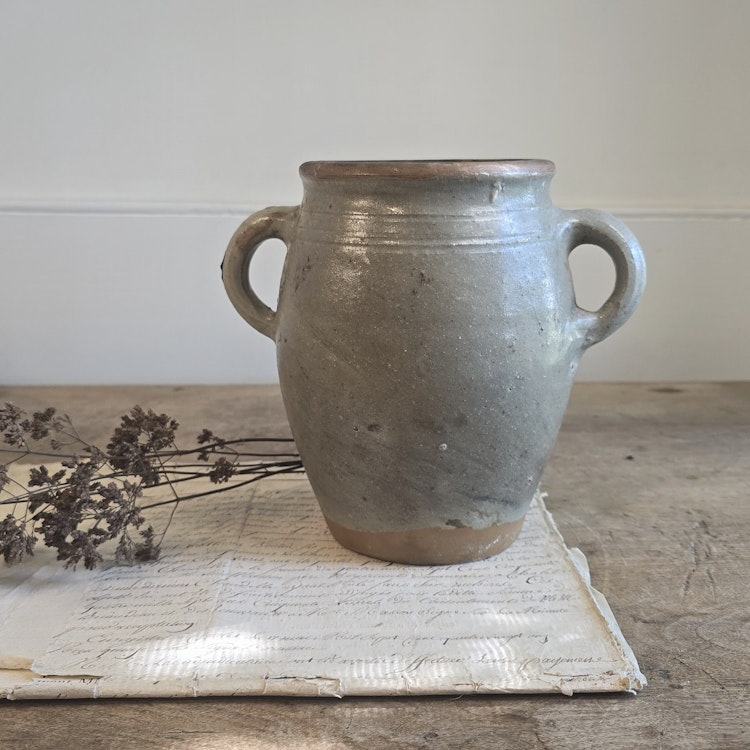
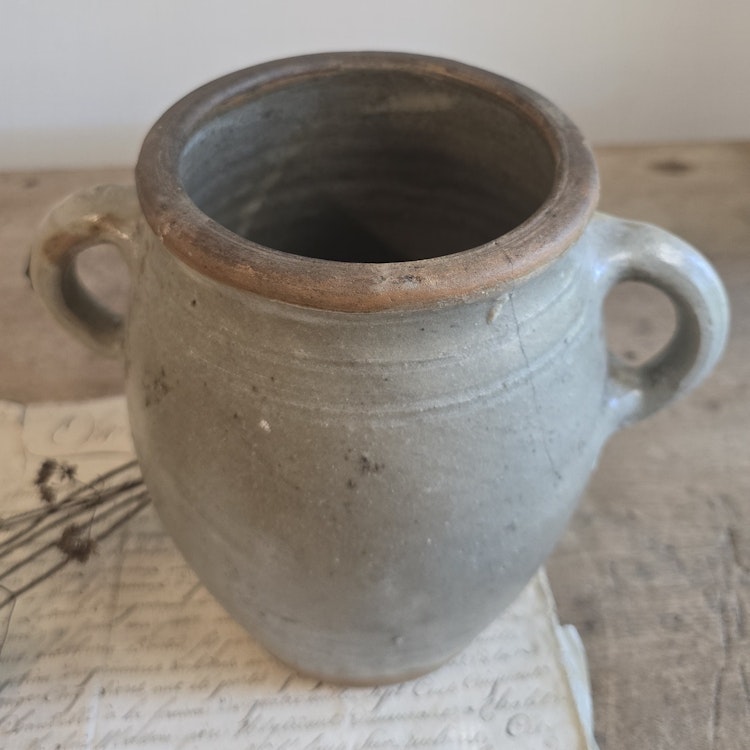
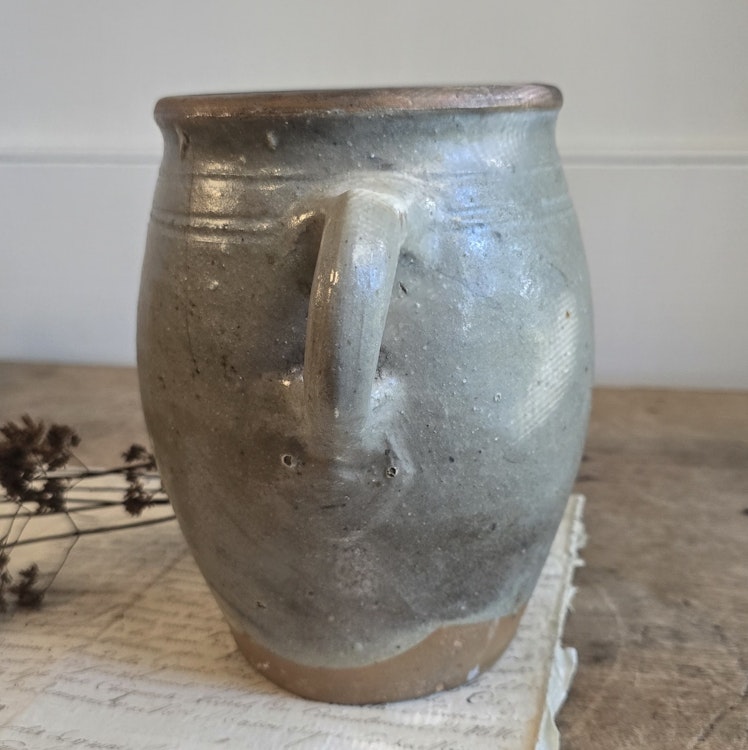
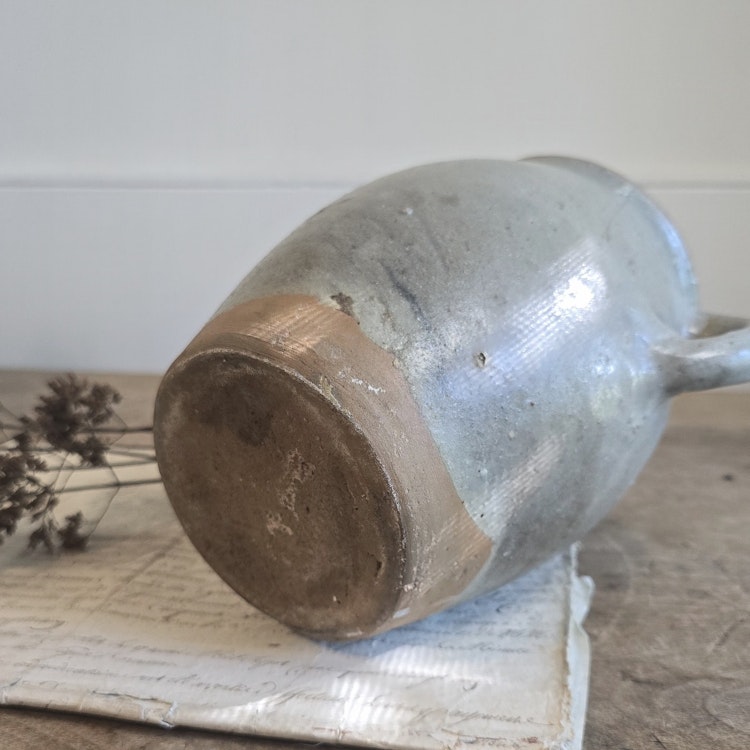
A French doublehandled stoneware confit pot, The ovoid body is thrown from a robust buff clay, featuring two pulled loop handles applied to the shoulders, beneath a short collar rim detailed with incised horizontal banding. The exterior is finished with a characteristic salt or ash glaze in shades of olive-grey and celadon, stopping short of the base to reveal the coarse, unglazed earthenware body beneath.
Historical & Style Details
- Artist / Maker / Author: Unknown Potter
- Period: 19th Century
- Origin: France (likely Puisaye or Berry region)
- Material / Technique: Wheel-thrown stoneware, salt-glazed
- Markings: Faint, illegible incised mark or potter's scribble to the underside of the base
- Decorative Details: Double pulled loop handles, incised horizontal banding near collar rim
- Colour & Surface: Varied olive-grey, celadon, and buff tones with natural glaze runs, kiln drips, and pitting
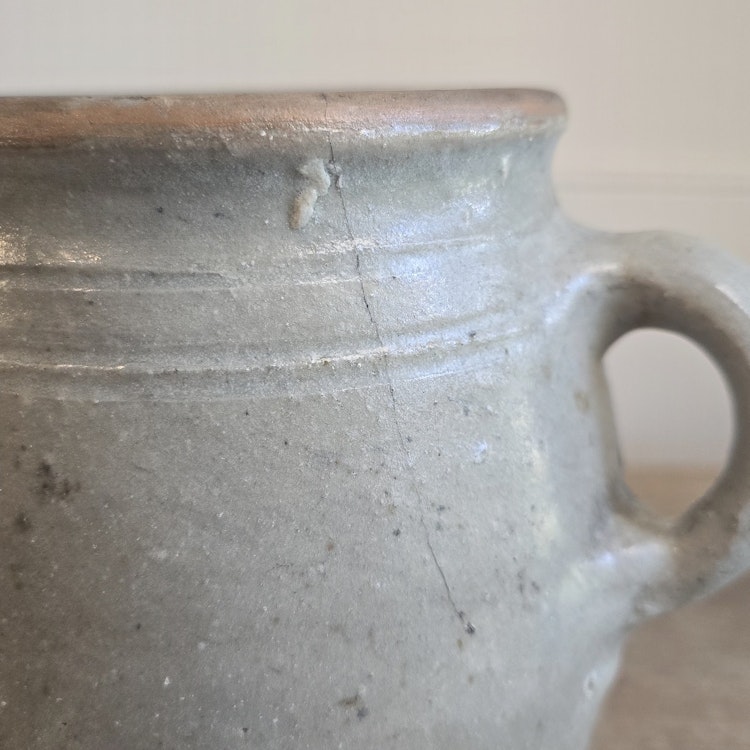
- Condition: A vertical hairline crack extending approximately 5 cm down from the rim; typical firing imperfections including glaze pops, kiln scars, and minor surface abrasions consistent with age and utilitarian use
History
Stoneware jars of this double-handled form were staple utilitarian vessels in 19th-century French rural households, primarily used for preserving lard, butter, or confit. Regions like La Puisaye and Berry became renowned for their high-quality clay deposits, producing durable, salt-glazed grès vessels that were distributed widely across France. Today, these rustic pots are highly collected for their robust forms, earthy textures, and honest, functional design.