
French Salvaged Figure of Ceres (Agriculture), late 19th century
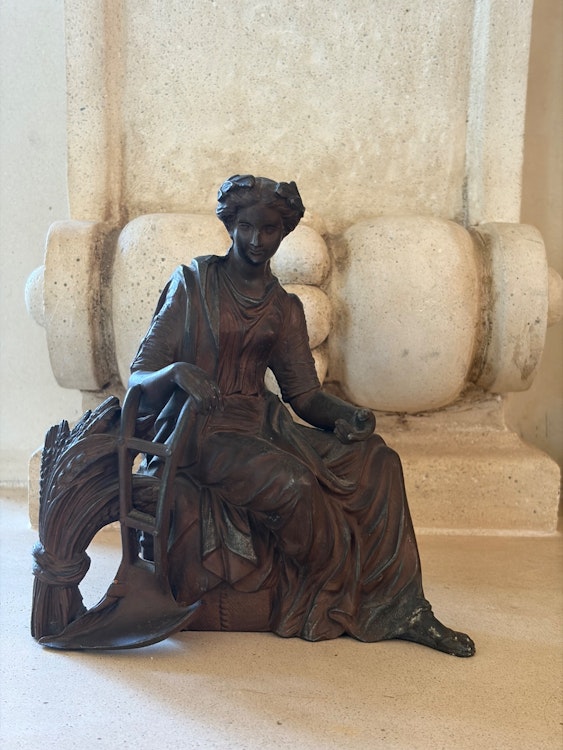
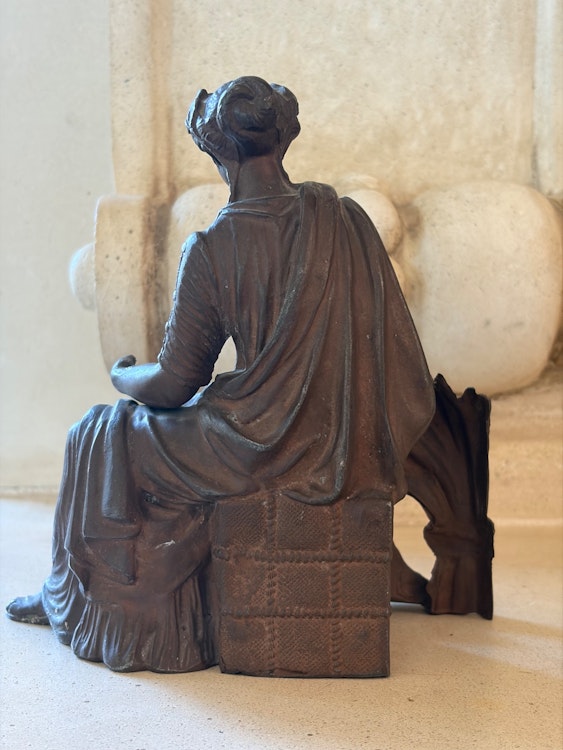
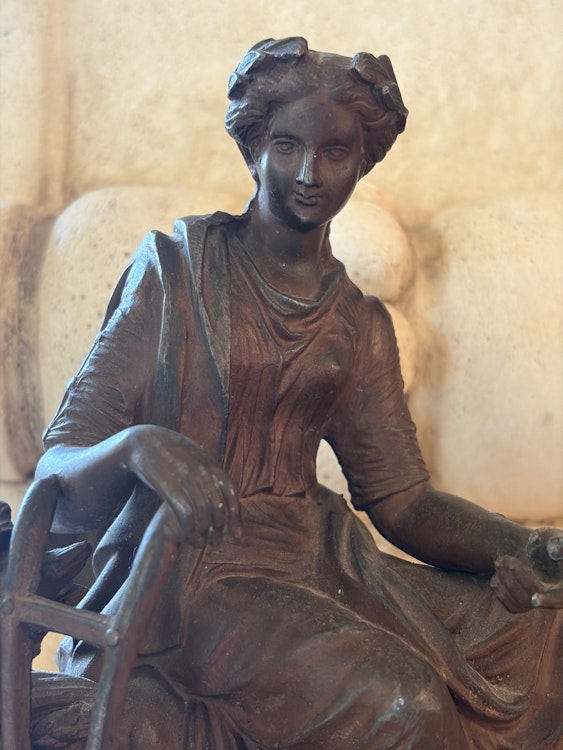
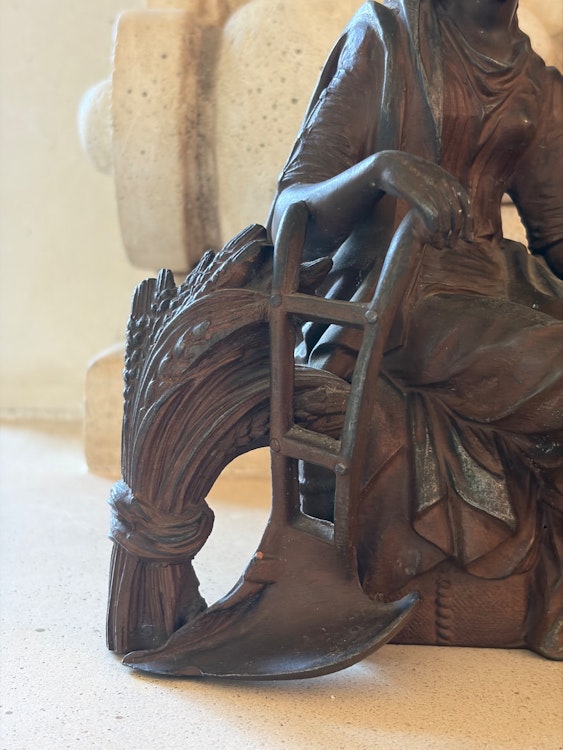
About product: An allegorical patinated metal figure of Ceres (Demeter) or Agriculture, depicted as a classical female maiden seated upon a tufted cushion. The figure is rendered in the French Academic style of the late nineteenth century, holding a stylized plow in her right hand, flanked by a richly detailed, bound sheaf of wheat. She wears classical drapery and a wreath of wheat ears in her hair, symbolizing the harvest. Believed to be possibly salvaged from a clock. Historical & Style Details - Subject / Sitter / Source: Allegory of Agriculture / Ceres (Demeter) - Period: Late 19th century (circa 1880–1900) - Condition: Light minor wear to patination consistent with age, structurally sound with no visible breaks or repairs History: Figures of this type were highly popular in late 19th-century France, frequently serving as clock toppers or decorative garnitures celebrating pastoral themes, industry, and agriculture. Inspired by classical antiquity and popularized by the Paris Salons, these allegorical representations of the harvest (often personified as Ceres or "La Moisson") decorated the mantels of bourgeois homes throughout the Third Republic.
$110.00· Free shipping
An allegorical patinated metal figure of Ceres (Demeter) or Agriculture, depicted as a classical female maiden seated upon a tufted cushion. The figure is rendered in the French Academic style of the late nineteenth century, holding a stylized plow in her right hand, flanked by a richly detailed, bound sheaf of wheat. She wears classical drapery and a wreath of wheat ears in her hair, symbolizing the harvest.
Believed to be possibly salvaged from a clock.
Historical & Style Details
- Subject / Sitter / Source: Allegory of Agriculture / Ceres (Demeter)
- Period: Late 19th century (circa 1880–1900)
- Condition: Light minor wear to patination consistent with age, structurally sound with no visible breaks or repairs
History
Figures of this type were highly popular in late 19th-century France, frequently serving as clock toppers or decorative garnitures celebrating pastoral themes, industry, and agriculture. Inspired by classical antiquity and popularized by the Paris Salons, these allegorical representations of the harvest (often personified as Ceres or "La Moisson") decorated the mantels of bourgeois homes throughout the Third Republic.