
French Rustic wheel-thrown stoneware pitcher with pinched spout and toasted ash glaze
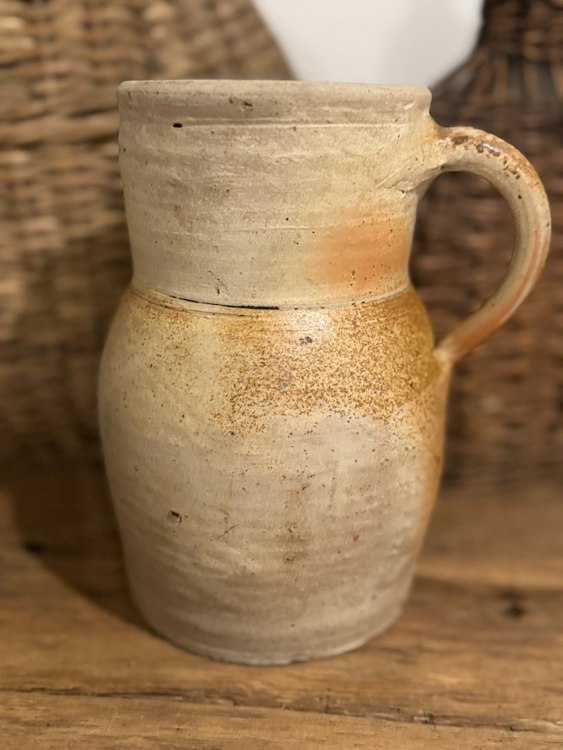
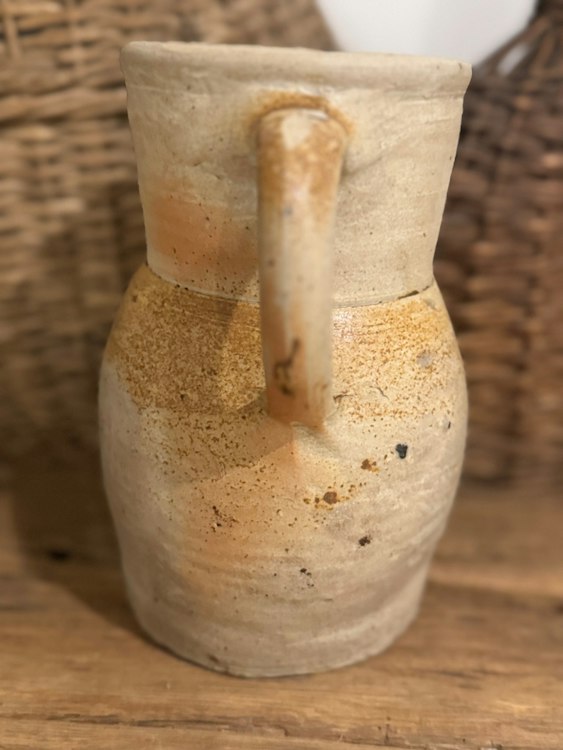
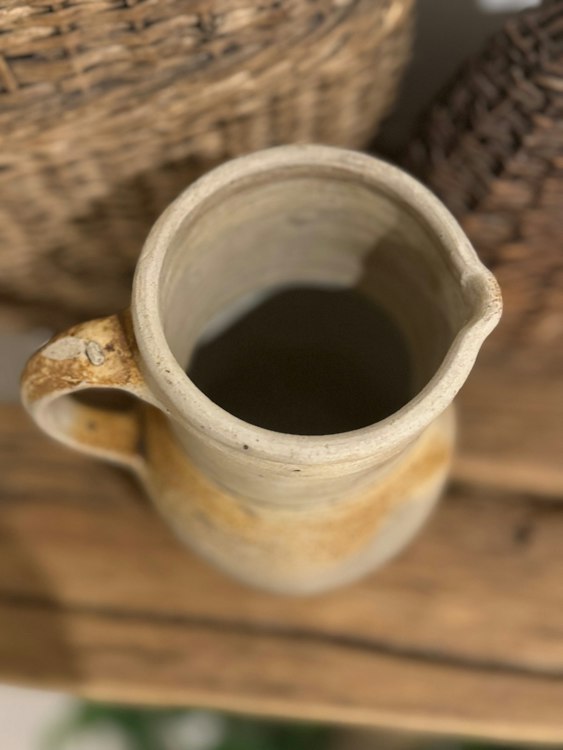
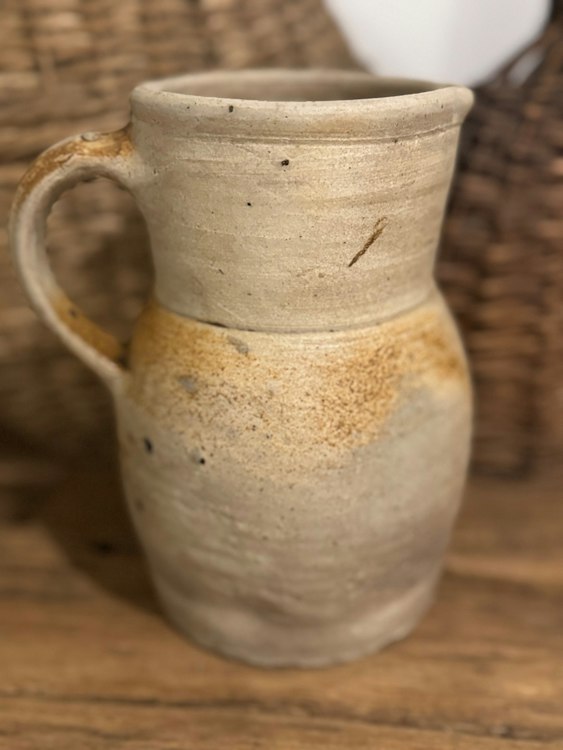
About product: A French rustic wheel-thrown stoneware pitcher featuring a swelling baluster body, tapered neck, pinched pouring spout, and an applied strap handle. Executed in a dense buff stoneware clay body, the exterior displays characteristic wood-firing atmospheric effects, highlighted by warm ochre and toasted orange firing flashes across the shoulder and neck. Exhibiting traditional country pottery craftsmanship, the vessel shows visible wheel-throwing ridges along both interior and exterior walls. The interior is lightly sealed with a smooth glaze finish to hold liquids, while the underside reveals an unglazed flat base with raw clay texture and wire-cut removal marks. Historical & Style Details - Period: Early 20th Century (1900s–1940s) - Origin: France - Material / Technique: Wheel-thrown stoneware, wood-fired - Decorative Details: Pinched pouring spout, applied strap handle, natural atmospheric fire flashing - Colour & Surface: Buff clay body with toasted orange and ochre firing flashes - Markings: Unmarked base - Condition: Good rustic condition with authentic firing grit, kiln imperfections, and light surface wear consistent with age and utilitarian use History: Utilitarian stoneware pitchers of this type (traditionally known in France as pichets en grès) were essential domestic vessels throughout rural Europe during the 19th and early 20th centuries. Crafted by village potters for daily kitchen and cellar use, their distinctive surface variations resulted from the unpredictable interaction of wood ash and flame inside traditional kilns, ensuring every piece was visually unique.
$98.00+ shipping
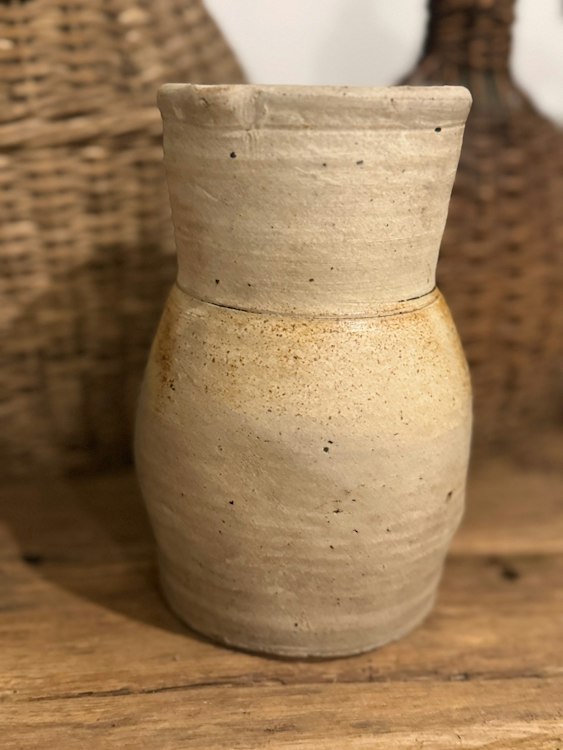
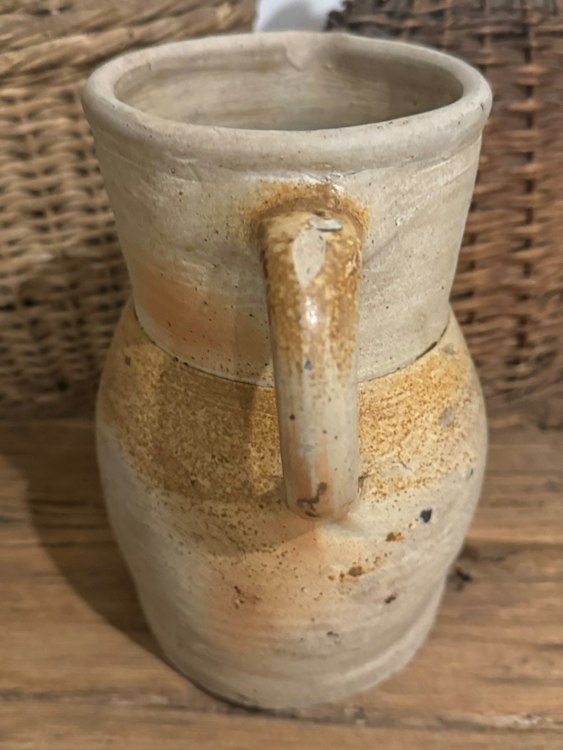
A French rustic wheel-thrown stoneware pitcher featuring a swelling baluster body, tapered neck, pinched pouring spout, and an applied strap handle. Executed in a dense buff stoneware clay body, the exterior displays characteristic wood-firing atmospheric effects, highlighted by warm ochre and toasted orange firing flashes across the shoulder and neck.
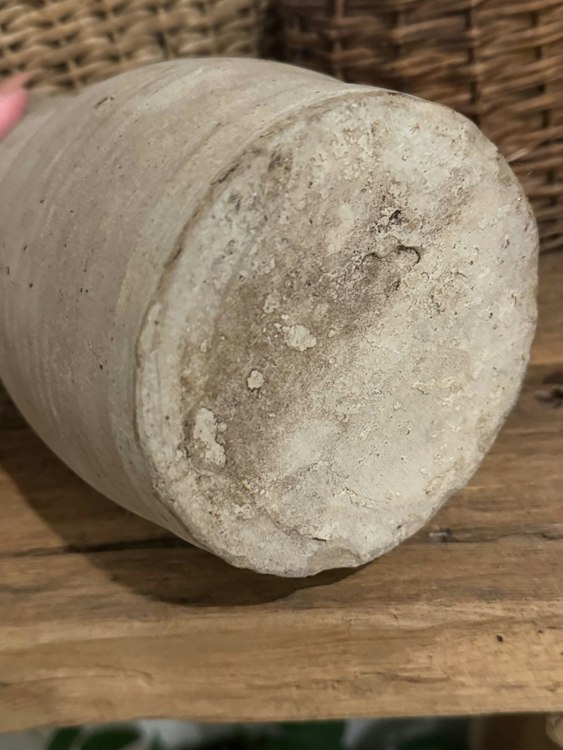
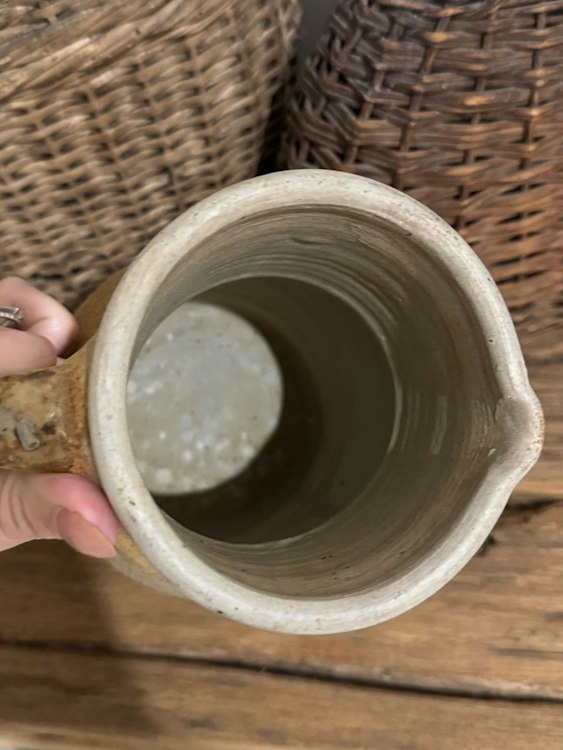
Exhibiting traditional country pottery craftsmanship, the vessel shows visible wheel-throwing ridges along both interior and exterior walls. The interior is lightly sealed with a smooth glaze finish to hold liquids, while the underside reveals an unglazed flat base with raw clay texture and wire-cut removal marks.
Historical & Style Details
- Period: Early 20th Century (1900s–1940s)
- Origin: France
- Material / Technique: Wheel-thrown stoneware, wood-fired
- Decorative Details: Pinched pouring spout, applied strap handle, natural atmospheric fire flashing
- Colour & Surface: Buff clay body with toasted orange and ochre firing flashes
- Markings: Unmarked base
- Condition: Good rustic condition with authentic firing grit, kiln imperfections, and light surface wear consistent with age and utilitarian use
History
Utilitarian stoneware pitchers of this type (traditionally known in France as pichets en grès) were essential domestic vessels throughout rural Europe during the 19th and early 20th centuries. Crafted by village potters for daily kitchen and cellar use, their distinctive surface variations resulted from the unpredictable interaction of wood ash and flame inside traditional kilns, ensuring every piece was visually unique.