
French Provincial Brown Glazed Footed Faisselle
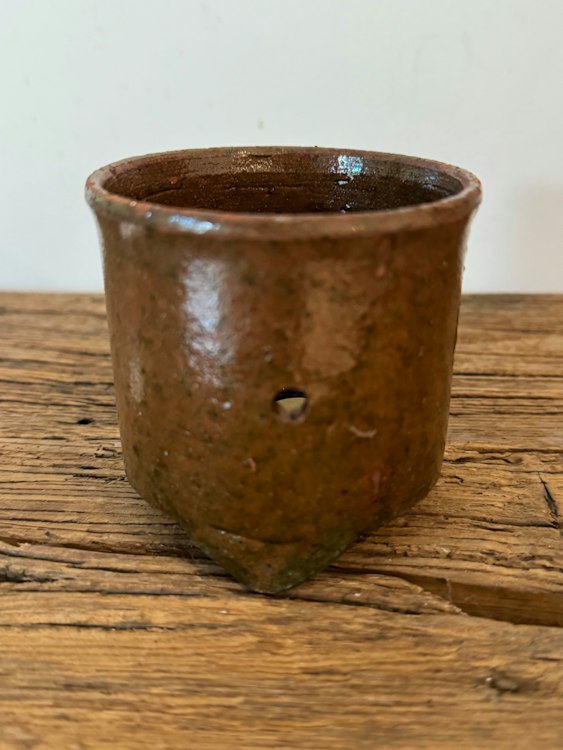
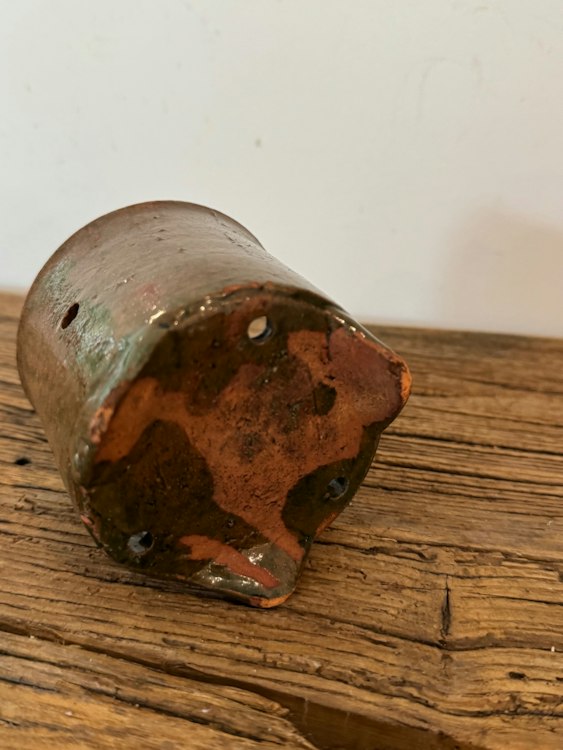
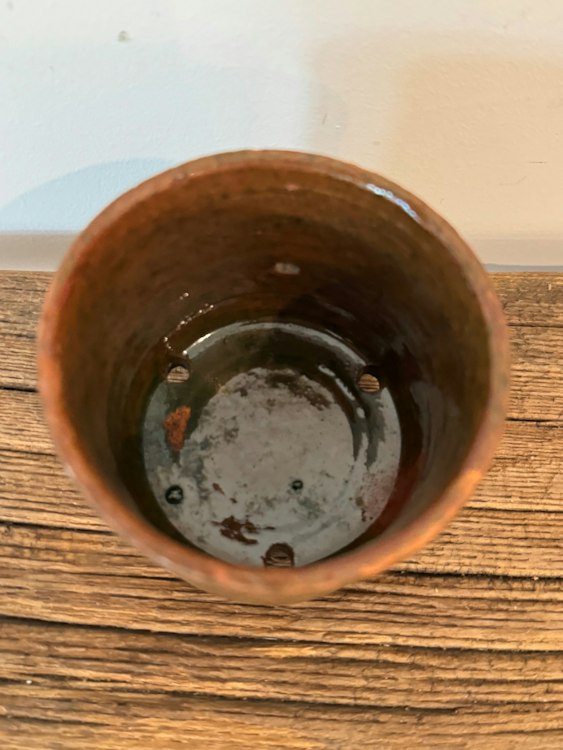
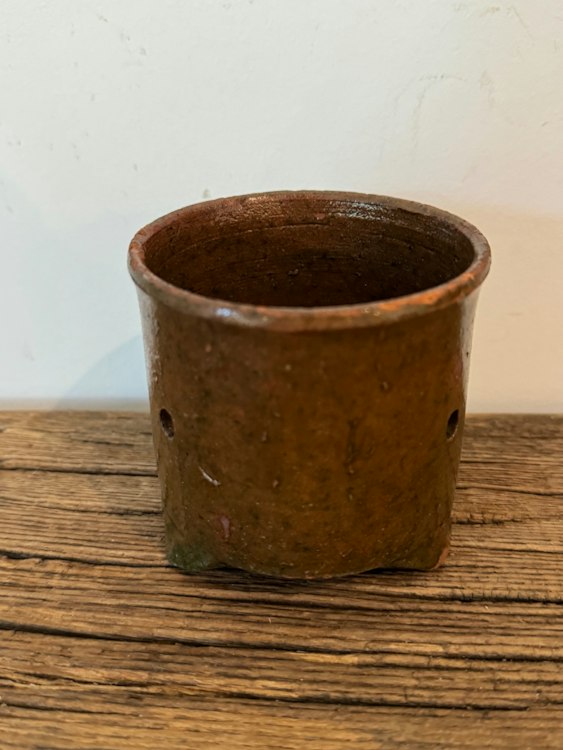
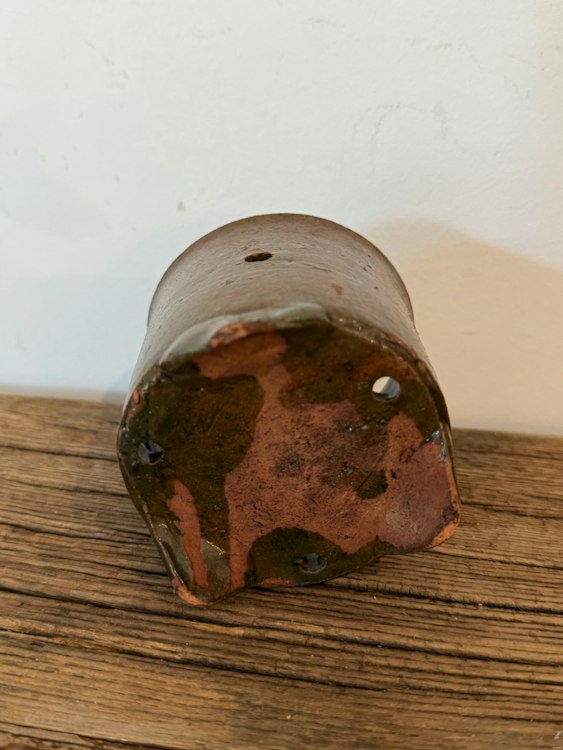
About product: A French provincial glazed earthenware tripod strainer pot, likely a cheese mold (faisselle), dating to the 19th century. Wheel-thrown from a coarse red terracotta clay, the cylindrical vessel features a slightly flared rim and is raised on three stubby tripod feet. The interior and upper exterior are finished with a rich, glossy caramel-brown to olive-green lead glaze, while the underside remains largely unglazed, showing the warm orange-red clay body and characteristic glaze drips. This utilitarian vessel is hand-pierced with multiple drainage holes around the lower body and base, designed to allow whey to drain during cheese-making or water to escape when used as a small berry strainer. Such rustic wares are highly collected for their honest, tactile quality and warm, earthy glazes characteristic of regional European folk pottery. Historical & Style Details - Subject / Function: Cheese mold (faisselle) or strainer pot - Period: 19th Century - Origin: France or Western Europe - Material / Technique: Wheel-thrown red earthenware (terracotta) with hand-pierced holes and lead glaze Dimensions: 3” opening × 3” H - Markings: None visible - Decorative Details: Flared rim, tripod feet, rich slip/lead glaze with natural variations and drips - Colour & Surface: Caramel brown, olive green, and unglazed terracotta red - Condition: Excellent antique condition with minor glaze flakes, firing imperfections, and wear consistent with age and utilitarian use History: Utilitarian earthenware vessels of this type were staple components of 19th-century European provincial kitchens, particularly in France, where they were used daily for draining curds in the production of fresh cheeses like fromage blanc. Made by local potters using regional clays and simple lead glazes, these pieces reflect the enduring traditions of European folk pottery, valued today for their rustic aesthetic and warm, organic textures.
$58.00+ shipping
A French provincial glazed earthenware tripod strainer pot, likely a cheese mold (faisselle), dating to the 19th century. Wheel-thrown from a coarse red terracotta clay, the cylindrical vessel features a slightly flared rim and is raised on three stubby tripod feet. The interior and upper exterior are finished with a rich, glossy caramel-brown to olive-green lead glaze, while the underside remains largely unglazed, showing the warm orange-red clay body and characteristic glaze drips.
This utilitarian vessel is hand-pierced with multiple drainage holes around the lower body and base, designed to allow whey to drain during cheese-making or water to escape when used as a small berry strainer. Such rustic wares are highly collected for their honest, tactile quality and warm, earthy glazes characteristic of regional European folk pottery.
Historical & Style Details
- Subject / Function: Cheese mold (faisselle) or strainer pot
- Period: 19th Century
- Origin: France or Western Europe
- Material / Technique: Wheel-thrown red earthenware (terracotta) with hand-pierced holes and lead glaze
Dimensions: 3” opening × 3” H
- Markings: None visible
- Decorative Details: Flared rim, tripod feet, rich slip/lead glaze with natural variations and drips
- Colour & Surface: Caramel brown, olive green, and unglazed terracotta red
- Condition: Excellent antique condition with minor glaze flakes, firing imperfections, and wear consistent with age and utilitarian use
History
Utilitarian earthenware vessels of this type were staple components of 19th-century European provincial kitchens, particularly in France, where they were used daily for draining curds in the production of fresh cheeses like fromage blanc. Made by local potters using regional clays and simple lead glazes, these pieces reflect the enduring traditions of European folk pottery, valued today for their rustic aesthetic and warm, organic textures.