
French Provençal glazed earthenware cheese mold faisselle, Saint-Paul-lès-Durance mark
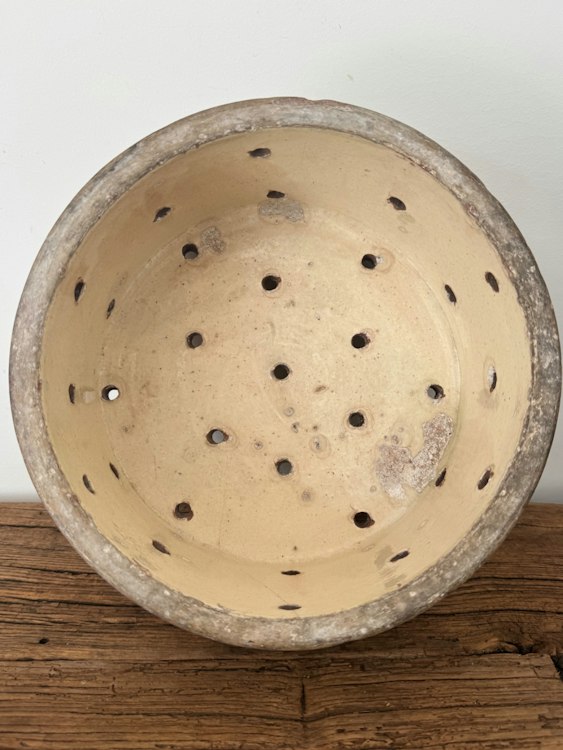
About product: A French Provençal pierced glazed earthenware cheese mold (faisselle), featuring a cylindrical wheel-thrown terracotta body perforated with multiple drainage holes across the base and side walls. The interior is finished in a smooth cream-colored glaze, while the exterior displays natural terracotta tones with white mineral encrustation and aged patina. The underside bears an impressed oval maker's mark reading "ST PAUL LES DURANCE". Historically used in rural dairies across southern France, these faisselles allowed whey to drain from fresh curds through hand-punched perforations during the traditional cheesemaking process. Historical & Style Details - Subject / Source: French provincial culinary earthenware / cheese strainer (faisselle) - Period: Early 20th Century - Origin: France (Saint-Paul-lès-Durance, Provence) - Material / Technique: wheel-thrown terracotta earthenware with interior glaze and pierced drainage holes - Markings: impressed oval mark on base reads "ST PAUL LES DURANCE" - Decorative Details: cylindrical form with straight sides, cream-glazed interior, hand-perforated wall and bottom drainage holes - Colour & Surface: terracotta exterior with white mineral deposits and weathering; pale cream-glazed interior - Condition: minor rim wear, light chipping, and surface mineral encrustation consistent with age and culinary utility History: Traditional Provençal earthenware, or terre cuite vernissée, has a rich history centered around regional pottery hubs in southern France along the Durance river valley. Utilitarian vessels like faisselles were essential dairy tools produced in local potteries throughout the 19th and early 20th centuries, prized today by collectors of French country antiques for their authentic rustic aesthetic and historical utility.
$189.00+ shipping
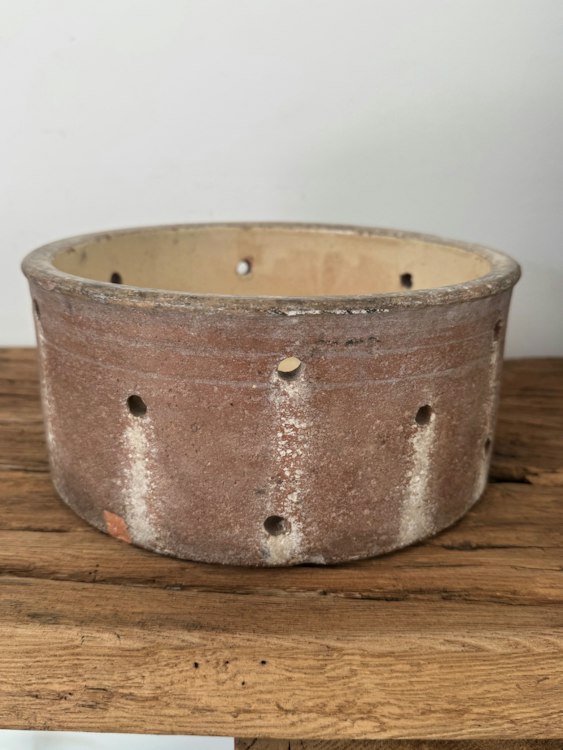
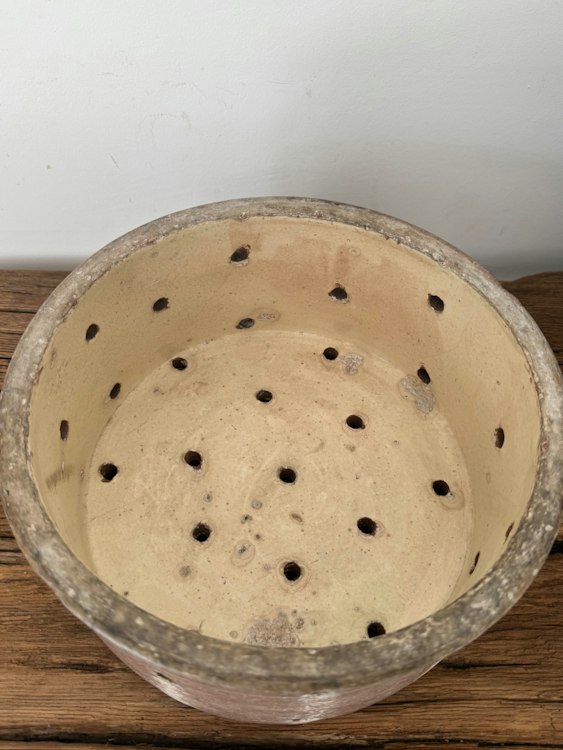
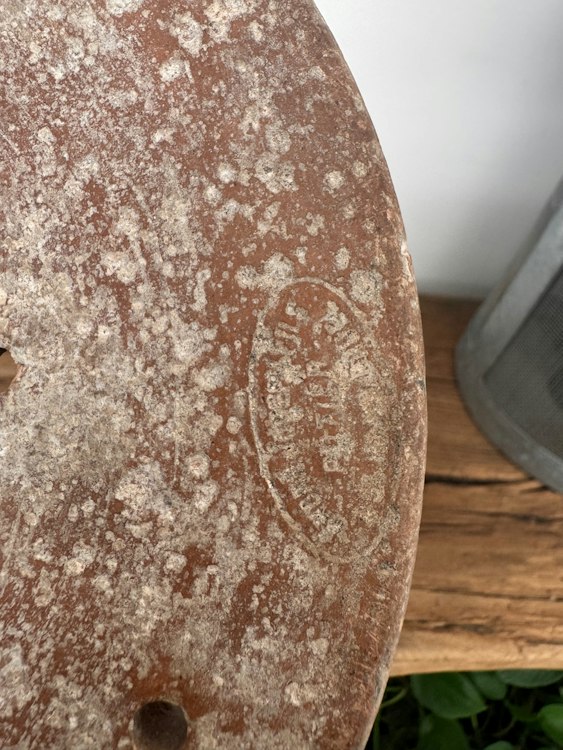
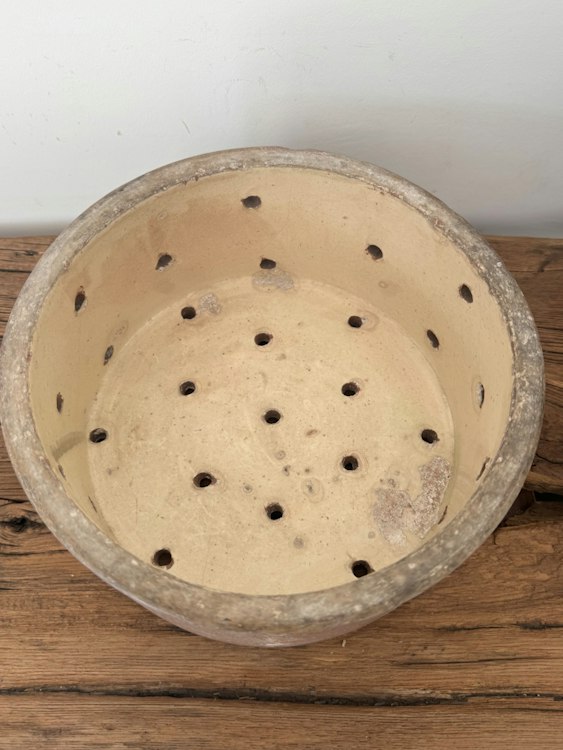
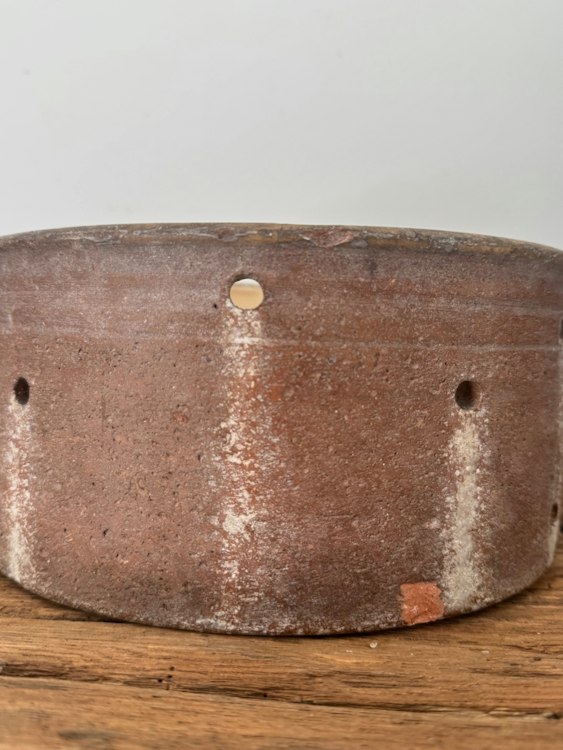
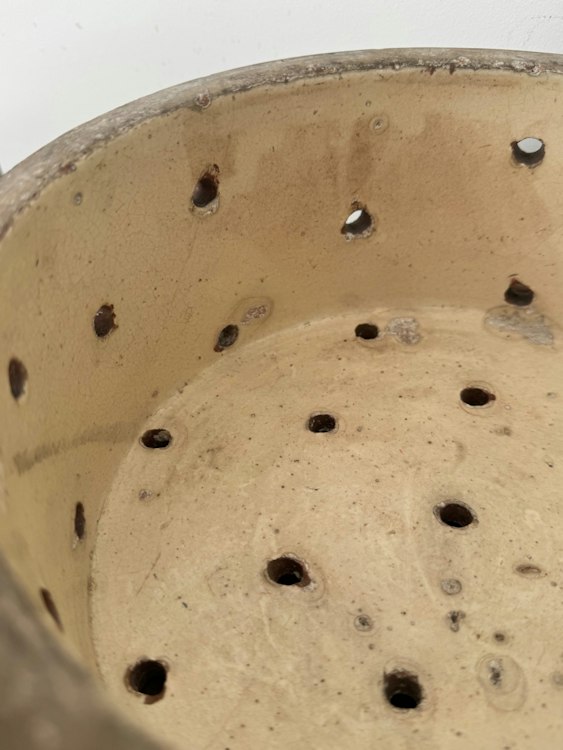
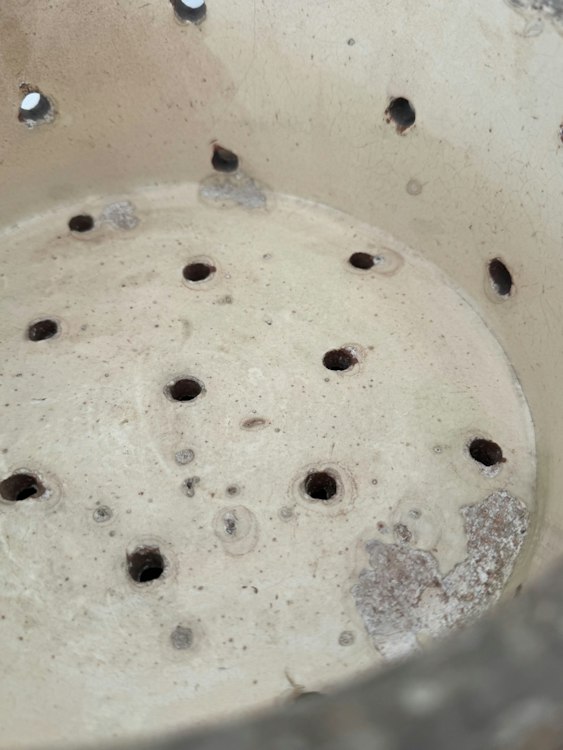
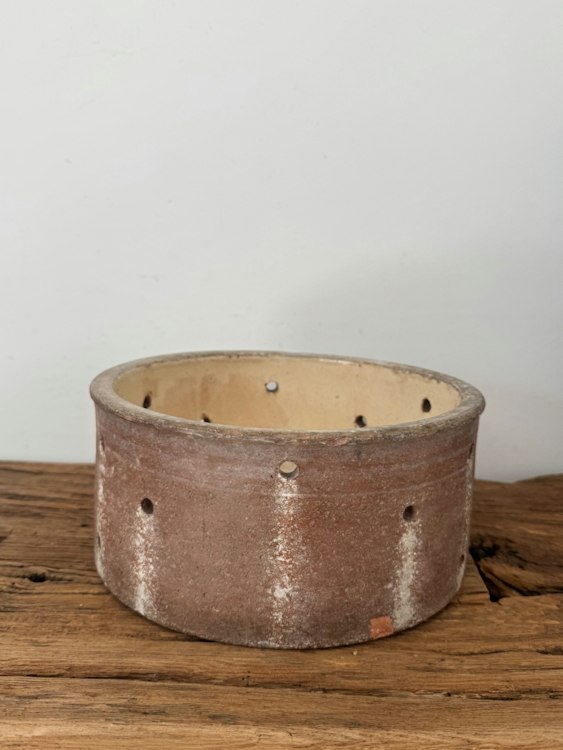
A French Provençal pierced glazed earthenware cheese mold (faisselle), featuring a cylindrical wheel-thrown terracotta body perforated with multiple drainage holes across the base and side walls. The interior is finished in a smooth cream-colored glaze, while the exterior displays natural terracotta tones with white mineral encrustation and aged patina. The underside bears an impressed oval maker's mark reading "ST PAUL LES DURANCE".
Historically used in rural dairies across southern France, these faisselles allowed whey to drain from fresh curds through hand-punched perforations during the traditional cheesemaking process.
Historical & Style Details
- Subject / Source: French provincial culinary earthenware / cheese strainer (faisselle)
- Period: Early 20th Century
- Origin: France (Saint-Paul-lès-Durance, Provence)
- Material / Technique: wheel-thrown terracotta earthenware with interior glaze and pierced drainage holes
- Markings: impressed oval mark on base reads "ST PAUL LES DURANCE"
- Decorative Details: cylindrical form with straight sides, cream-glazed interior, hand-perforated wall and bottom drainage holes
- Colour & Surface: terracotta exterior with white mineral deposits and weathering; pale cream-glazed interior
- Condition: minor rim wear, light chipping, and surface mineral encrustation consistent with age and culinary utility
History
Traditional Provençal earthenware, or terre cuite vernissée, has a rich history centered around regional pottery hubs in southern France along the Durance river valley. Utilitarian vessels like faisselles were essential dairy tools produced in local potteries throughout the 19th and early 20th centuries, prized today by collectors of French country antiques for their authentic rustic aesthetic and historical utility.