
French Faience Transfer-Printed soup plate , Aux Lions de Faïence
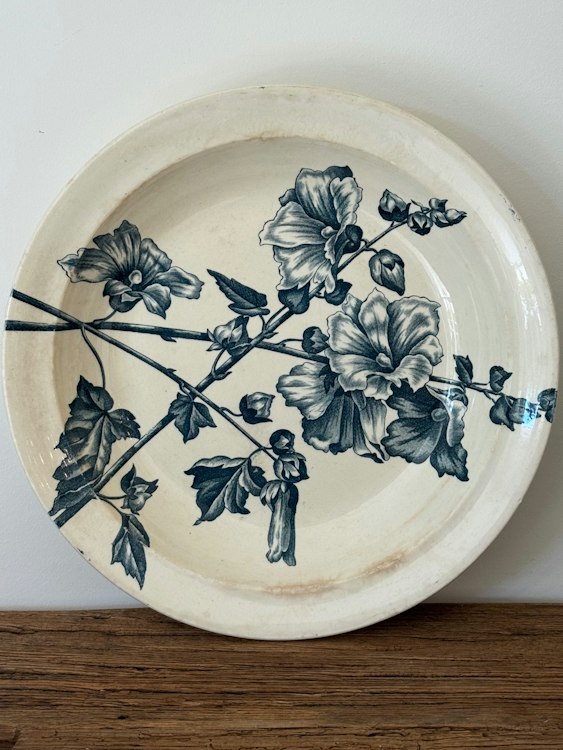
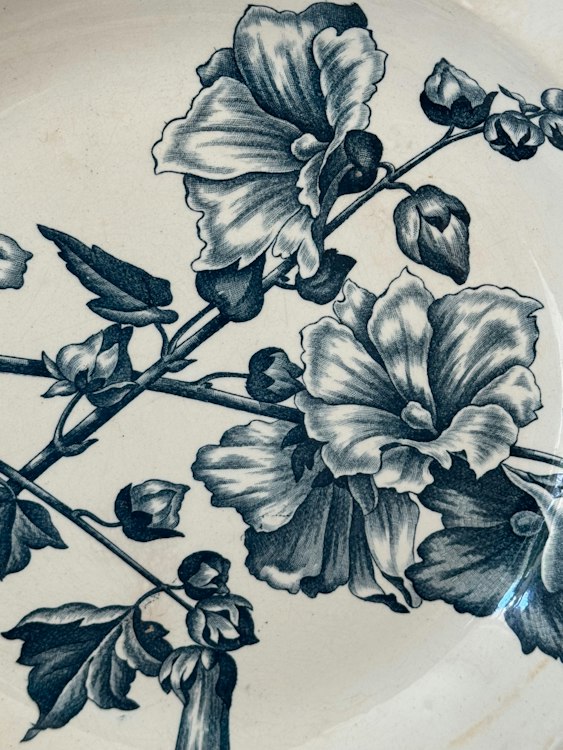
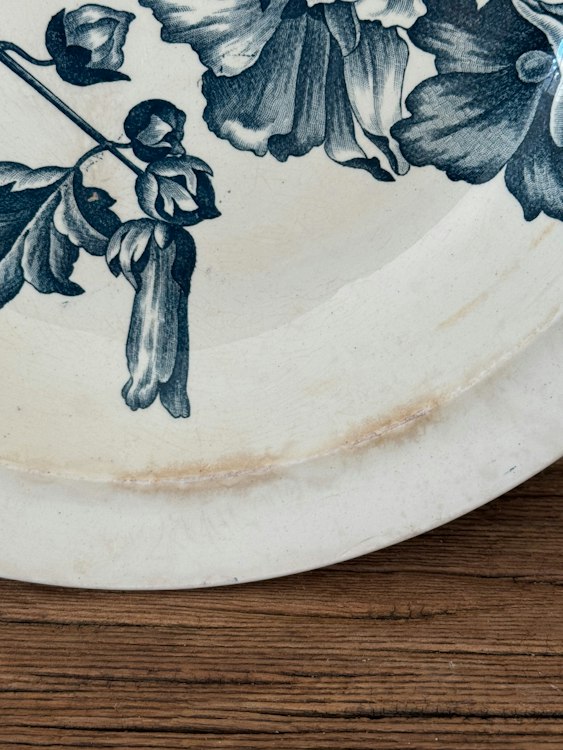
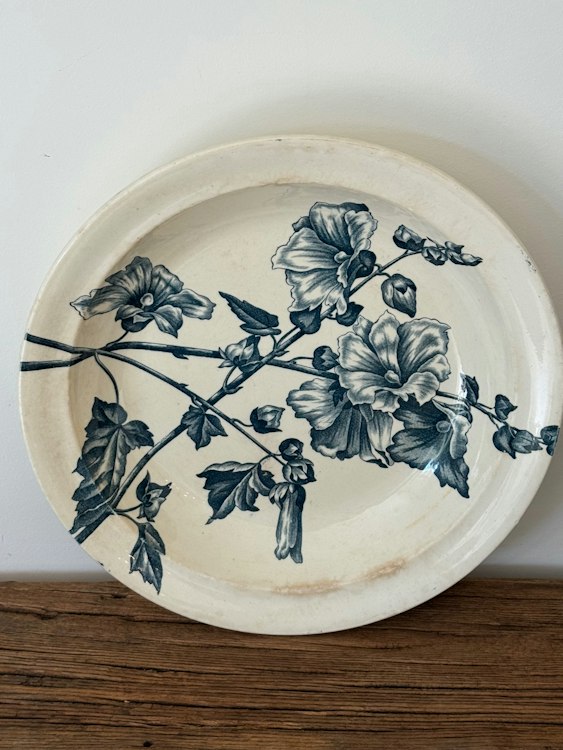
About product: A late 19th-century French faience fine deep plate, decorated with a rich teal-blue monochrome transfer-printed botanical study of flowering hollyhocks. The asymmetrical design features leafy branching stems laden with open blossoms and buds extending across the central well and wide rim, reflecting the influence of late Victorian Japonisme and naturalism. Condition Report & Provenance - Subject / Source: Hollyhock (Rose trémière) botanical motif - Retailer / Dealer label: Stamped in blue underglaze on reverse: "AUX LIONS DE FAIENCE / RUE DE RIVOLI 90 / PARIS" - Period: Victorian (1837–1901) - Origin: France - Material / Technique: Earthenware (faience fine) with underglaze transfer-printed decoration - Colour & Surface: Cream ground with dark teal-blue print, clear glaze crazing, and localized discolouration - Condition: Hairline crack visible at the left rim; brown age staining and discolouration along the lower inner well margin; overall fine glaze crazing History: Located at 90 Rue de Rivoli in Paris, Aux Lions de Faïence was a prominent 19th-century Parisian emporium specializing in fine ceramics, crystal, and luxury tableware. The shop retailed custom-commissioned tablewares produced by major French manufactories such as Choisy-le-Roi, Creil-Montereau, and Keller & Guérin. Naturalistic, asymmetrical botanical patterns became widely popular during the late 19th century under the aesthetic influence of Japanese art.
$122.00+ shipping
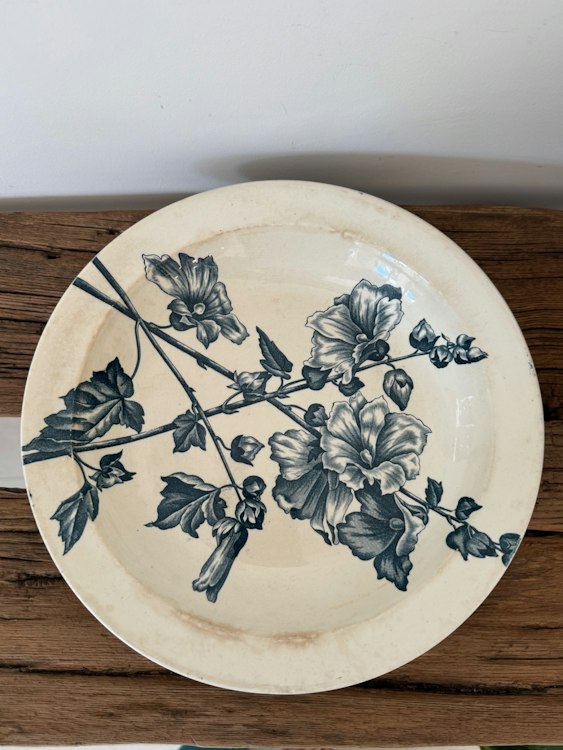
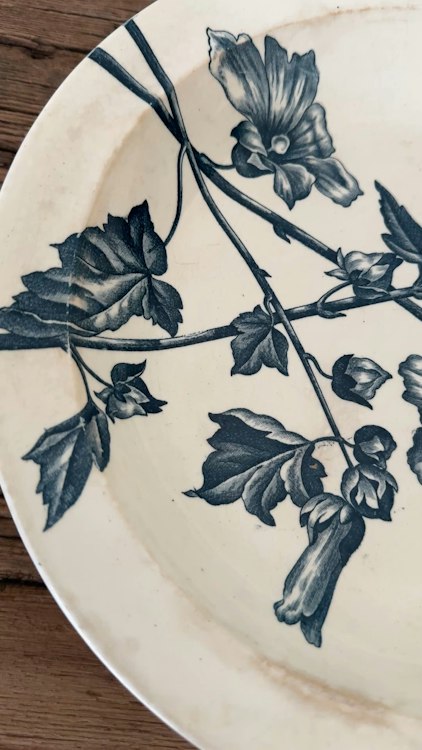
A late 19th-century French faience fine deep plate, decorated with a rich teal-blue monochrome transfer-printed botanical study of flowering hollyhocks. The asymmetrical design features leafy branching stems laden with open blossoms and buds extending across the central well and wide rim, reflecting the influence of late Victorian Japonisme and naturalism.
Condition Report & Provenance
- Subject / Source: Hollyhock (Rose trémière) botanical motif
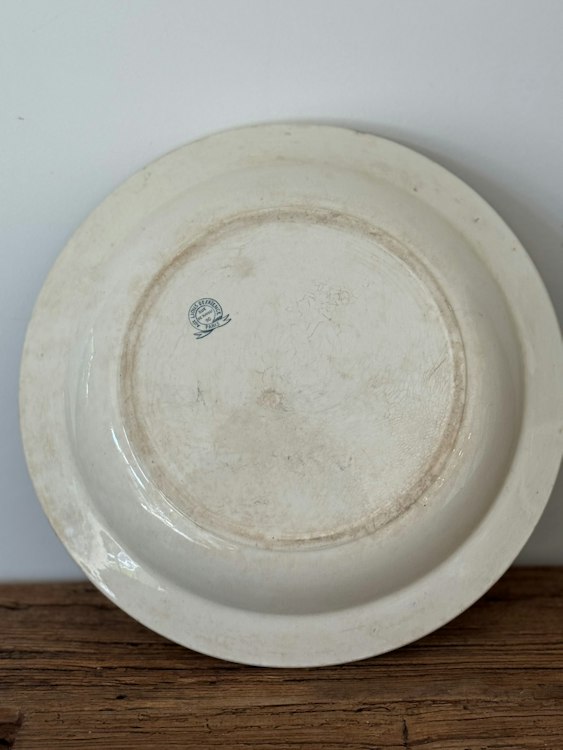
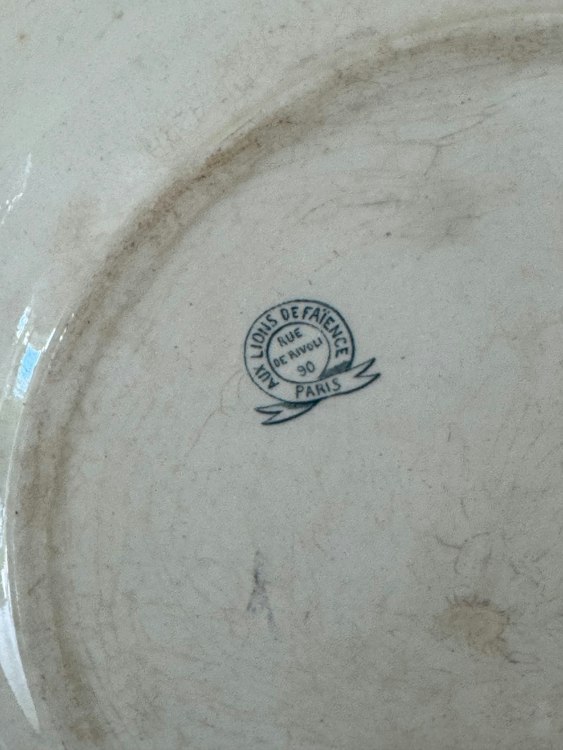
- Retailer / Dealer label: Stamped in blue underglaze on reverse: "AUX LIONS DE FAIENCE / RUE DE RIVOLI 90 / PARIS"
- Period: Victorian (1837–1901)
- Origin: France
- Material / Technique: Earthenware (faience fine) with underglaze transfer-printed decoration
- Colour & Surface: Cream ground with dark teal-blue print, clear glaze crazing, and localized discolouration
- Condition: Hairline crack visible at the left rim; brown age staining and discolouration along the lower inner well margin; overall fine glaze crazing
History
Located at 90 Rue de Rivoli in Paris, Aux Lions de Faïence was a prominent 19th-century Parisian emporium specializing in fine ceramics, crystal, and luxury tableware. The shop retailed custom-commissioned tablewares produced by major French manufactories such as Choisy-le-Roi, Creil-Montereau, and Keller & Guérin. Naturalistic, asymmetrical botanical patterns became widely popular during the late 19th century under the aesthetic influence of Japanese art.