
French 19th-Century Devotional Frame of Blessed Thomas de Biville with Goldwork Border
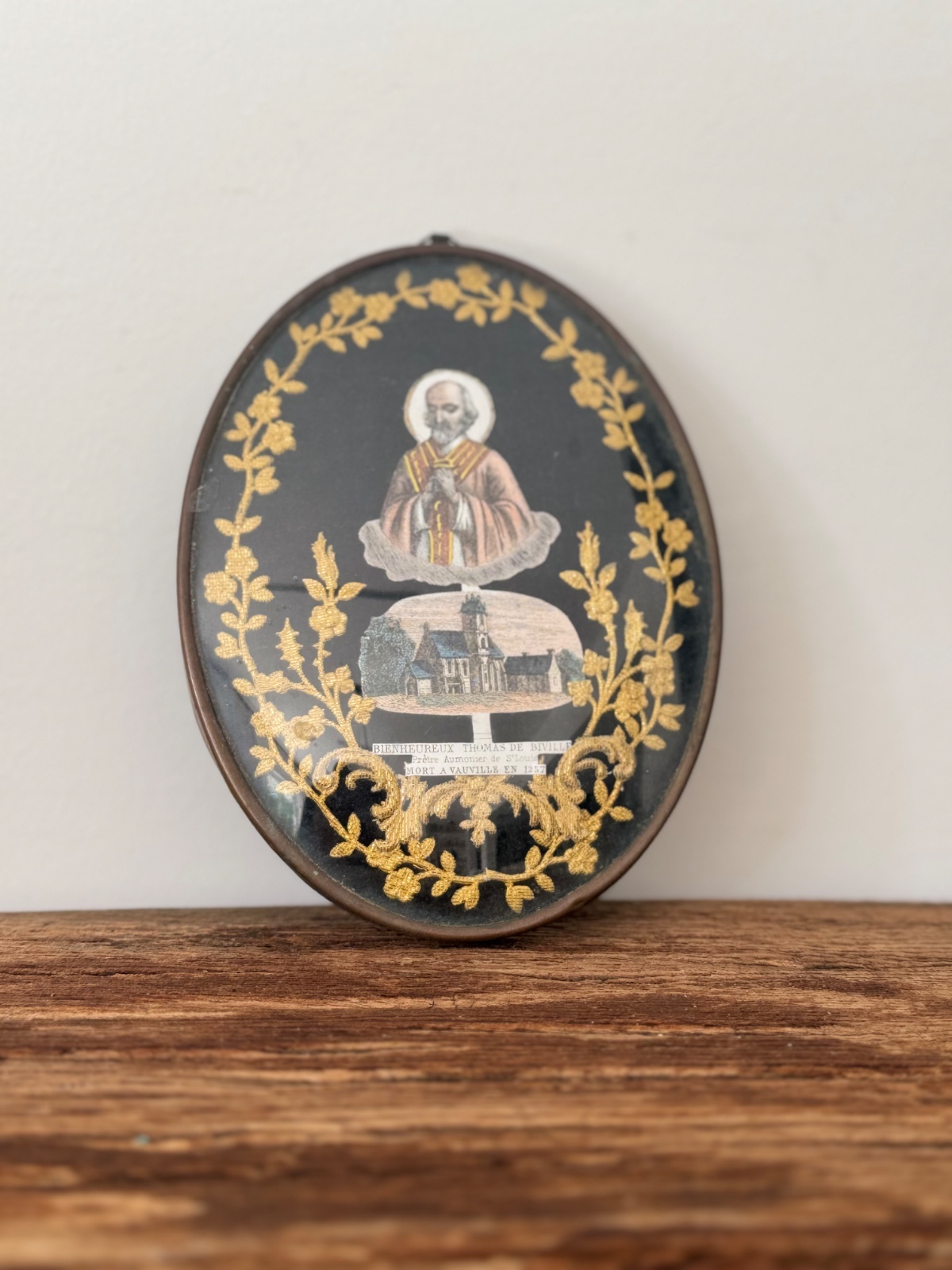
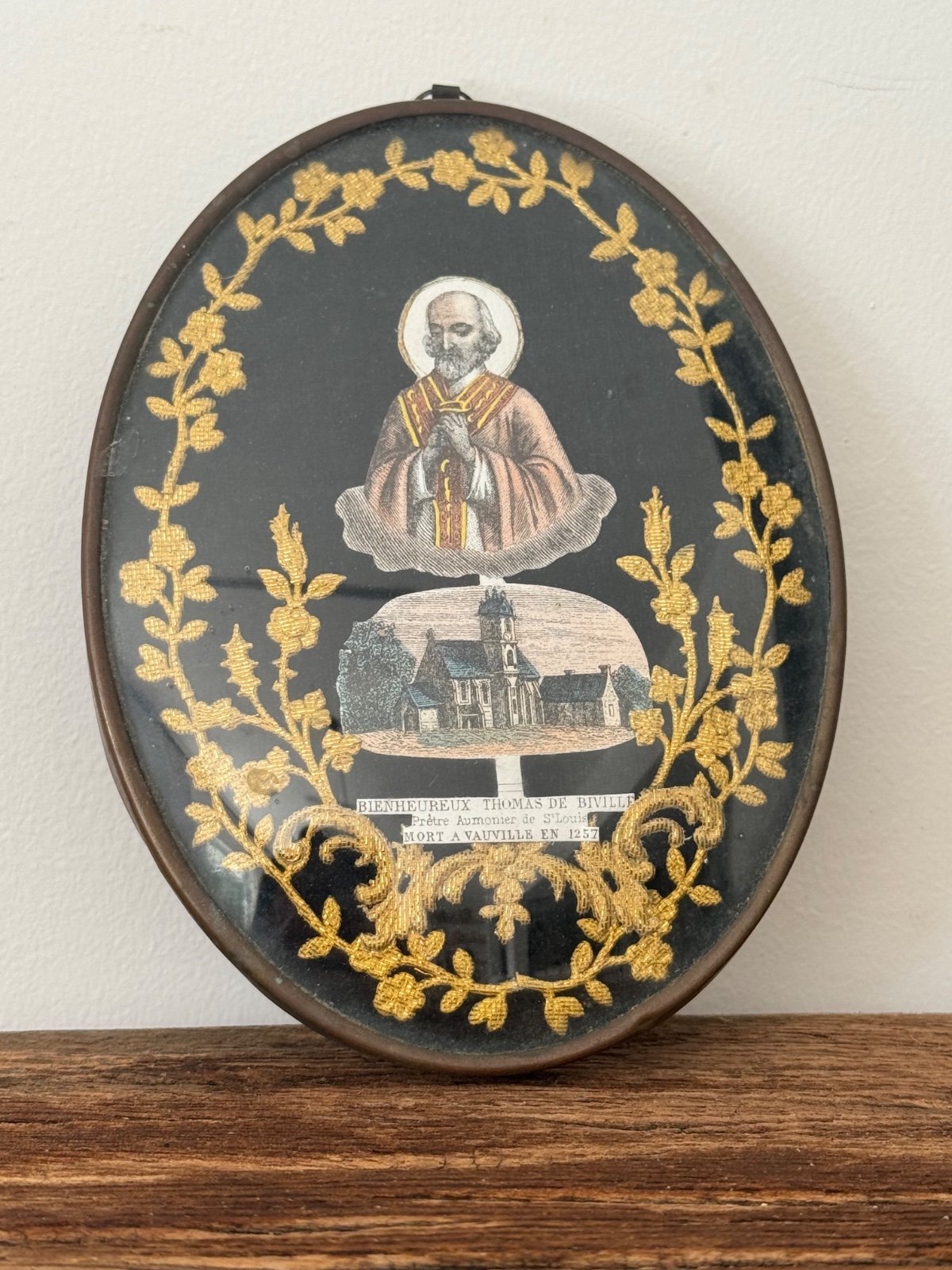
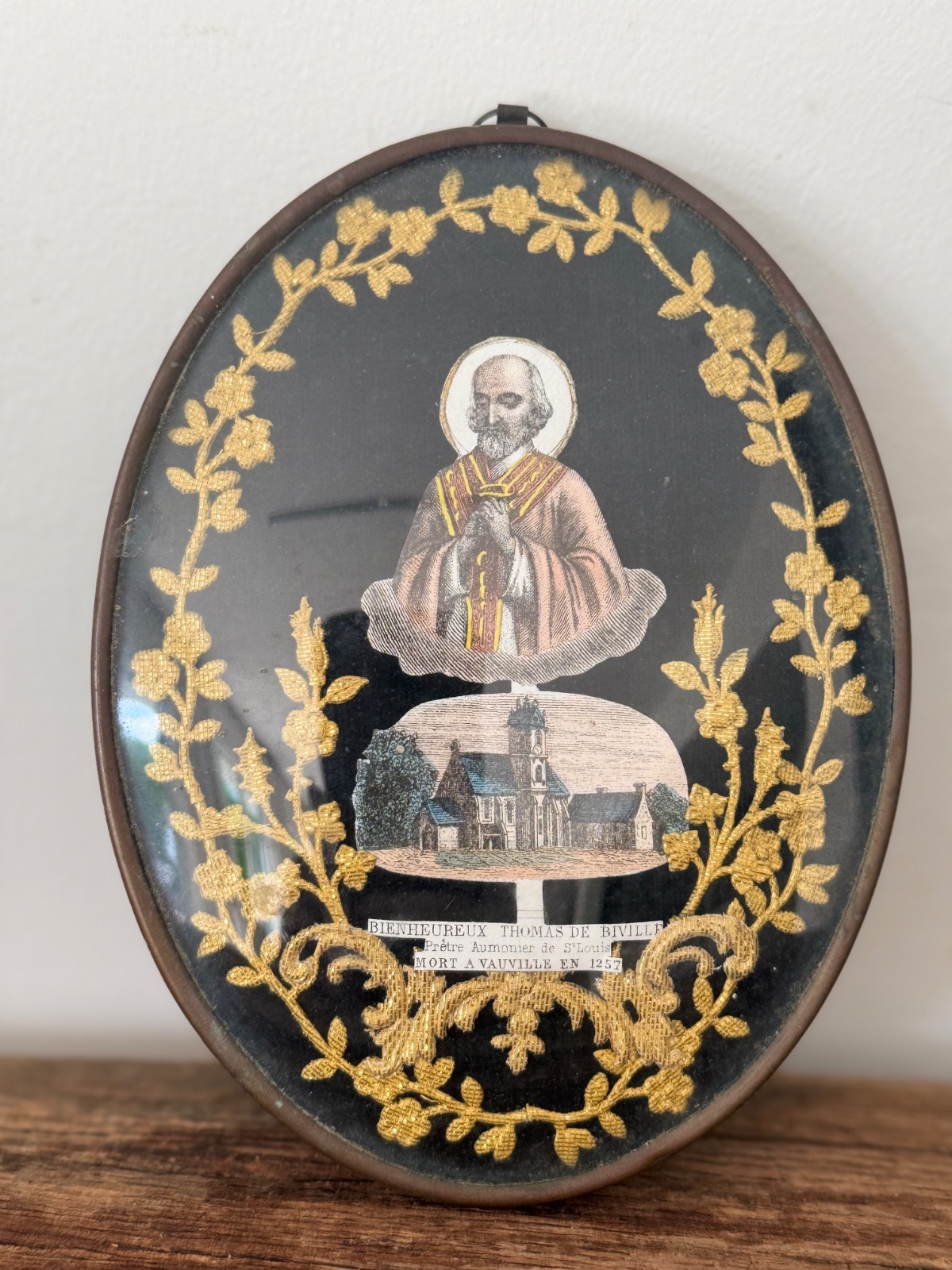
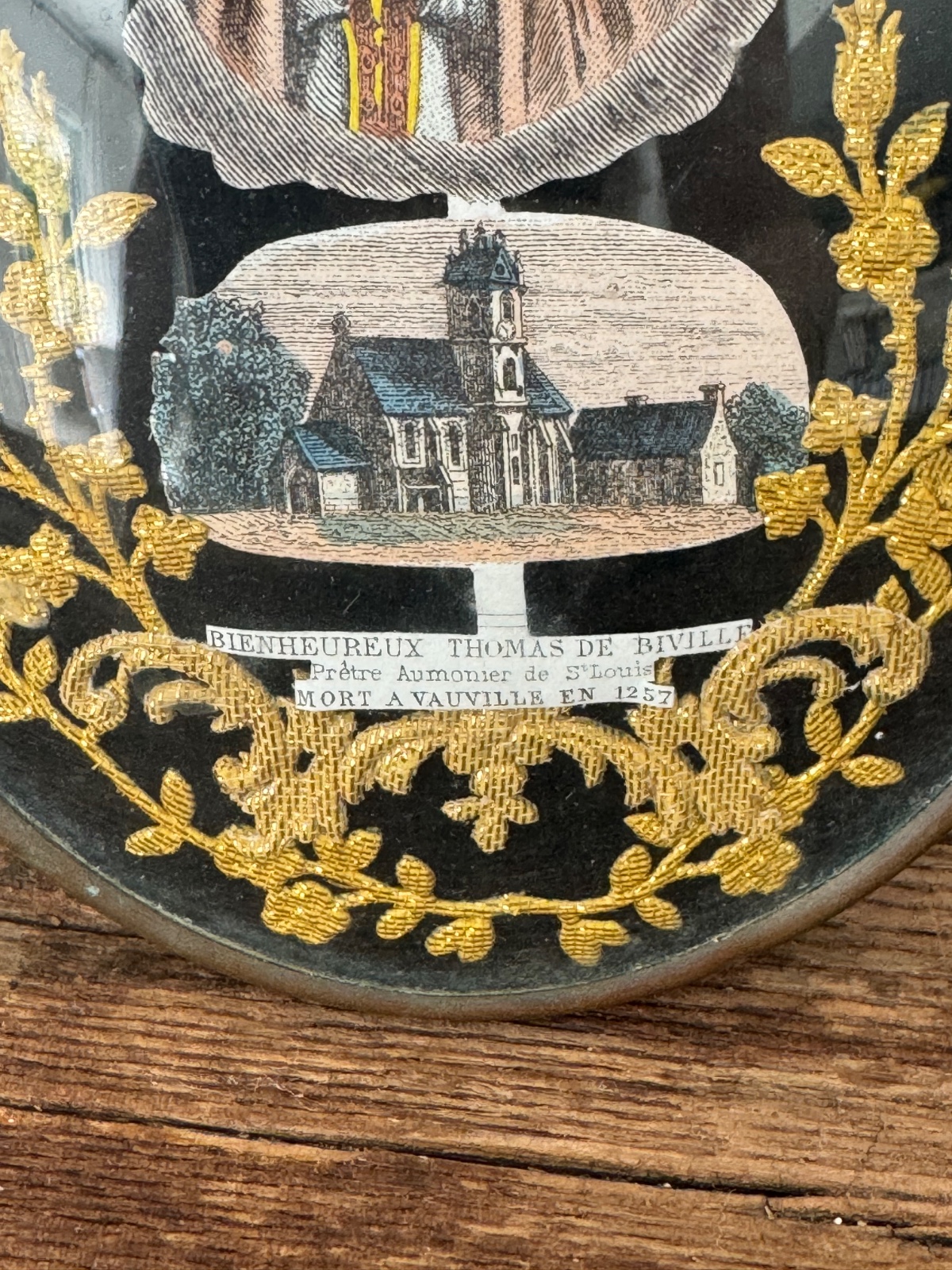
About product: A 19th-century French oval devotional frame (cadre de dévotion) depicting Blessed Thomas of Biville (Thomas Hélye, c. 1187–1257), chaplain to Saint Louis. The composition features two hand-coloured engraved cut-outs—a bust portrait of the saint in prayer with a radiant halo, and an architectural view of the church at Vauville—set against a black ground and framed by an intricate garland of raised gold metallic thread (cannetille) embroidery. Blessed Thomas Hélye of Biville was a 13th-century Norman priest, itinerant preacher, and almoner to King Louis IX, renowned in Normandy for his austerity and miracles. His cult was formally confirmed by Pope Pius IX in 1859, inspiring a revival of devotional artworks and souvenirs produced for pilgrims in the Cotentin region. Historical & Style Details - Subject / Sitter: Blessed Thomas of Biville (Thomas Hélye, c. 1187–1257) - Period: 19th Century (circa 1860–1880) - Origin: France (Normandy) - Material / Technique: Hand-coloured steel engravings, gold bullion thread embroidery, black ground, brass bezel frame, glass - Markings: Printed captions reading "BIENHEUREUX THOMAS DE BIVILLE", "Prêtre Aumonier de S.t Louis", "MORT A VAUVILLE EN 1257"; ink-numbered paper collection tag on reverse reading "N° 47" - Decorative Details: Leaf and floral wreath executed in raised goldwork embroidery surrounding central portrait and architectural vignette - Condition: Light patination to outer brass rim, minor aging and subtle toning to printed paper elements; reverse backing intact with top suspension ring History: Devotional frames incorporating goldwork thread, paperolles, and hand-coloured engravings were popular religious objects in 19th-century France, often crafted by monastic orders or specialized workshops near pilgrimage sites. Following the official papal recognition of Thomas Hélye's cult in 1859, high-quality devotional items such as this frame were created for pilgrims visiting Biville and Vauville in the Manche department of Normandy.
$178.00+ shipping
A 19th-century French oval devotional frame (cadre de dévotion) depicting Blessed Thomas of Biville (Thomas Hélye, c. 1187–1257), chaplain to Saint Louis. The composition features two hand-coloured engraved cut-outs—a bust portrait of the saint in prayer with a radiant halo, and an architectural view of the church at Vauville—set against a black ground and framed by an intricate garland of raised gold metallic thread (cannetille) embroidery.
Blessed Thomas Hélye of Biville was a 13th-century Norman priest, itinerant preacher, and almoner to King Louis IX, renowned in Normandy for his austerity and miracles. His cult was formally confirmed by Pope Pius IX in 1859, inspiring a revival of devotional artworks and souvenirs produced for pilgrims in the Cotentin region.
Historical & Style Details
- Subject / Sitter: Blessed Thomas of Biville (Thomas Hélye, c. 1187–1257)
- Period: 19th Century (circa 1860–1880)
- Origin: France (Normandy)
- Material / Technique: Hand-coloured steel engravings, gold bullion thread embroidery, black ground, brass bezel frame, glass
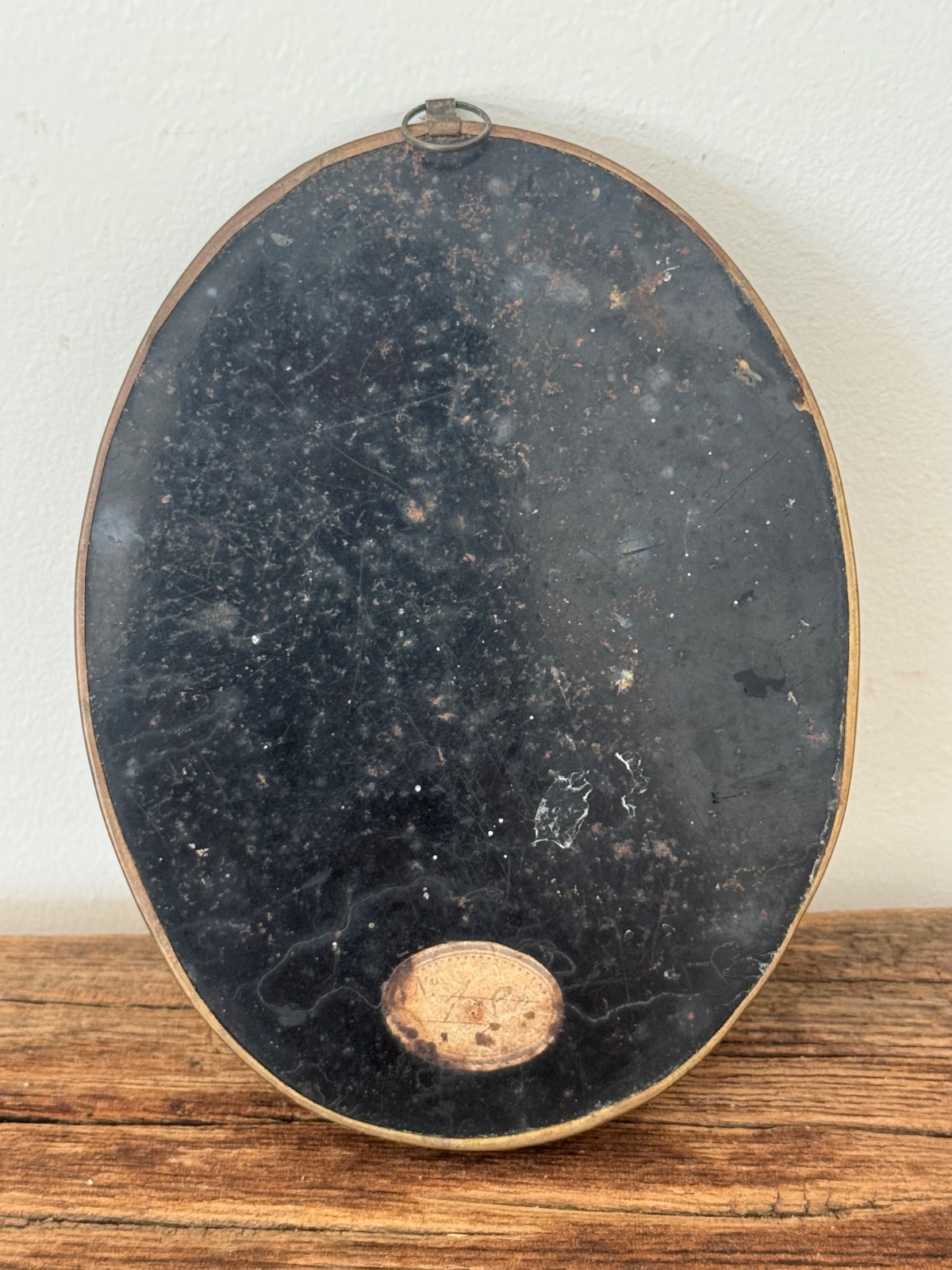
- Markings: Printed captions reading "BIENHEUREUX THOMAS DE BIVILLE", "Prêtre Aumonier de S.t Louis", "MORT A VAUVILLE EN 1257"; ink-numbered paper collection tag on reverse reading "N° 47"
- Decorative Details: Leaf and floral wreath executed in raised goldwork embroidery surrounding central portrait and architectural vignette
- Condition: Light patination to outer brass rim, minor aging and subtle toning to printed paper elements; reverse backing intact with top suspension ring
History
Devotional frames incorporating goldwork thread, paperolles, and hand-coloured engravings were popular religious objects in 19th-century France, often crafted by monastic orders or specialized workshops near pilgrimage sites. Following the official papal recognition of Thomas Hélye's cult in 1859, high-quality devotional items such as this frame were created for pilgrims visiting Biville and Vauville in the Manche department of Normandy.