
European tinned sheet metal two-part Easter lamb mold, numbered 380
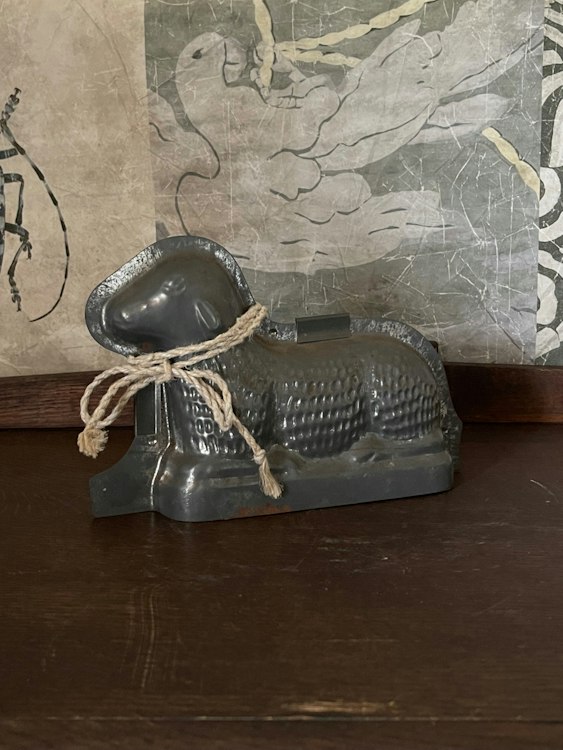
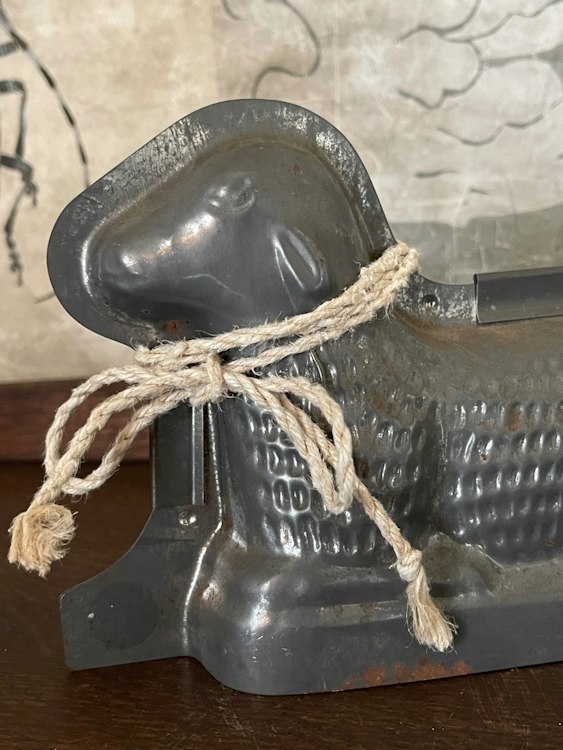
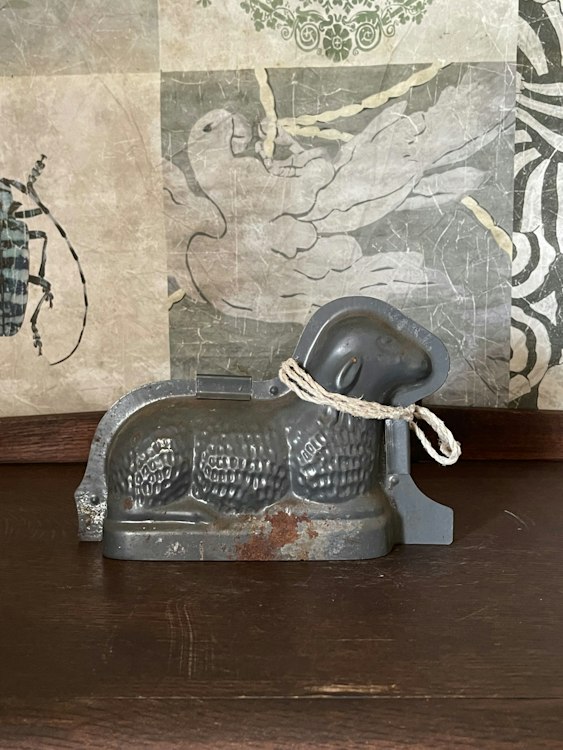
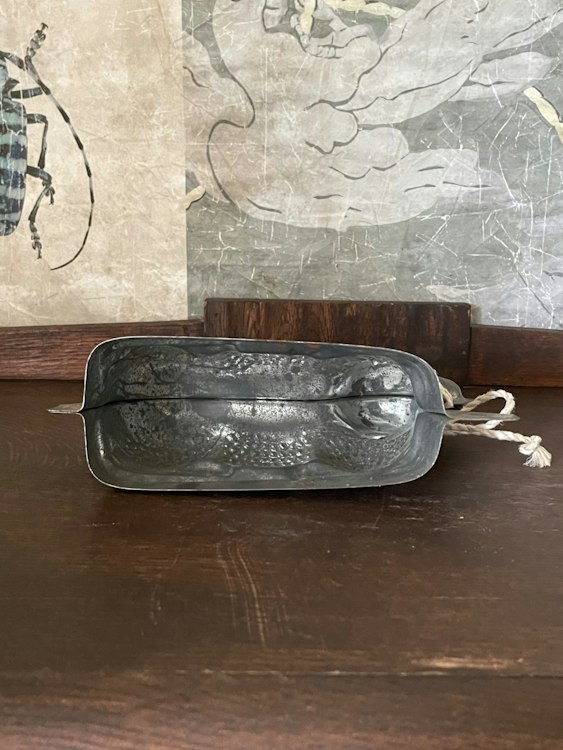
About product: A vintage European two-part chocolate or baking mold in the form of a reclining Easter lamb (Osterlamm). Crafted from stamped tinned sheet metal (tinplate), the mold features a detailed embossed fleece texture, a defined face, and a recumbent posture. The two halves are designed to join together, secured by a sliding metal clip along the top spine and historically held at the neck (here secured with a decorative natural twine bow). Product Specifications - Subject / Sitter / Source: Reclining Easter Lamb (Osterlamm) - Period: Early 20th Century - Origin: European, likely Germany or France - Material / Technique: Stamped tinned sheet metal (tinplate) - Markings: Embossed vertical number "380" on the front shoulder of the lamb - Decorative Details: Embossed stylized fleece texture, two-part hollow construction, sliding metal clip on the upper spine - Colour & Surface: Dull grey metallic finish with areas of oxidation, surface wear, and localized rust patination - Condition: Moderate oxidation and rust spots consistent with age and use, particularly along the lower edges, seams, and interior; one original metal clip remains, neck secured with replacement twine History: Two-part tinned sheet metal molds of this type were widely produced in Germany and France during the late 19th and early 20th centuries, with Dresden-based Anton Reiche being one of the most prominent manufacturers. These molds were traditionally used by confectioners and home bakers to create decorative chocolate, marzipan, or cake lambs for Easter celebrations. Today, they are highly collectible as rustic kitchen decor and examples of early industrial food-molding technology.
$42.00· Free shipping
A vintage European two-part chocolate or baking mold in the form of a reclining Easter lamb (Osterlamm). Crafted from stamped tinned sheet metal (tinplate), the mold features a detailed embossed fleece texture, a defined face, and a recumbent posture. The two halves are designed to join together, secured by a sliding metal clip along the top spine and historically held at the neck (here secured with a decorative natural twine bow).
Product Specifications
- Subject / Sitter / Source: Reclining Easter Lamb (Osterlamm)
- Period: Early 20th Century
- Origin: European, likely Germany or France
- Material / Technique: Stamped tinned sheet metal (tinplate)
- Markings: Embossed vertical number "380" on the front shoulder of the lamb
- Decorative Details: Embossed stylized fleece texture, two-part hollow construction, sliding metal clip on the upper spine
- Colour & Surface: Dull grey metallic finish with areas of oxidation, surface wear, and localized rust patination
- Condition: Moderate oxidation and rust spots consistent with age and use, particularly along the lower edges, seams, and interior; one original metal clip remains, neck secured with replacement twine
History
Two-part tinned sheet metal molds of this type were widely produced in Germany and France during the late 19th and early 20th centuries, with Dresden-based Anton Reiche being one of the most prominent manufacturers. These molds were traditionally used by confectioners and home bakers to create decorative chocolate, marzipan, or cake lambs for Easter celebrations. Today, they are highly collectible as rustic kitchen decor and examples of early industrial food-molding technology.