
Early 20th Century Lithographed Tin Lunch Box with Double Handles
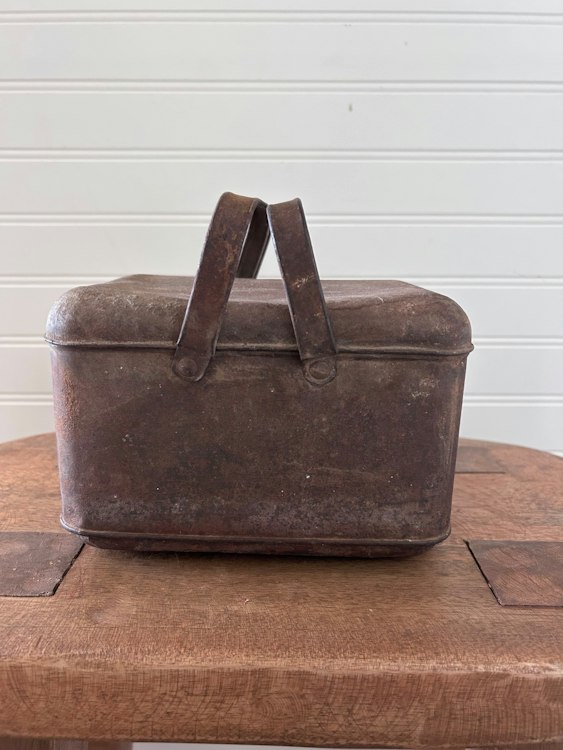
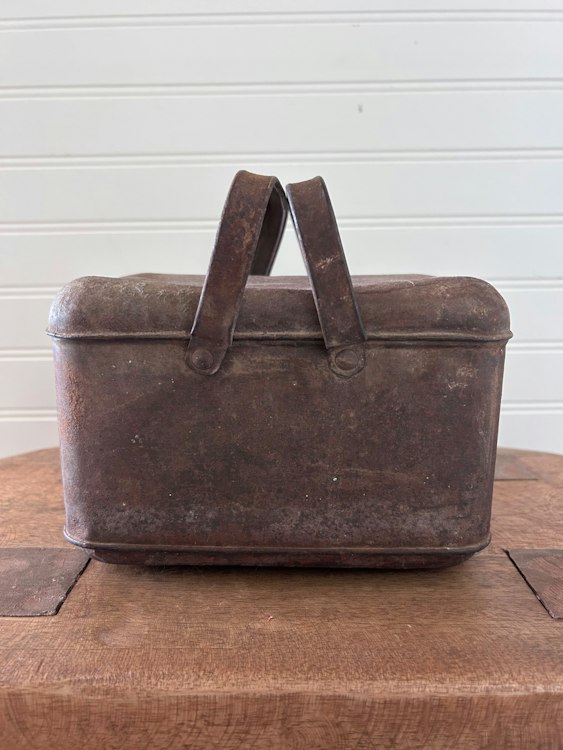
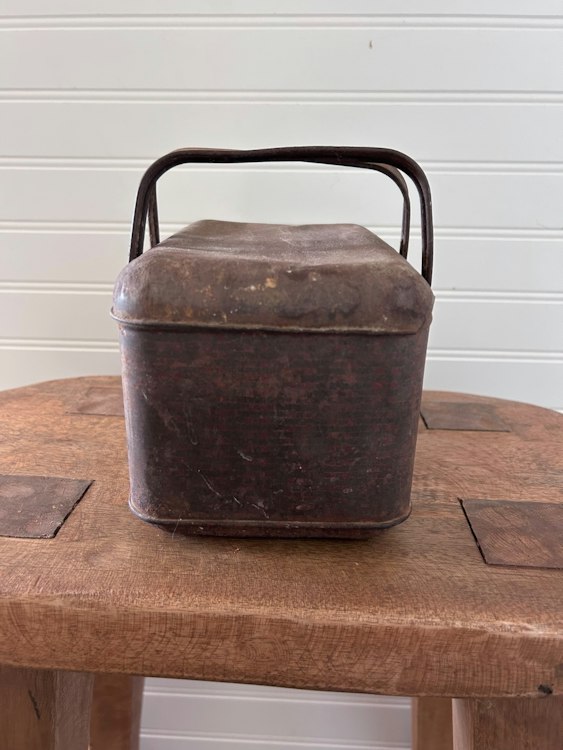
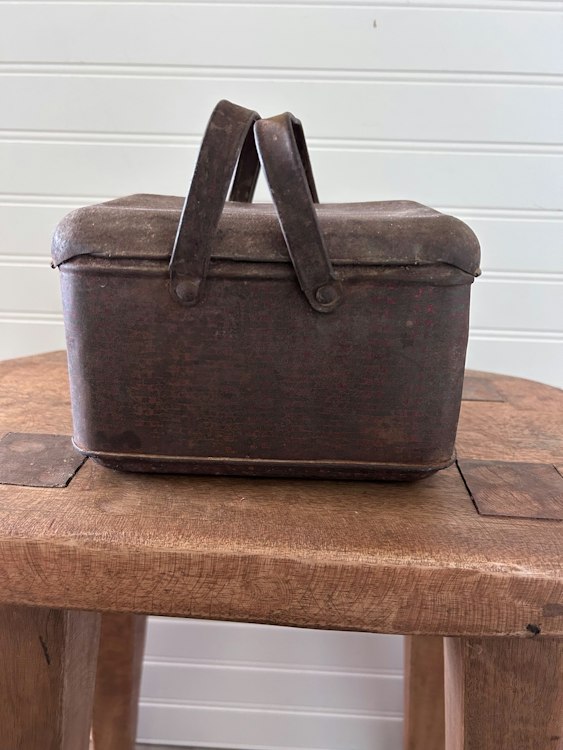
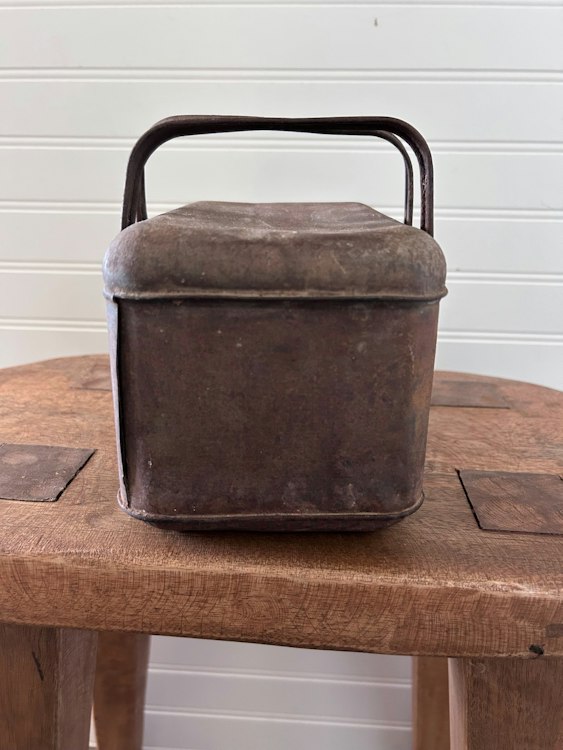
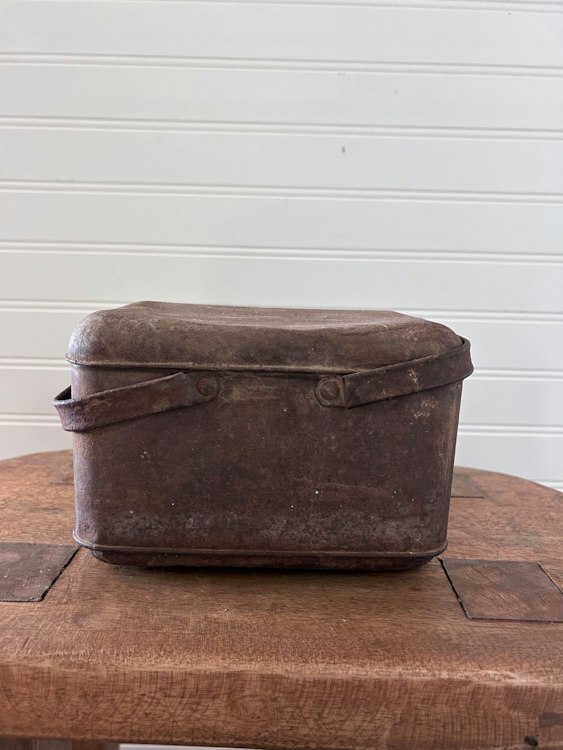
About product: An early 20th-century pressed tin lunch box featuring a rectangular form with rounded corners, a fitted lift-off lid, and dual riveted metal strap handles. The exterior retains faint remnants of an original red lithographed basket-weave pattern beneath a heavy, aged patina of oxidation and surface rust. Condition Report & Provenance - Period: Early 20th Century (c. 1900–1930s) - Material / Technique: Pressed sheet tin with printed lithography and riveted joinery - Materials: metal - Colour & Surface: Dark overall rust, oxidation, and pitting with faint traces of red lithographed weave decoration - Decorative Details: Dual folding metal handles attached with flathead rivets, friction-fit lid with rolled edge - Condition: Extensive surface corrosion, rust, and paint loss throughout; structural body remains fully intact History: Lithographed tin lunch boxes and pails were essential utilitarian items throughout the industrial era of the late 19th and early 20th centuries. Often designed with faux wicker, plaid, or woodgrain patterns to imitate traditional picnic hampers and baskets, these metal containers provided a durable, easy-to-clean lunch carrier for factory workers, miners, and schoolchildren.
$24.00+ shipping
An early 20th-century pressed tin lunch box featuring a rectangular form with rounded corners, a fitted lift-off lid, and dual riveted metal strap handles. The exterior retains faint remnants of an original red lithographed basket-weave pattern beneath a heavy, aged patina of oxidation and surface rust.
Condition Report & Provenance
- Period: Early 20th Century (c. 1900–1930s)
- Material / Technique: Pressed sheet tin with printed lithography and riveted joinery
- Materials: metal
- Colour & Surface: Dark overall rust, oxidation, and pitting with faint traces of red lithographed weave decoration
- Decorative Details: Dual folding metal handles attached with flathead rivets, friction-fit lid with rolled edge
- Condition: Extensive surface corrosion, rust, and paint loss throughout; structural body remains fully intact
History
Lithographed tin lunch boxes and pails were essential utilitarian items throughout the industrial era of the late 19th and early 20th centuries. Often designed with faux wicker, plaid, or woodgrain patterns to imitate traditional picnic hampers and baskets, these metal containers provided a durable, easy-to-clean lunch carrier for factory workers, miners, and schoolchildren.