
Art Nouveau Era Amethyst Enamelled Glass Pitcher & Six Tumbler Set with UV Glow
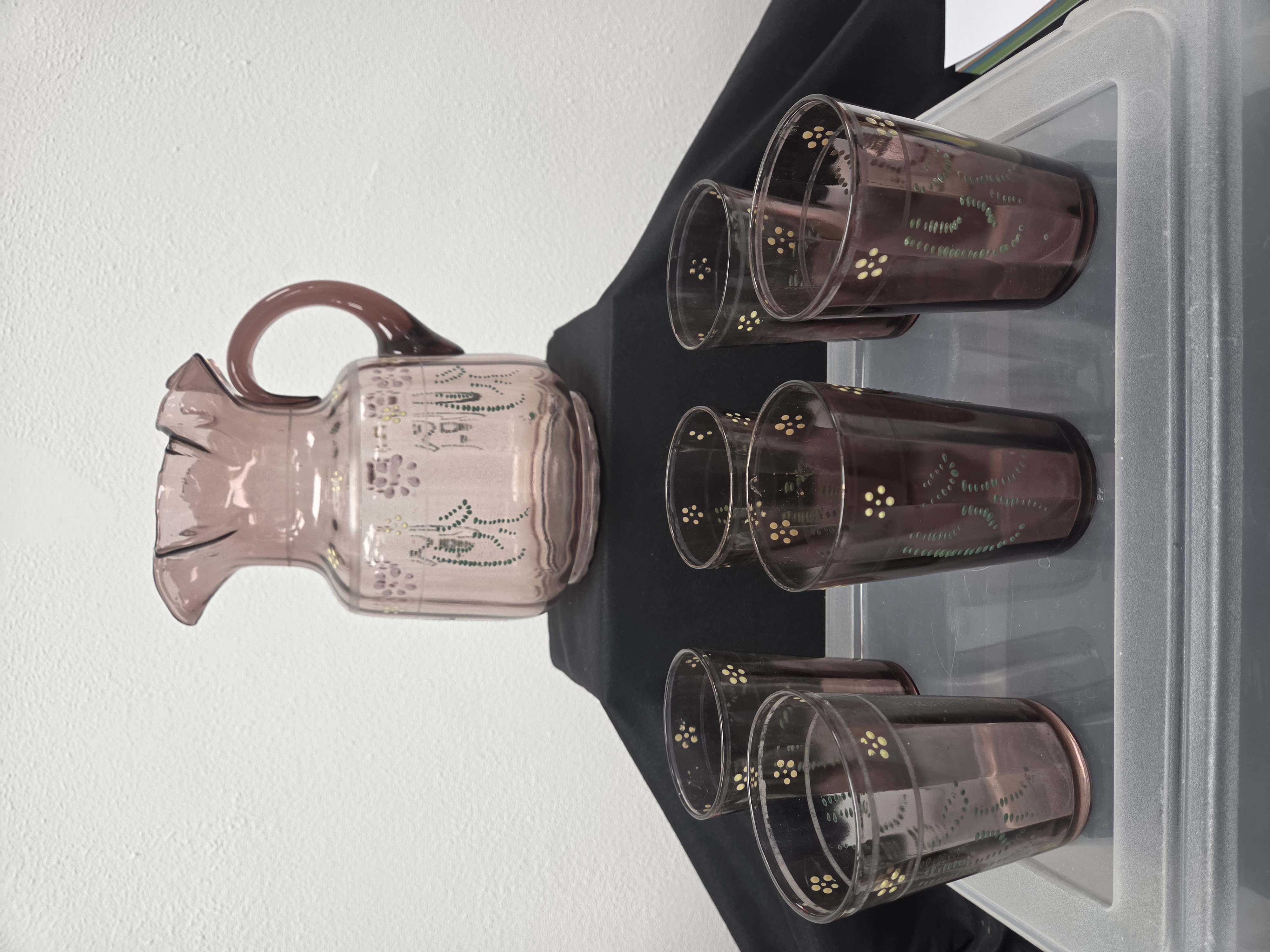
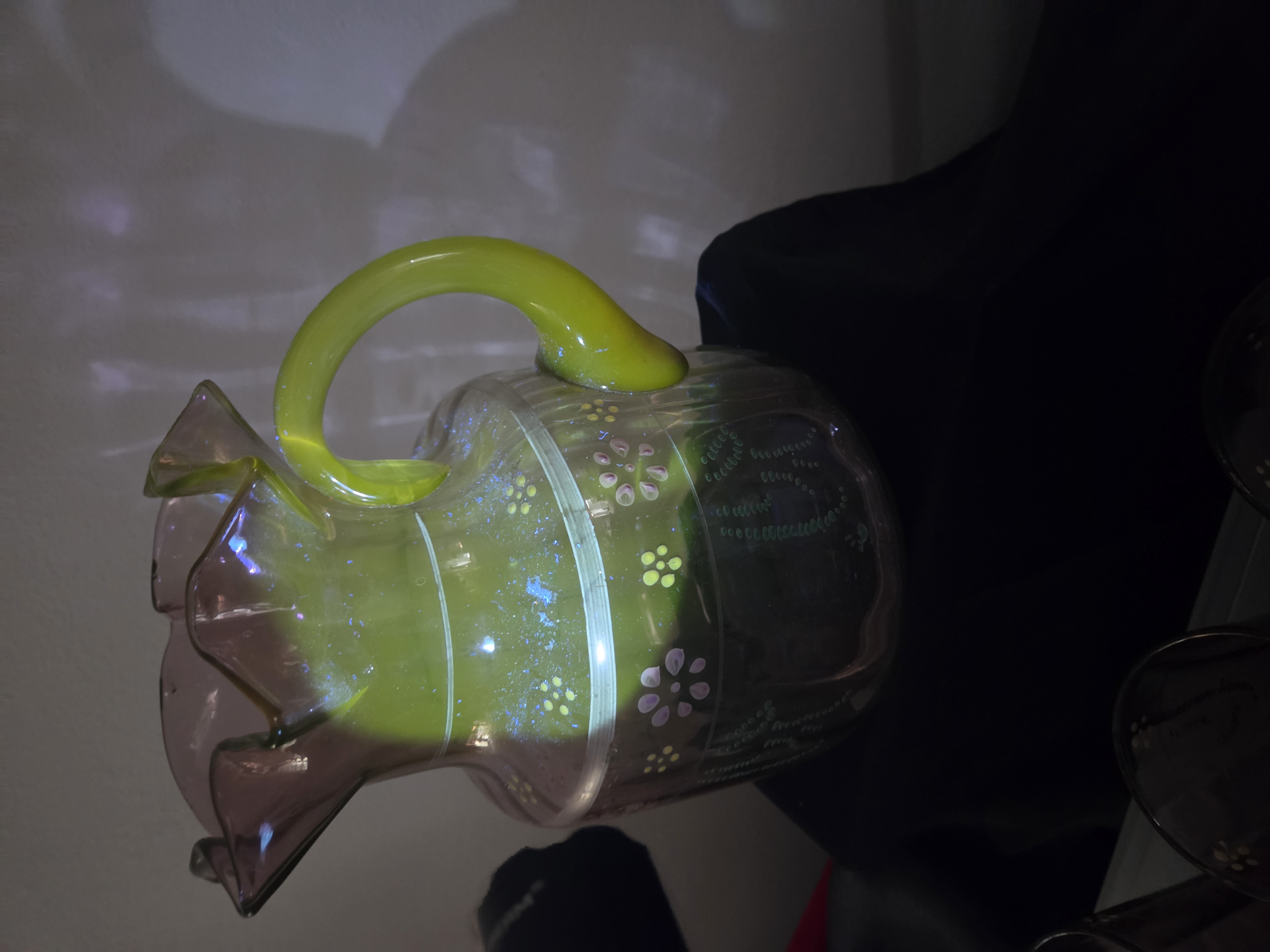
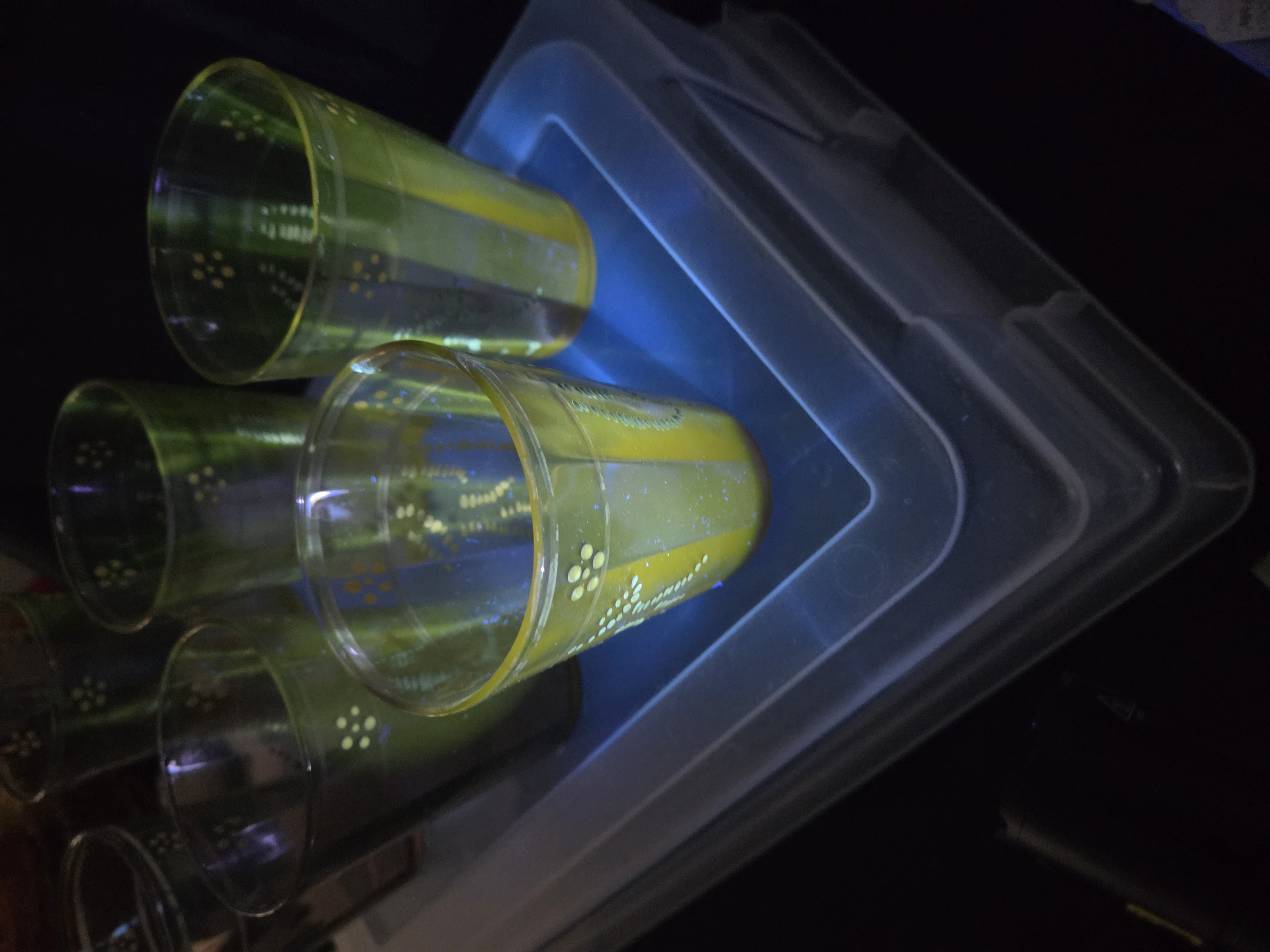
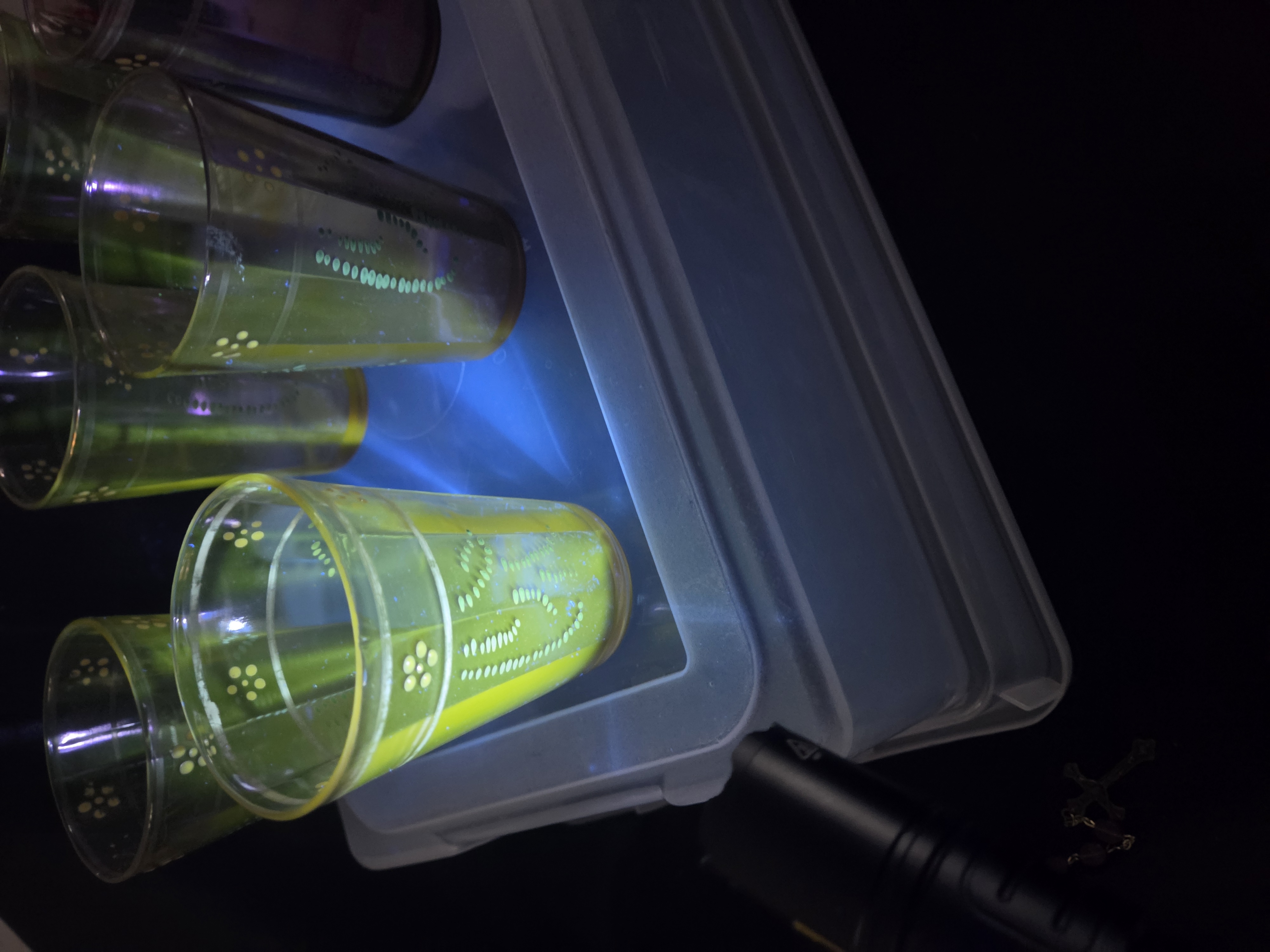
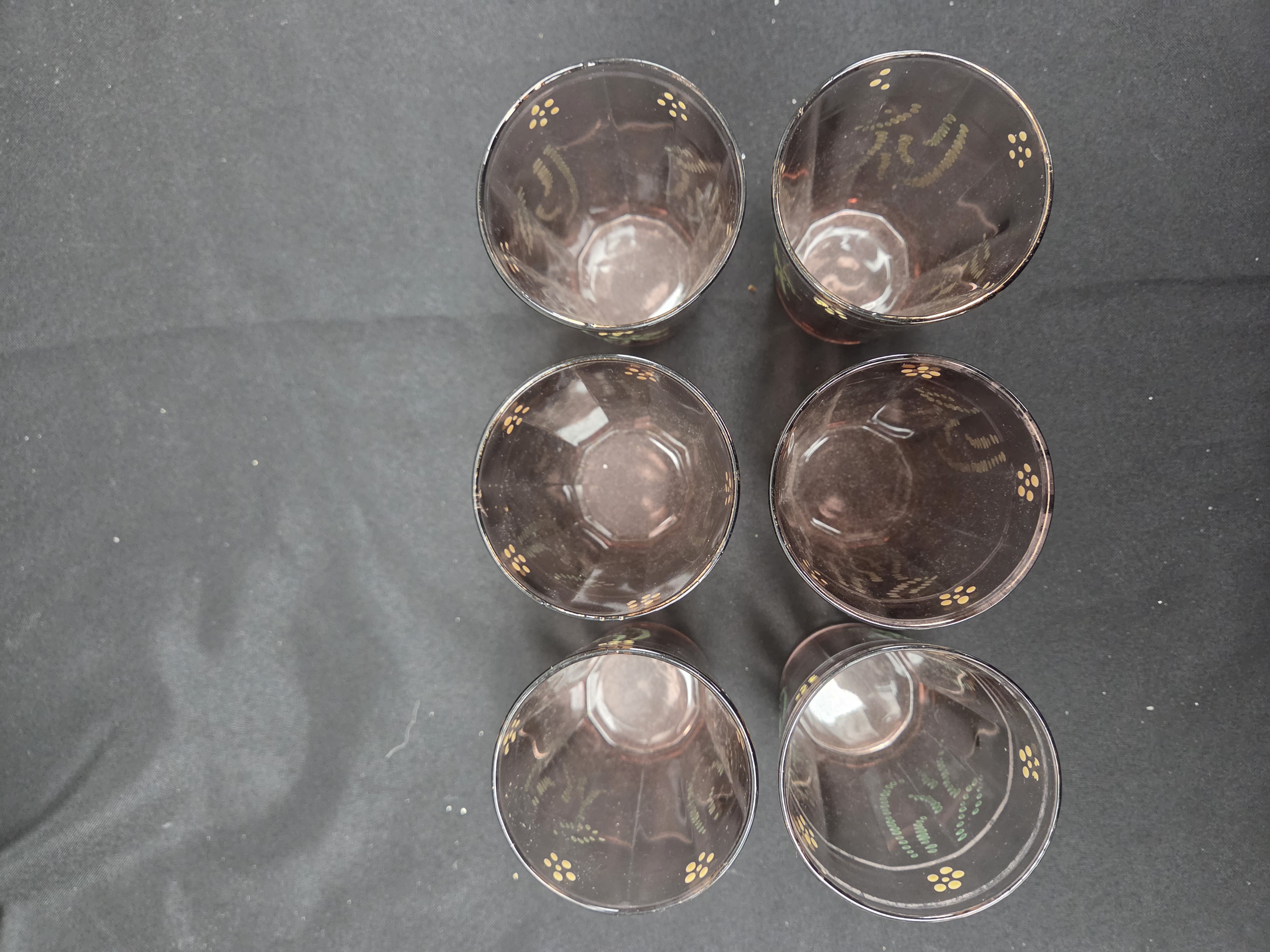
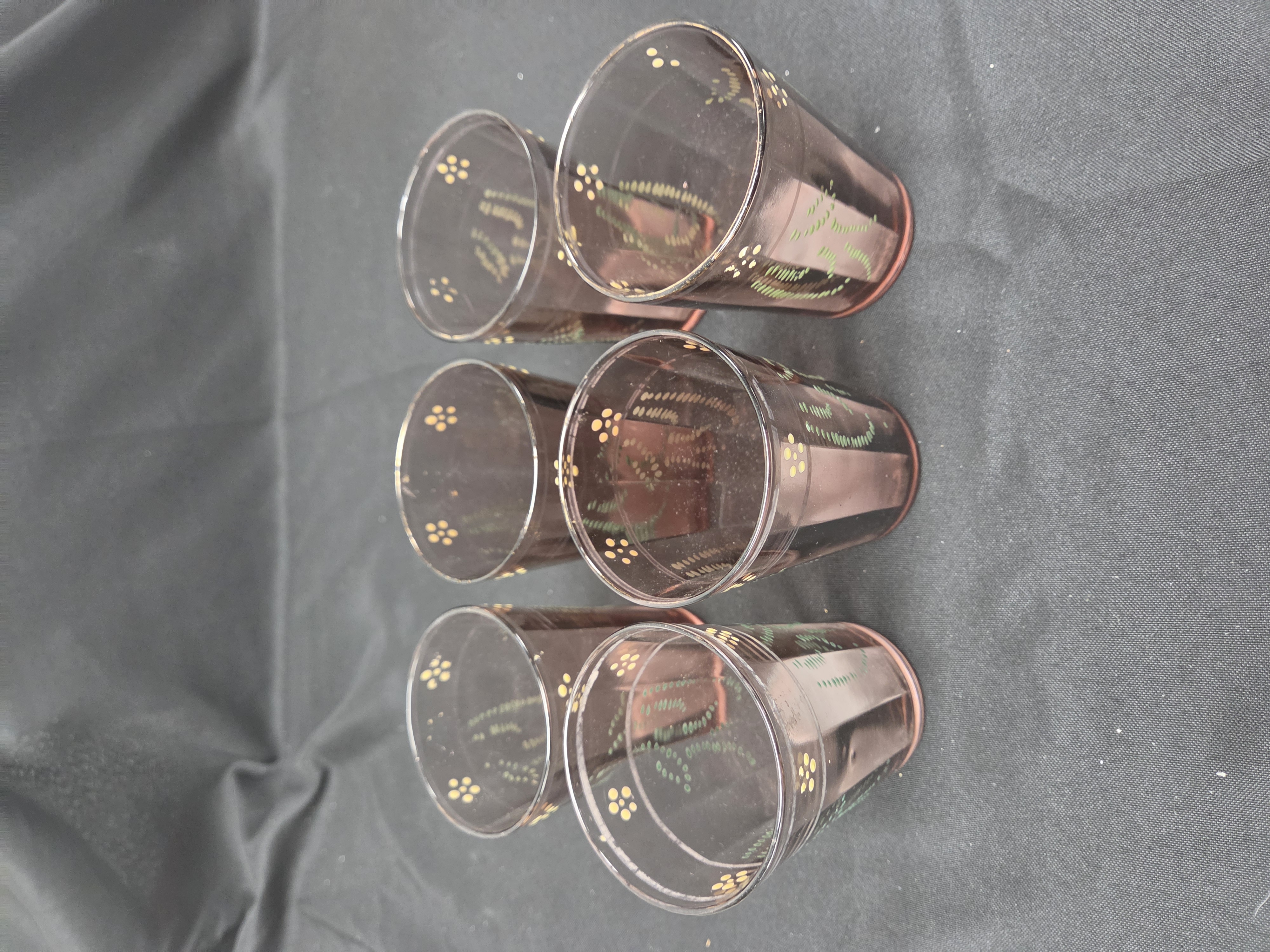
About product: An antique amethyst-coloured glass beverage set comprising a ruffled-spout pitcher with an applied handle and six matching cylindrical tumblers. Each piece features hand-painted polychrome enamel dot decoration forming stylised floral motifs and beaded swags. Under ultraviolet light, the glass exhibits strong yellow-green fluorescence indicative of manganese dioxide content within the glass formula. - Material / Technique: Hand-blown amethyst glass, applied handle, enamel decoration - Set Composition: 1 pitcher, 6 matching tumblers - Condition Report: Good antique condition with minor surface wear and light rubbing to enamel decoration consistent with age. No visible chips or cracks, although there are some fleabites on the rims of the glasses. History: During the late 19th and early 20th centuries, Bohemian and Central European glasshouses excelled at creating tinted glassware embellished with delicate hand-painted enamelling. Glass formulations of this era frequently incorporated metallic oxides, such as manganese dioxide or uranium, to modify color hues or act as decoloring agents. Today, these historic production methods are recognized and actively collected for their striking fluorescence under ultraviolet illumination.
$185.00+ shipping
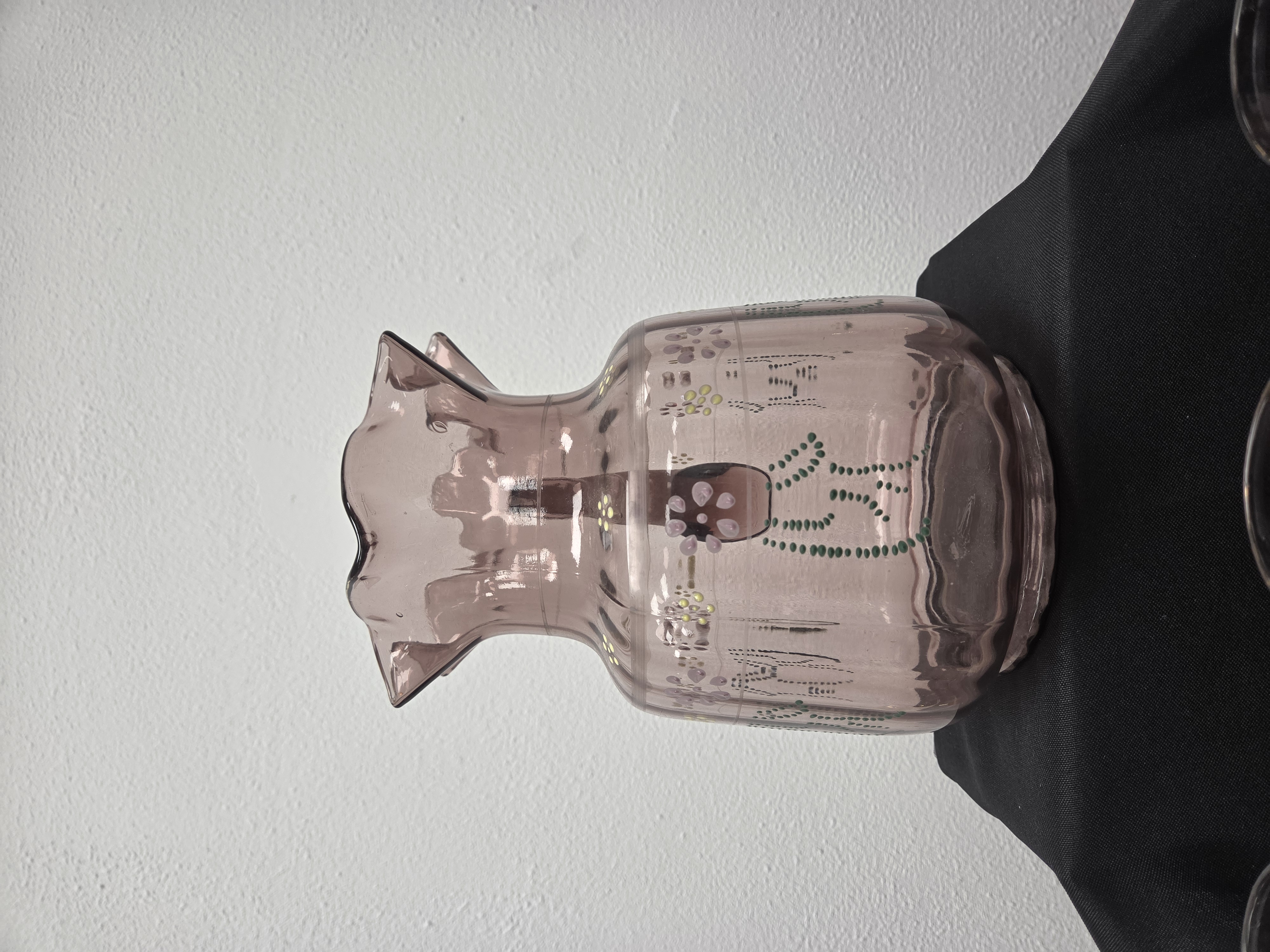
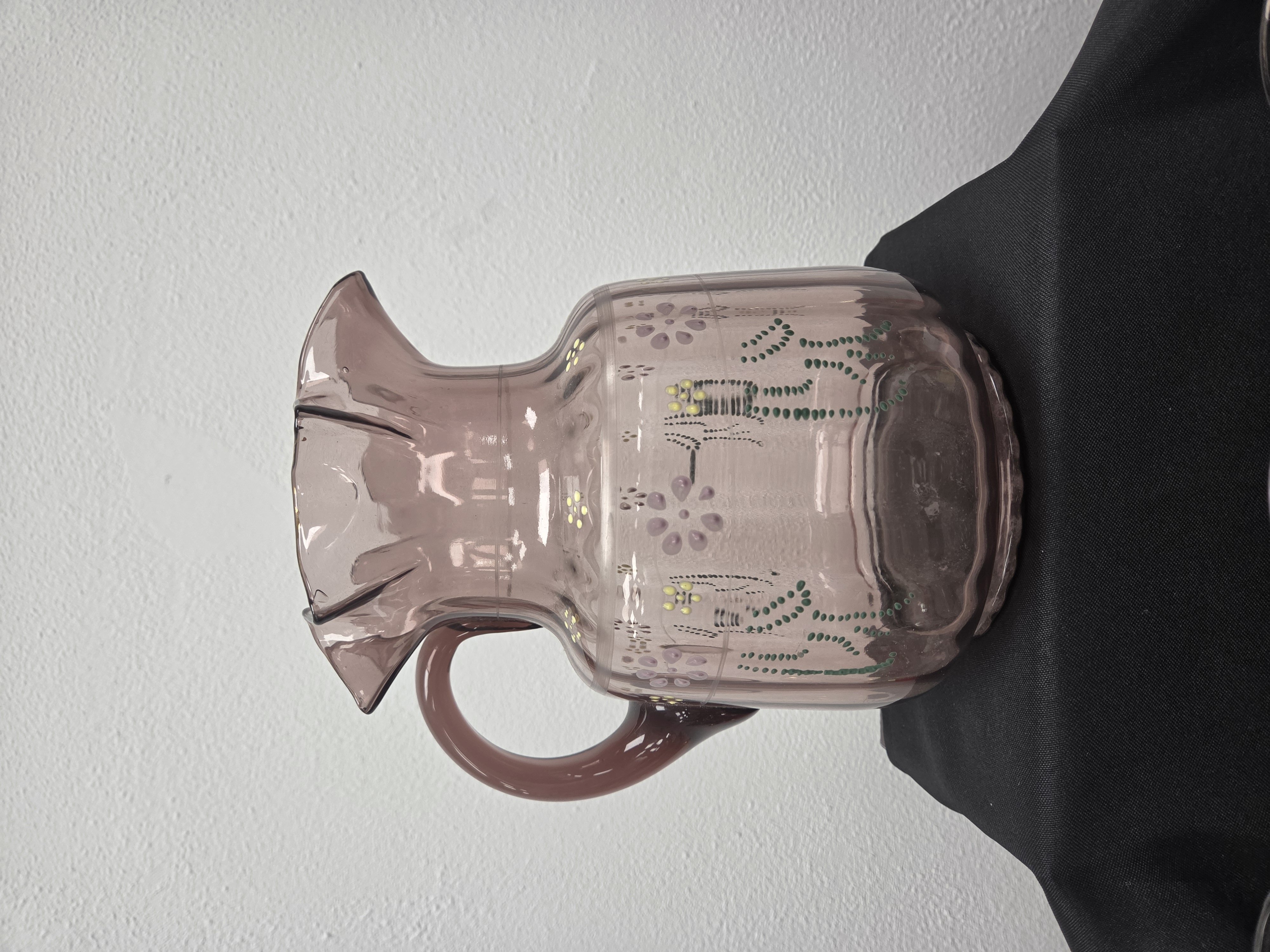
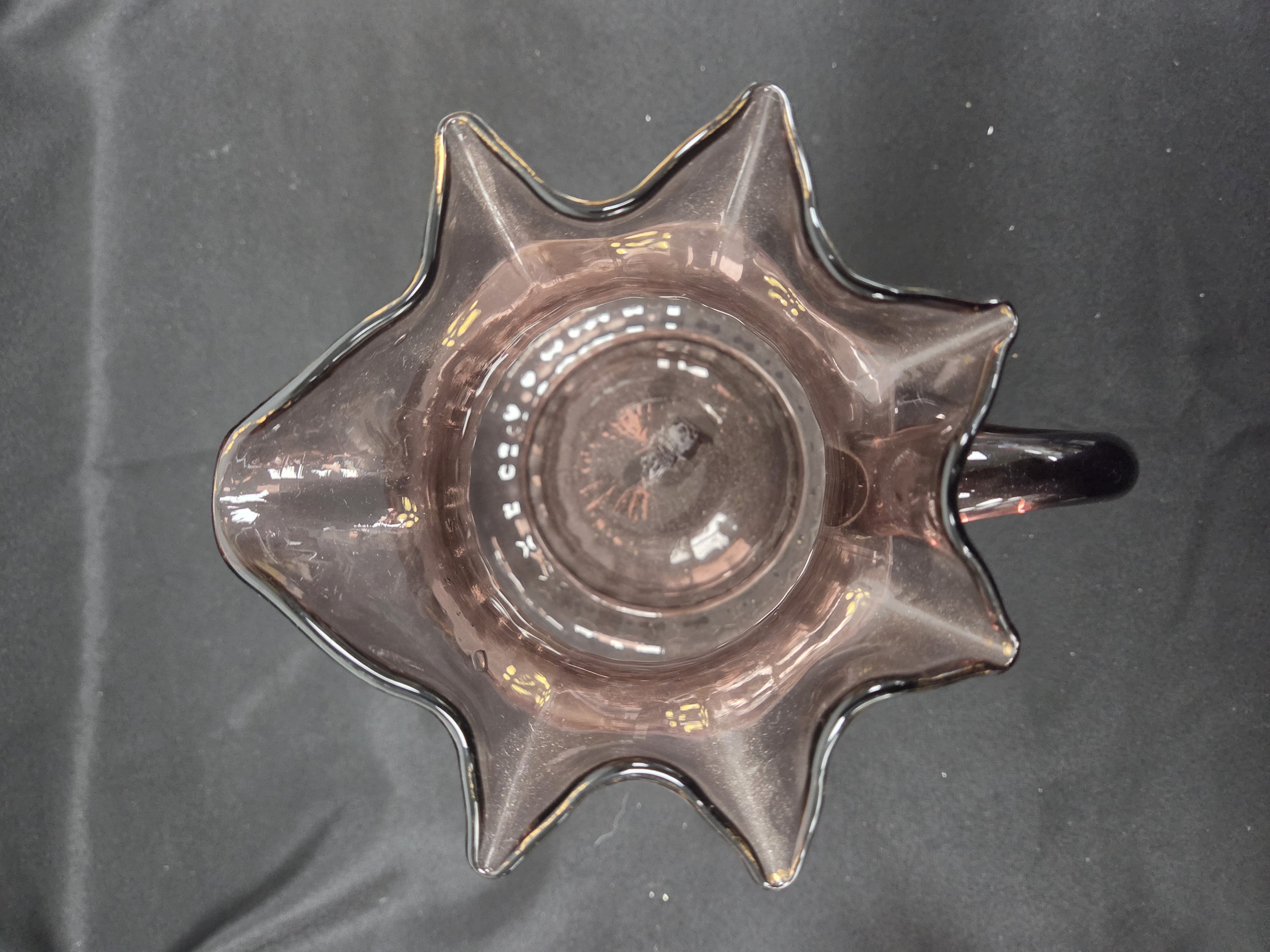
An antique amethyst-coloured glass beverage set comprising a ruffled-spout pitcher with an applied handle and six matching cylindrical tumblers. Each piece features hand-painted polychrome enamel dot decoration forming stylised floral motifs and beaded swags. Under ultraviolet light, the glass exhibits strong yellow-green fluorescence indicative of manganese dioxide content within the glass formula.
- Material / Technique: Hand-blown amethyst glass, applied handle, enamel decoration
- Set Composition: 1 pitcher, 6 matching tumblers
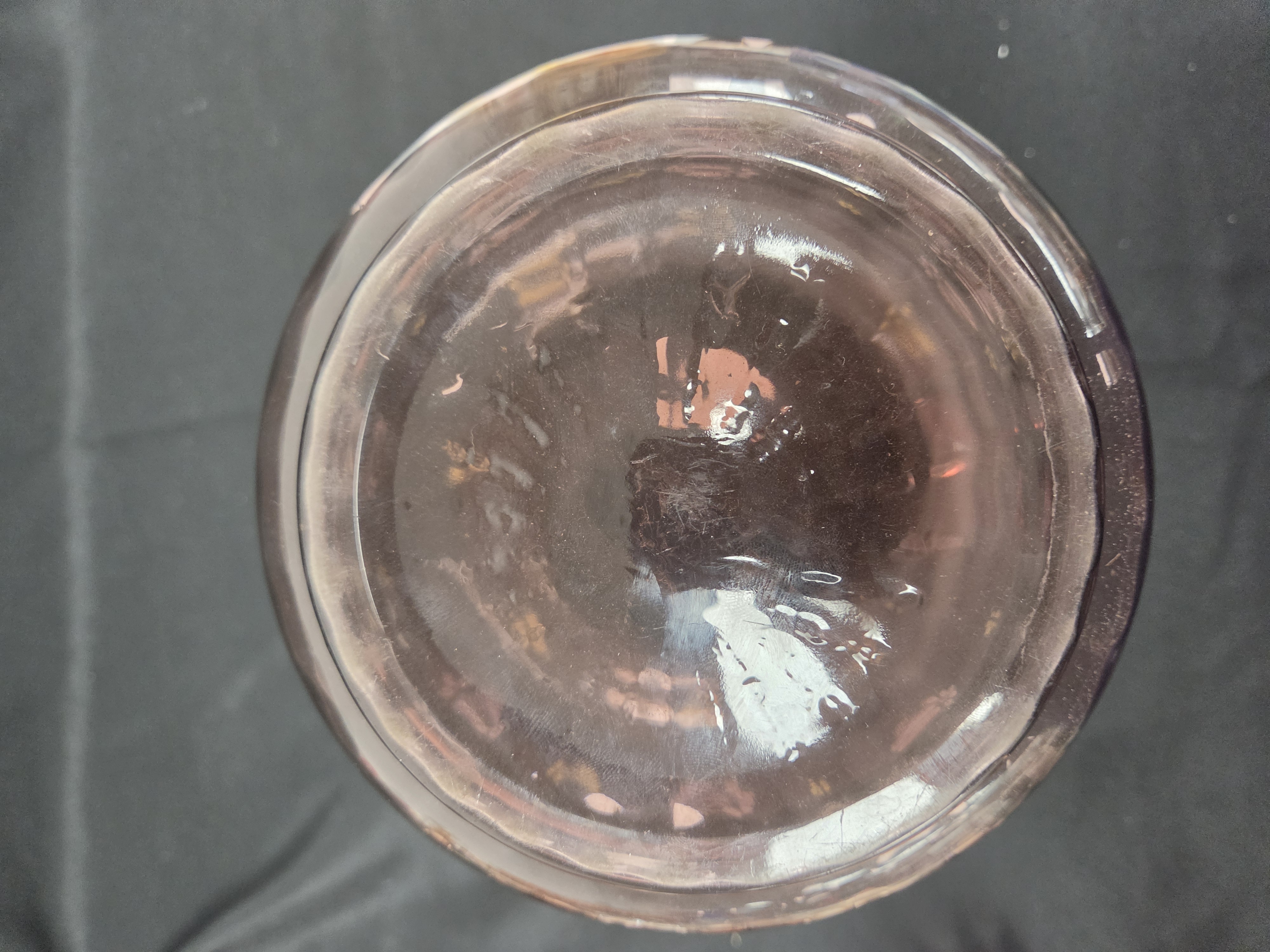
- Condition Report: Good antique condition with minor surface wear and light rubbing to enamel decoration consistent with age. No visible chips or cracks, although there are some fleabites on the rims of the glasses.
History
During the late 19th and early 20th centuries, Bohemian and Central European glasshouses excelled at creating tinted glassware embellished with delicate hand-painted enamelling. Glass formulations of this era frequently incorporated metallic oxides, such as manganese dioxide or uranium, to modify color hues or act as decoloring agents. Today, these historic production methods are recognized and actively collected for their striking fluorescence under ultraviolet illumination.