
Antique steel double-handled mezzaluna herb chopper
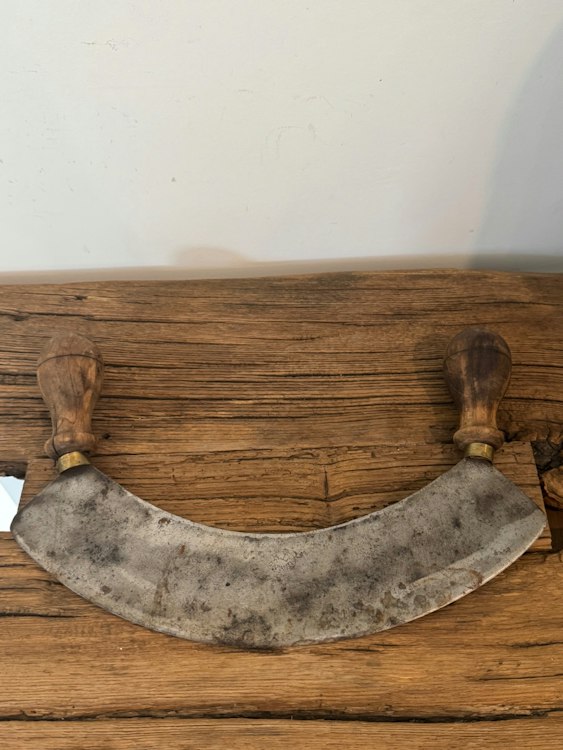
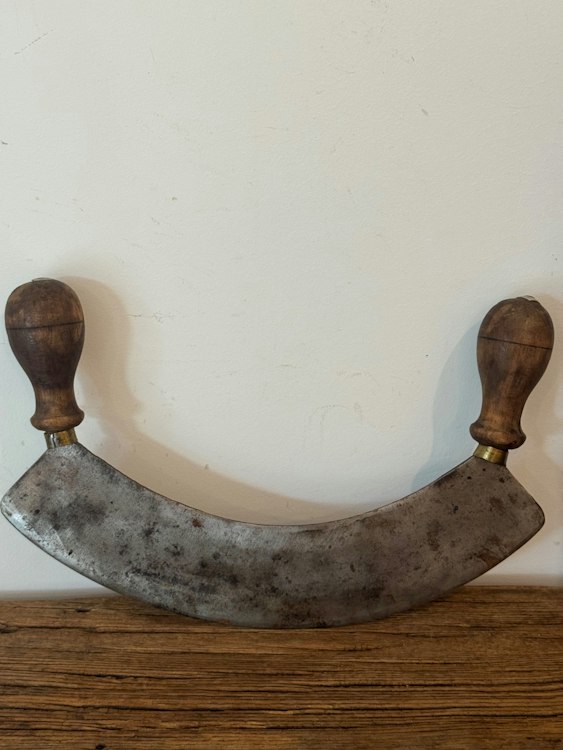
About product: An antique double-handled mezzaluna (mincing knife), featuring a crescent-shaped carbon steel blade mounted with two turned wooden handles secured by brass ferrules. This classic culinary tool, also known as a hachoir, is designed for rocking back and forth to chop herbs, vegetables, or meat. Historical & Style Details - Subject / Sitter / Source: Mezzaluna / Mincing Knife - Period: Victorian - Origin: Unknown - Materials: Carbon steel, turned wood, brass - Markings: Indistinct maker's stamp on the lower face of the blade - Colour & Surface: Dark grey oxidized steel with heavy pitting and patina; warm, darkened natural wood grain - Condition: Heavy oxidation, rust staining, and pitting across the steel blade; wear, minor splitting, and deep patination to the wooden handles consistent with age and kitchen use 10” L × approx. 5” H History: The mezzaluna (meaning "half-moon" in Italian) or hachoir has been a staple of European kitchens since at least the 18th century. Prized for its efficiency in chopping herbs, nuts, and meats, this double-handled design allowed cooks to apply even downward pressure while rocking the blade. Antique examples with hand-forged carbon steel blades and turned wooden handles are highly collectible today both for rustic kitchen display and for historical culinary collections.
$68.00+ shipping
An antique double-handled mezzaluna (mincing knife), featuring a crescent-shaped carbon steel blade mounted with two turned wooden handles secured by brass ferrules. This classic culinary tool, also known as a hachoir, is designed for rocking back and forth to chop herbs, vegetables, or meat.
Historical & Style Details
- Subject / Sitter / Source: Mezzaluna / Mincing Knife
- Period: Victorian
- Origin: Unknown
- Materials: Carbon steel, turned wood, brass
- Markings: Indistinct maker's stamp on the lower face of the blade
- Colour & Surface: Dark grey oxidized steel with heavy pitting and patina; warm, darkened natural wood grain
- Condition: Heavy oxidation, rust staining, and pitting across the steel blade; wear, minor splitting, and deep patination to the wooden handles consistent with age and kitchen use
10” L × approx. 5” H
History
The mezzaluna (meaning "half-moon" in Italian) or hachoir has been a staple of European kitchens since at least the 18th century. Prized for its efficiency in chopping herbs, nuts, and meats, this double-handled design allowed cooks to apply even downward pressure while rocking the blade. Antique examples with hand-forged carbon steel blades and turned wooden handles are highly collectible today both for rustic kitchen display and for historical culinary collections.