
Antique primitive tapered wooden grain measure with wire-bound corners
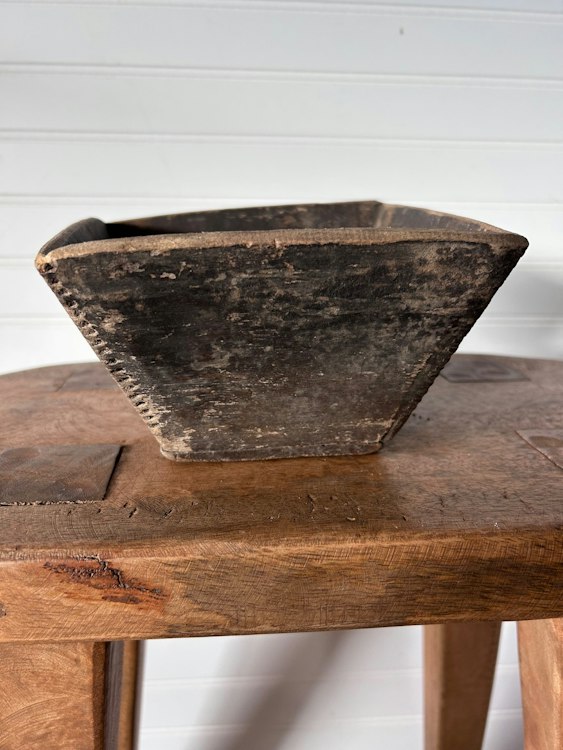
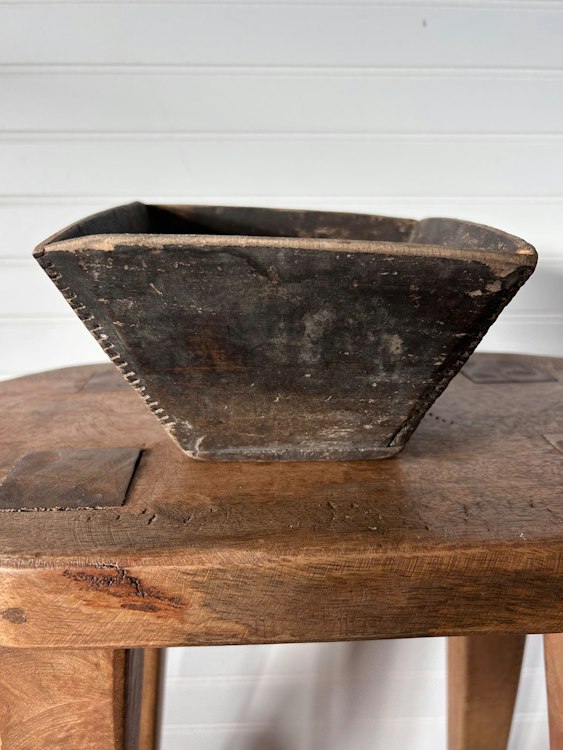
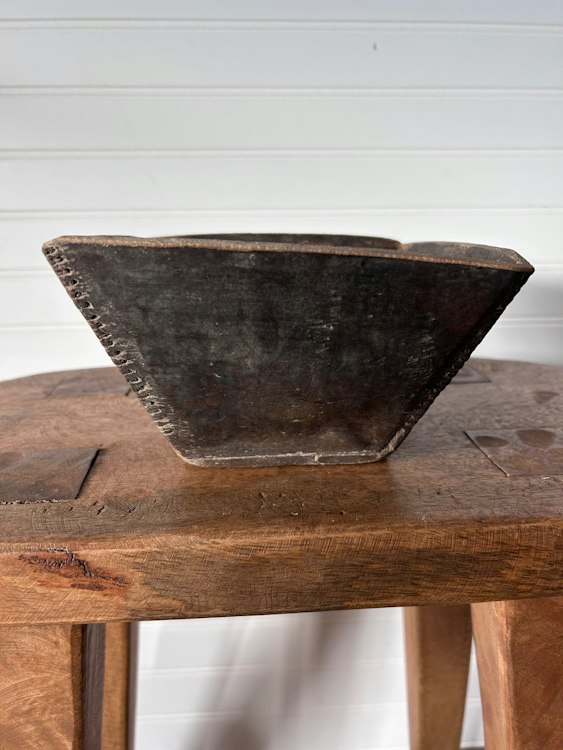
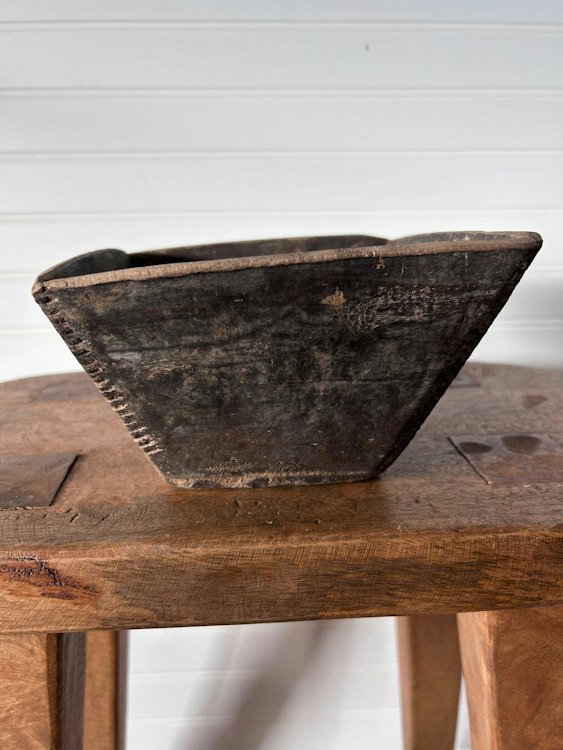
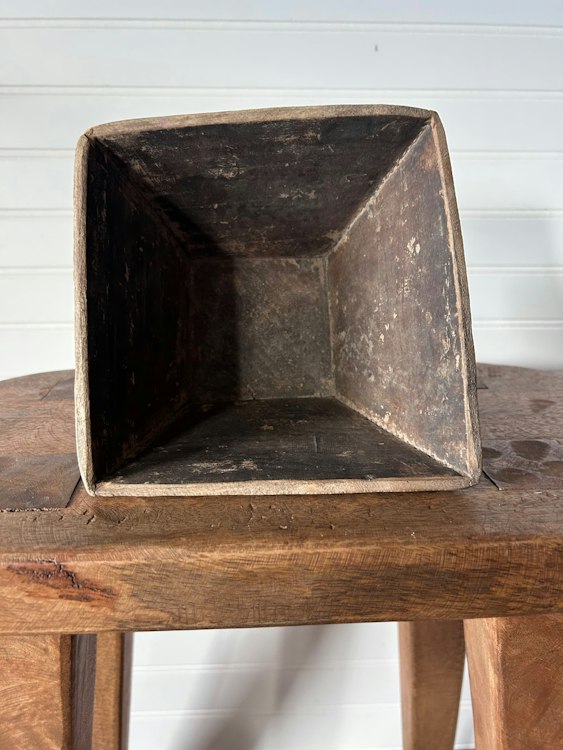
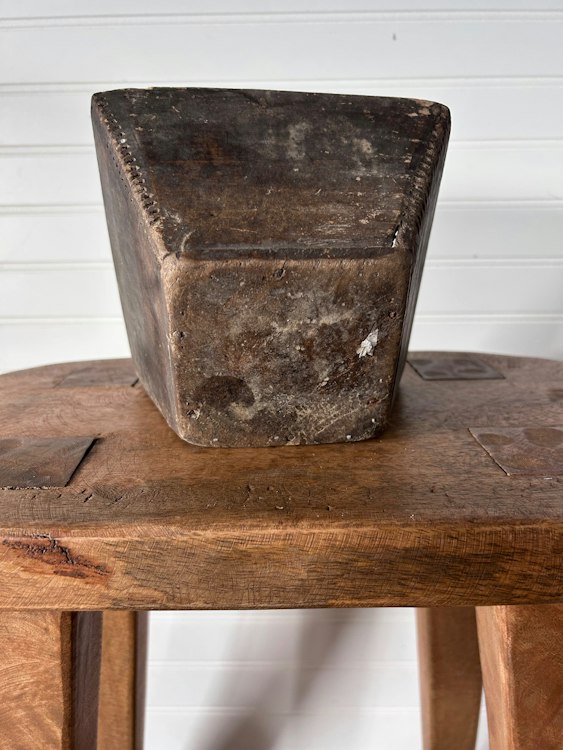
About product: An antique primitive wooden grain measure, featuring an inverted truncated pyramid form with dramatically flaring sloped sides and a flat square base. Constructed from four hand-shaped wooden panels bound at the corner seams with a series of iron wire staples or ties, demonstrating traditional utilitarian folk joinery. The dark, weathered wood displays a deeply aged patina and authentic surface character acquired through domestic or agricultural use. Historical & Style Details - Object Type: Grain measure / primitive box - Period: Early 20th Century (1900s–1940s) - Origin: Unknown - Material / Technique: Hand-worked wood, iron wire staple binding - Form: Flared square hopper / inverted truncated pyramid - Colour & Surface: Darkened oxidized wood with aged patina, surface wear, and natural grain texture - Condition: Good antique condition with widespread atmospheric wear, surface scuffs, minor grain splits, and dark oxidation consistent with age and practical utility; wire corner bindings remain stable History: Tapered square wooden measures were essential utilitarian objects across agricultural societies throughout the 19th and early 20th centuries, used for measuring and dispensing dry goods such as grain, rice, seed, or flour. Simple wire-stitched corner joinery allowed local craftspeople to assemble lightweight yet durable vessels using minimal materials. Today, these functional objects are appreciated in country antique and folk art collections for their strong geometric forms and rich tactile patinas.
$48.00+ shipping
An antique primitive wooden grain measure, featuring an inverted truncated pyramid form with dramatically flaring sloped sides and a flat square base. Constructed from four hand-shaped wooden panels bound at the corner seams with a series of iron wire staples or ties, demonstrating traditional utilitarian folk joinery. The dark, weathered wood displays a deeply aged patina and authentic surface character acquired through domestic or agricultural use.
Historical & Style Details
- Object Type: Grain measure / primitive box
- Period: Early 20th Century (1900s–1940s)
- Origin: Unknown
- Material / Technique: Hand-worked wood, iron wire staple binding
- Form: Flared square hopper / inverted truncated pyramid
- Colour & Surface: Darkened oxidized wood with aged patina, surface wear, and natural grain texture
- Condition: Good antique condition with widespread atmospheric wear, surface scuffs, minor grain splits, and dark oxidation consistent with age and practical utility; wire corner bindings remain stable
History
Tapered square wooden measures were essential utilitarian objects across agricultural societies throughout the 19th and early 20th centuries, used for measuring and dispensing dry goods such as grain, rice, seed, or flour. Simple wire-stitched corner joinery allowed local craftspeople to assemble lightweight yet durable vessels using minimal materials. Today, these functional objects are appreciated in country antique and folk art collections for their strong geometric forms and rich tactile patinas.