
Antique French Sieve #1
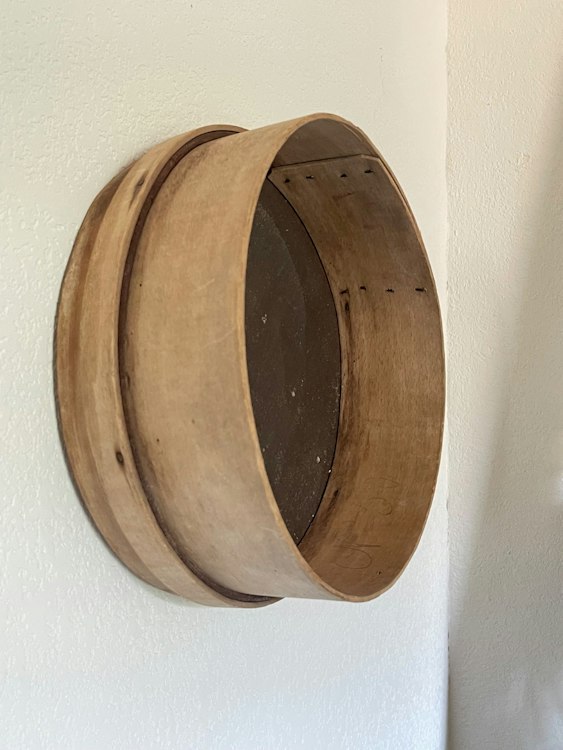
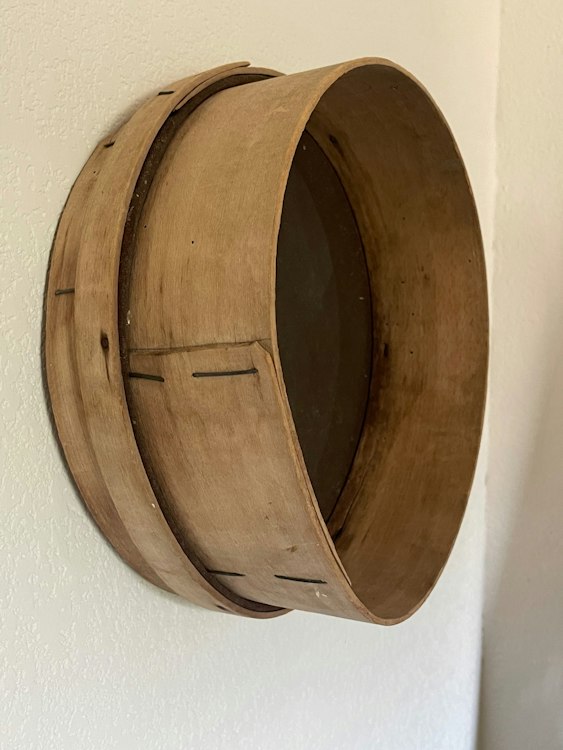
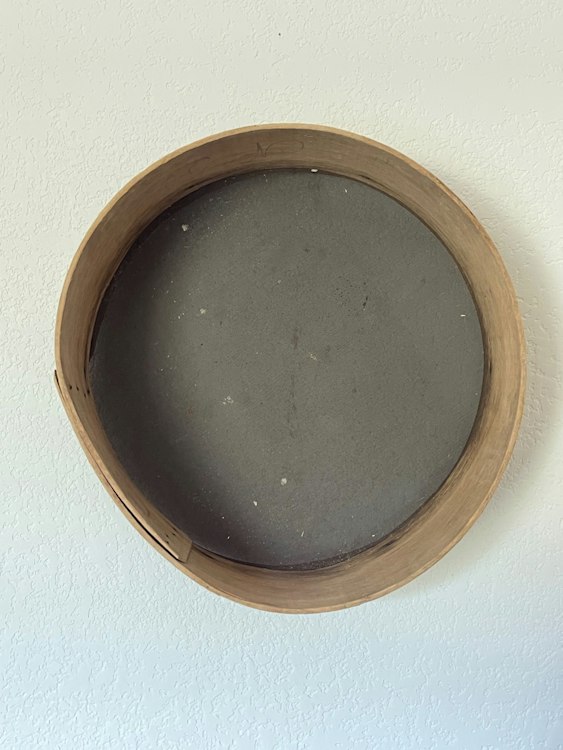
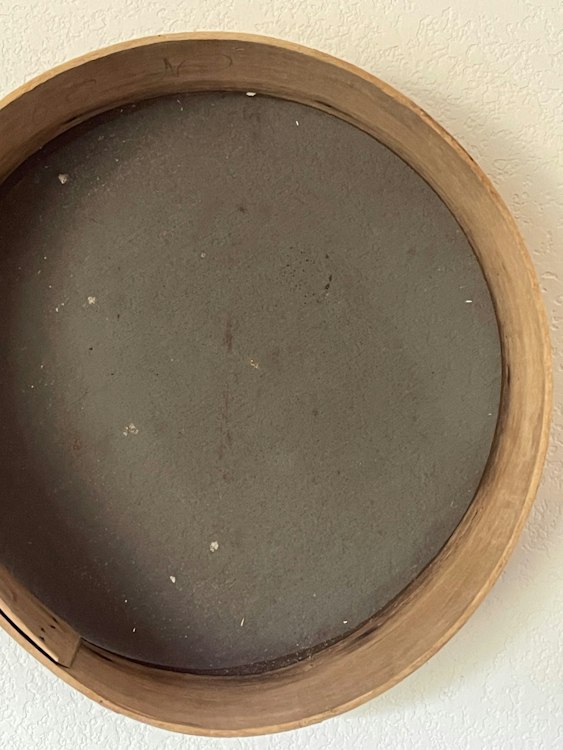
About product: An antique French provincial drum sieve (tamis), traditionally utilized in domestic kitchens and bakeries for sifting flour. The piece is constructed from a broad band of steam-bent wood, likely ash or beech, overlapping at the seam and secured with hand-driven iron staples, holding a fine-gauge wire mesh screen tautly in place. Historical & Style Details - Artist / Maker: Unknown (French provincial / vernacular) - Period: Early 20th Century - Origin: France - Material / Technique: Steam-bent wood, wire mesh, iron staples - Materials: Wood, iron - Condition: Wear consistent with age and utilitarian use, including natural patination, minor staining to the wood, and light oxidation to the metal staples; the mesh remains structurally intact and taut. History: Drum sieves of this type, traditionally known in France as *tamis*, were essential utilitarian implements in late 19th and early 20th-century European kitchens. Crafted using time-honored steam-bending techniques, their simple, organic form and rustic character have made them highly sought-after decorative objects for country house and farmhouse-style interiors.
$88.00· Free shipping
An antique French provincial drum sieve (tamis), traditionally utilized in domestic kitchens and bakeries for sifting flour. The piece is constructed from a broad band of steam-bent wood, likely ash or beech, overlapping at the seam and secured with hand-driven iron staples, holding a fine-gauge wire mesh screen tautly in place.
Historical & Style Details
- Artist / Maker: Unknown (French provincial / vernacular)
- Period: Early 20th Century
- Origin: France
- Material / Technique: Steam-bent wood, wire mesh, iron staples
- Materials: Wood, iron
- Condition: Wear consistent with age and utilitarian use, including natural patination, minor staining to the wood, and light oxidation to the metal staples; the mesh remains structurally intact and taut.
History
Drum sieves of this type, traditionally known in France as *tamis*, were essential utilitarian implements in late 19th and early 20th-century European kitchens. Crafted using time-honored steam-bending techniques, their simple, organic form and rustic character have made them highly sought-after decorative objects for country house and farmhouse-style interiors.