
Antique French Provincial Glazed Terracotta Cruche
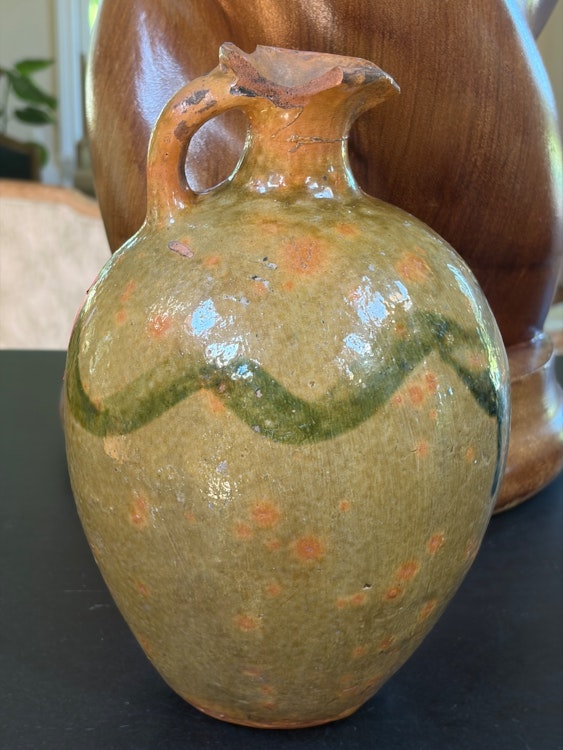
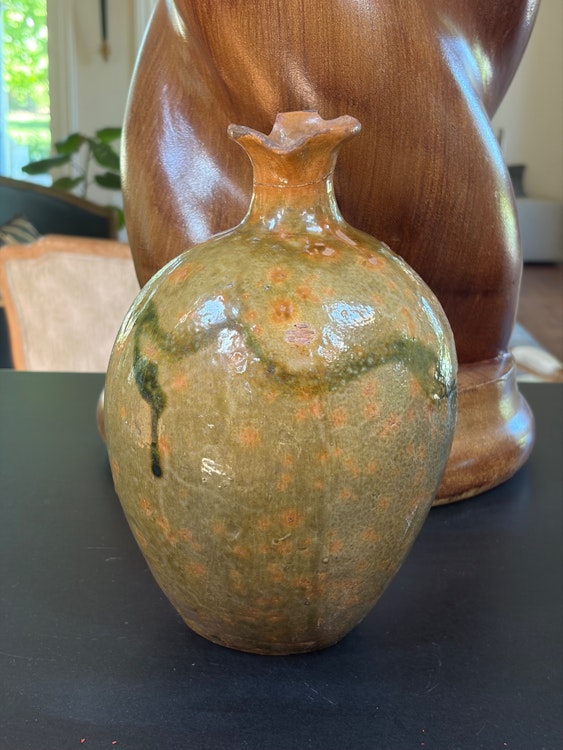
About product: This authentic 19th-century terracotta pitcher embodies the rustic soul of the French countryside. Featuring a classic ovoid body and a hand-formed pulled handle, the piece is finished in a characteristic honey-olive lead glaze. The most striking feature is the vibrant green copper-oxide "wave" or "slip" decoration that encircles the midline, a traditional folk art motif often used to distinguish domestic pottery. The glaze is further enriched by "orange peel" pitting and subtle manganese speckling, resulting in a rich, variegated patina that only comes with age. Condition Report & Provenance • Condition: In "as-found" provincial condition. The rim shows significant historical chipping and a stabilized hairline crack at the neck, consistent with daily use in a 19th-century household. • Details: Note the visible terracotta "biscuit" where the glaze has worn, revealing the iron-rich local clay. A small mark of red wax or pigment is present on the side, likely an old inventory or estate mark. • Provenance: Sourced from the French regional tradition of utilitarian slipware. These vessels were the workhorses of the French farmstead, used for transporting and storing water, wine, or olive oil.
$95.00· Free shipping
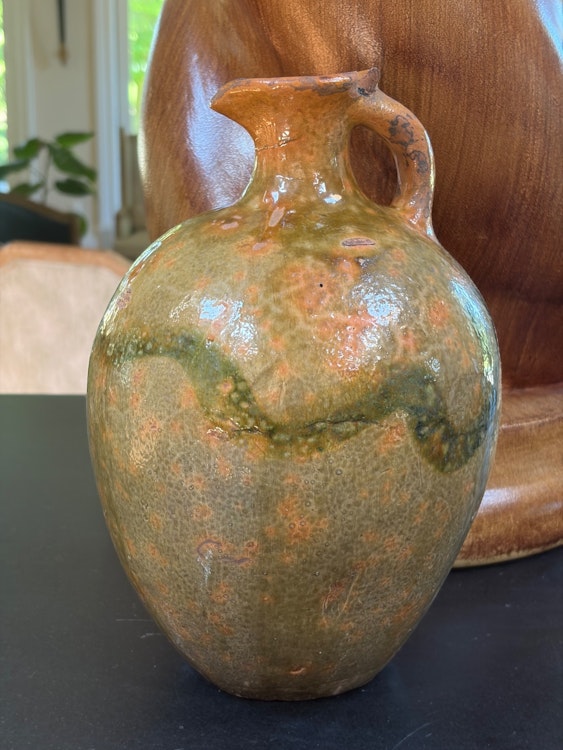
This authentic 19th-century terracotta pitcher embodies the rustic soul of the French countryside. Featuring a classic ovoid body and a hand-formed pulled handle, the piece is finished in a characteristic honey-olive lead glaze. The most striking feature is the vibrant green copper-oxide "wave" or "slip" decoration that encircles the midline, a traditional folk art motif often used to distinguish domestic pottery. The glaze is further enriched by "orange peel" pitting and subtle manganese speckling, resulting in a rich, variegated patina that only comes with age.
Condition Report & Provenance
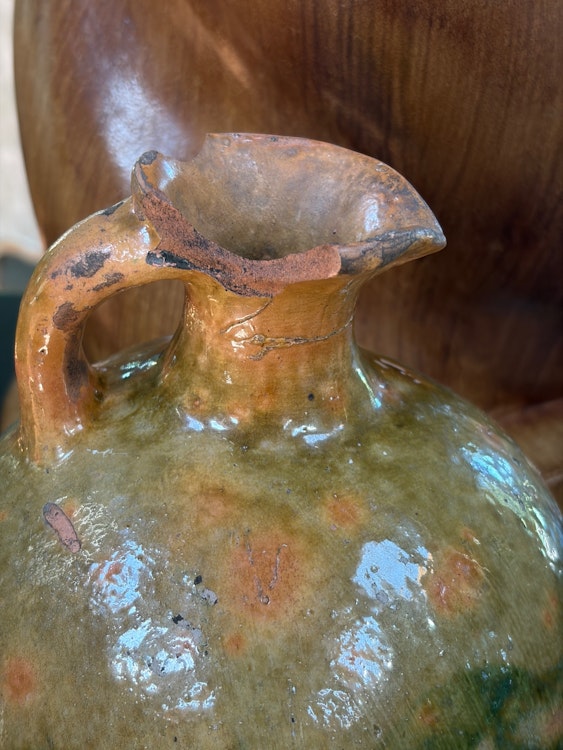
- Condition: In "as-found" provincial condition. The rim shows significant historical chipping and a stabilized hairline crack at the neck, consistent with daily use in a 19th-century household.
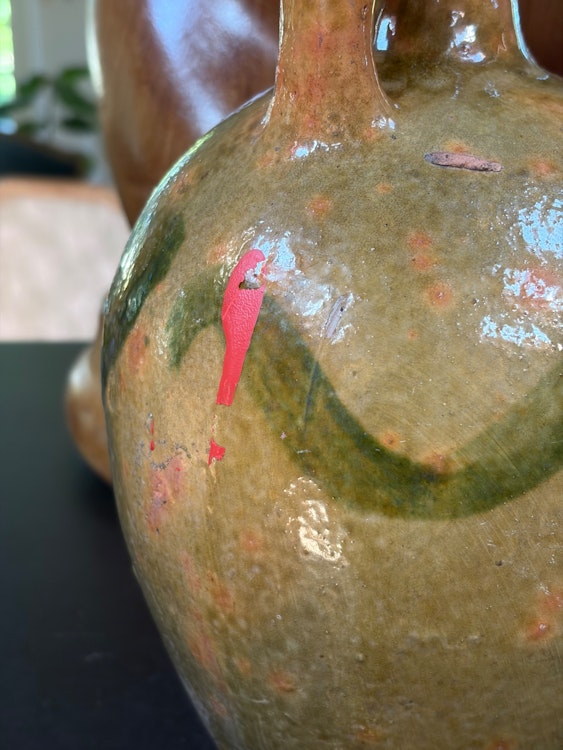
- Details: Note the visible terracotta "biscuit" where the glaze has worn, revealing the iron-rich local clay. A small mark of red wax or pigment is present on the side, likely an old inventory or estate mark.
- Provenance: Sourced from the French regional tradition of utilitarian slipware. These vessels were the workhorses of the French farmstead, used for transporting and storing water, wine, or olive oil.