
Antique early 1900's Northwood Four-Footed Inverted Fan & Feather opalescent Glass bowl
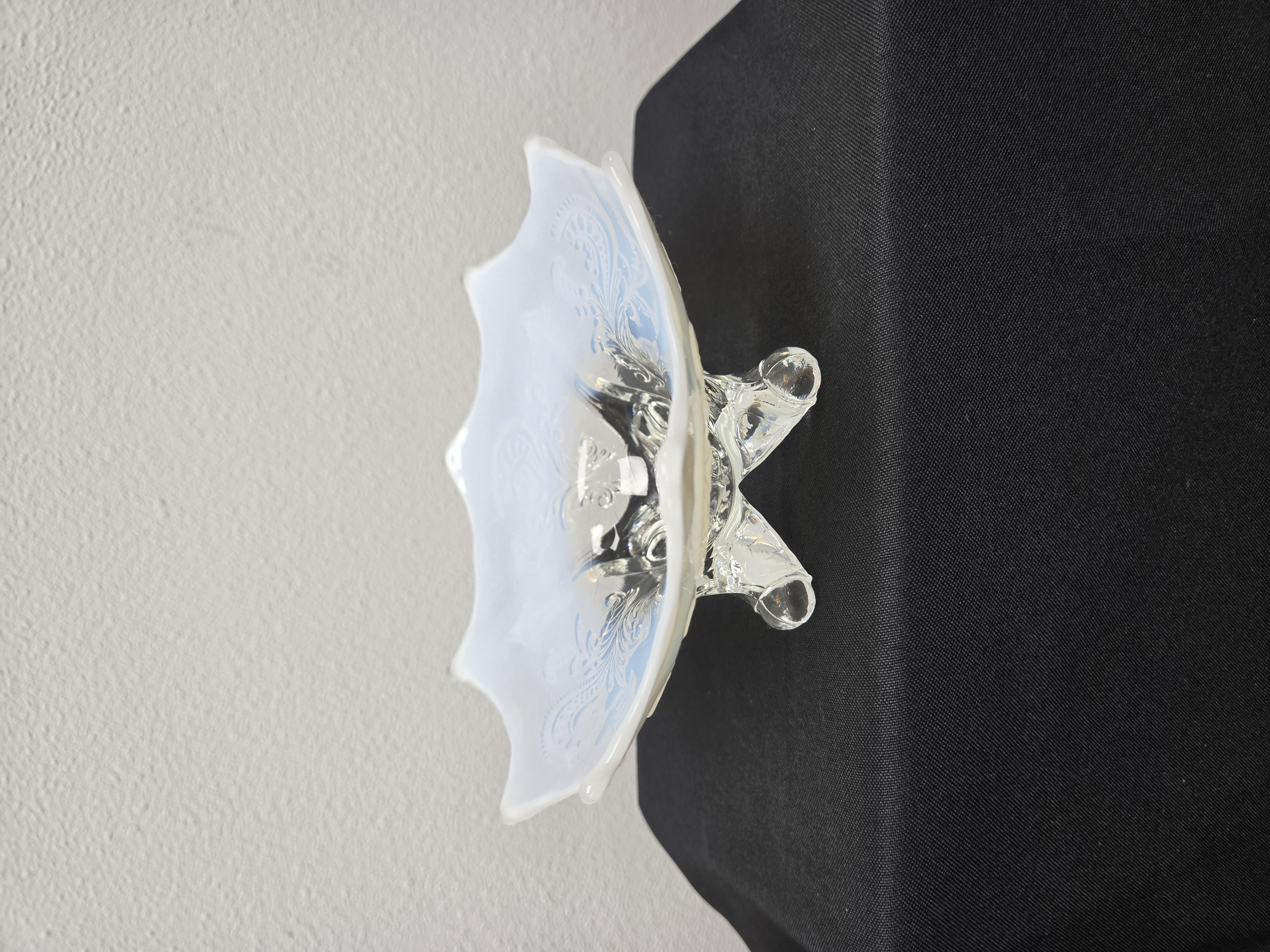
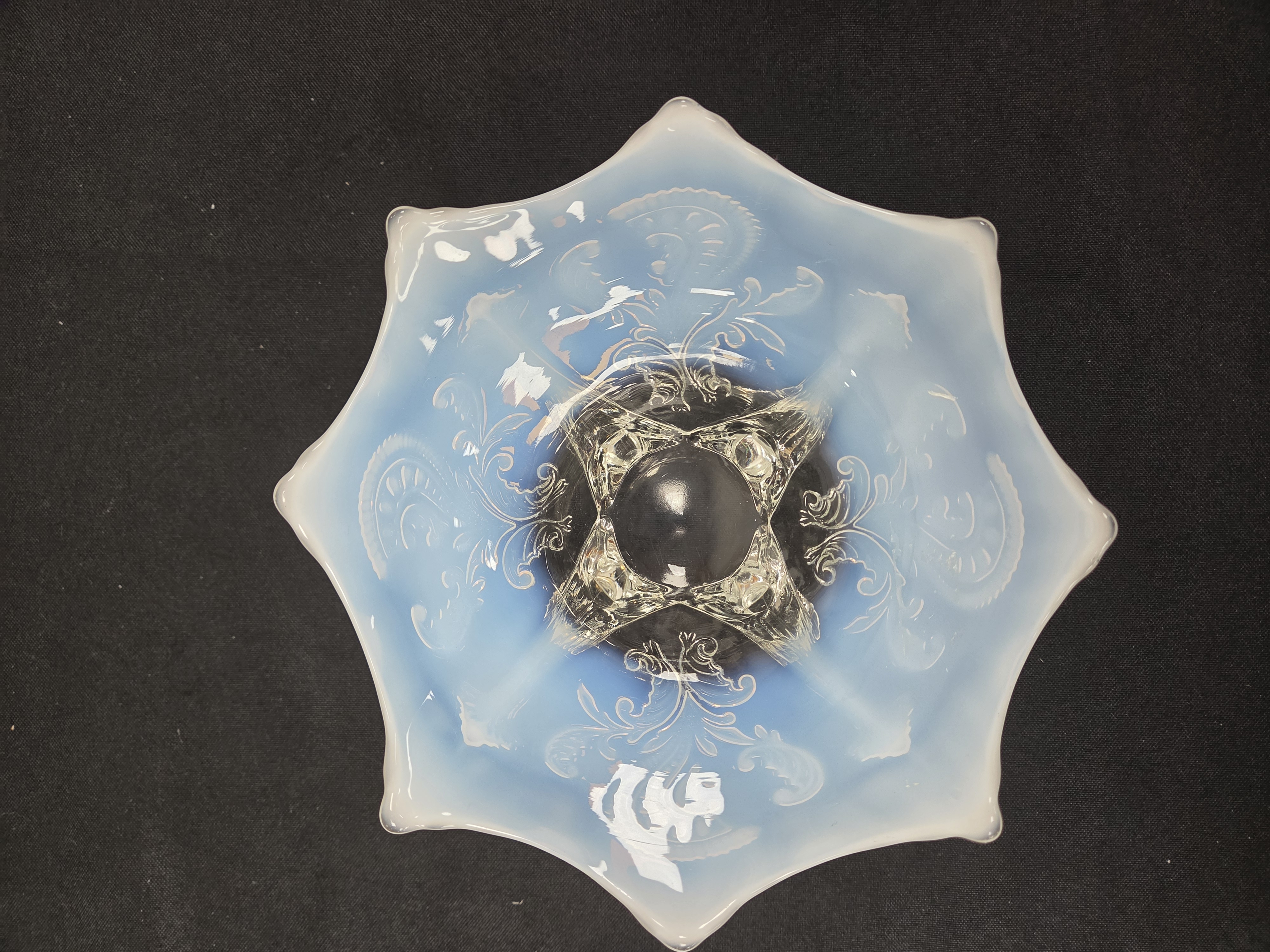
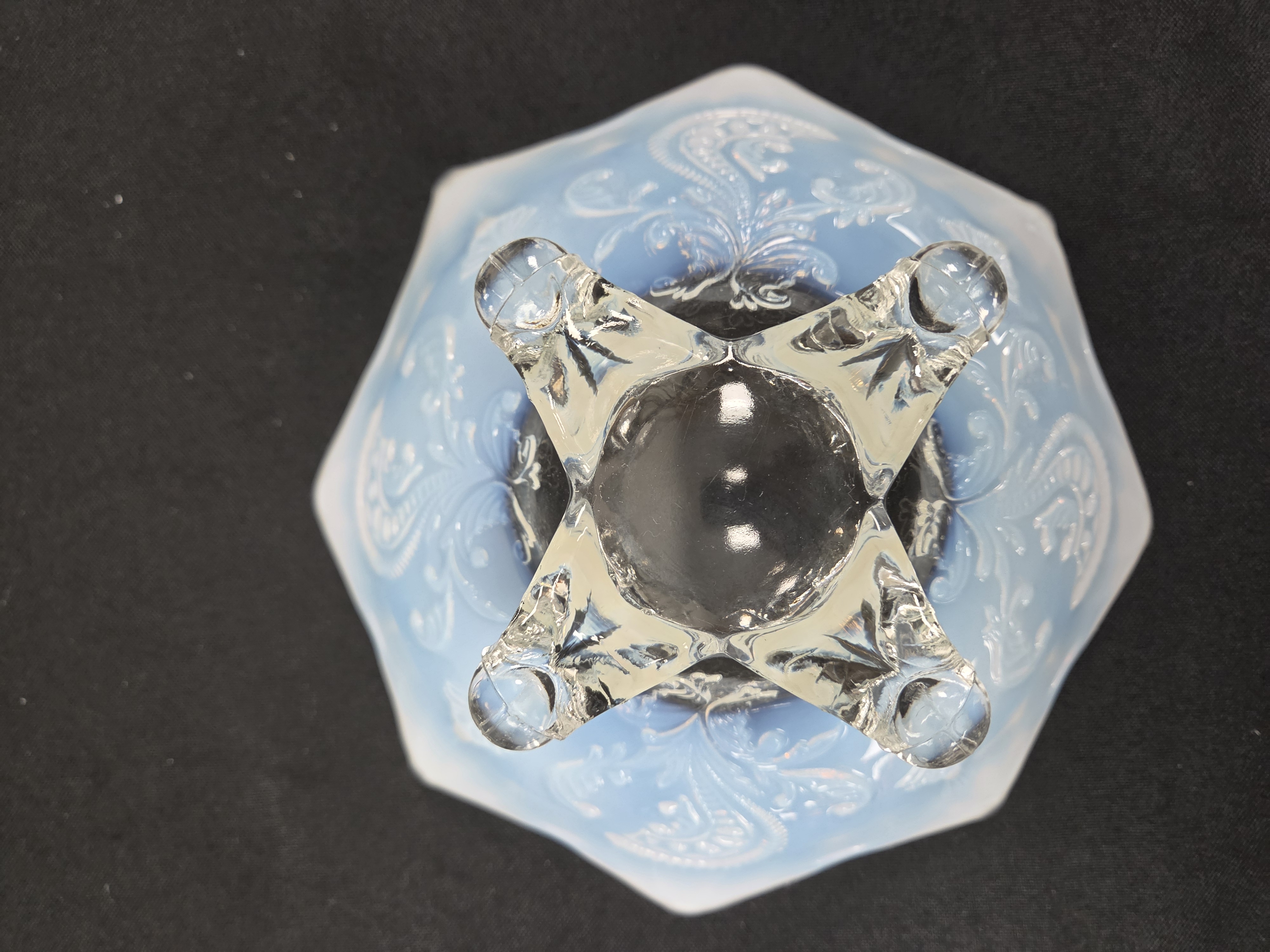
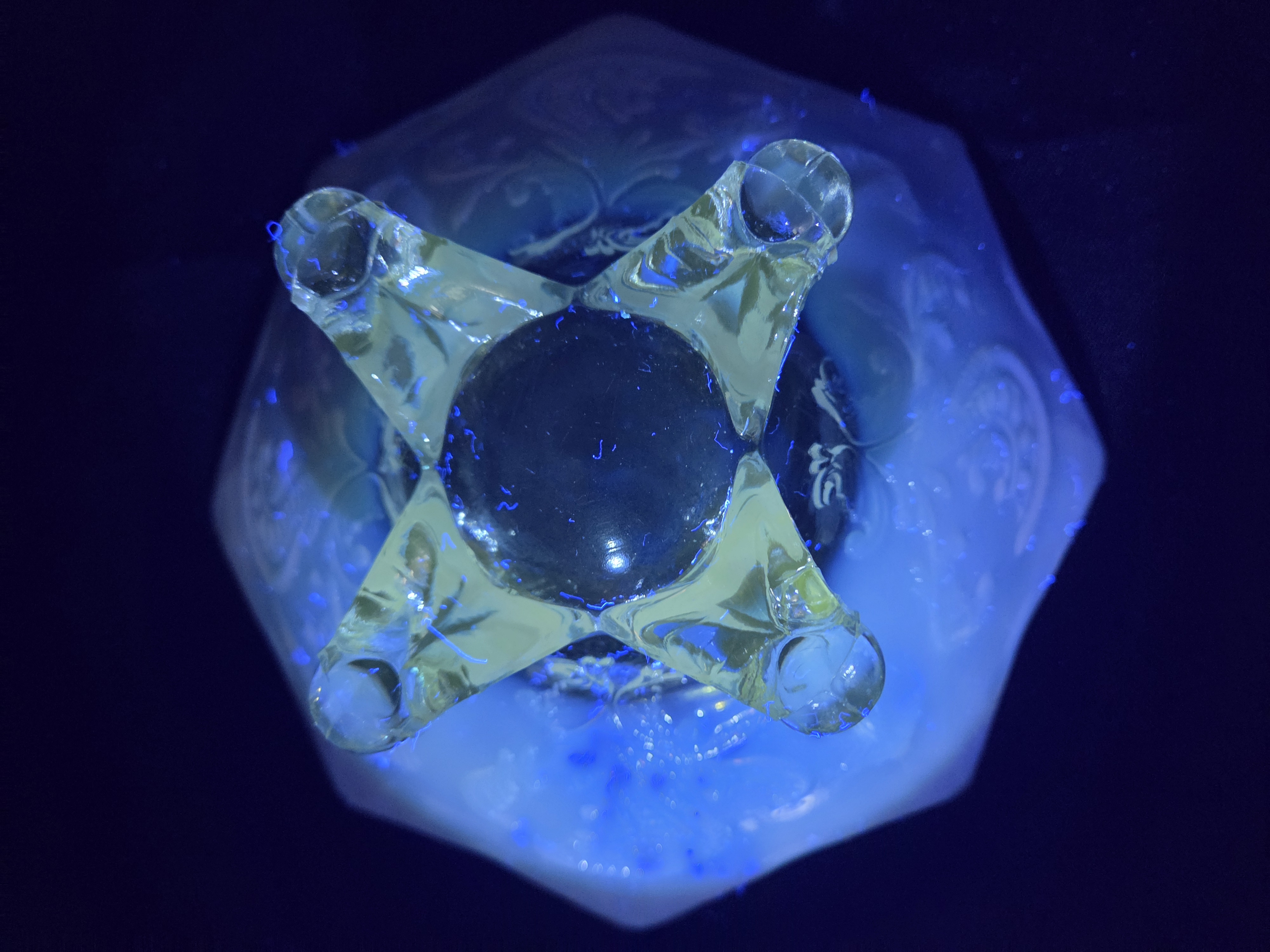
About product: An early 20th-century press-molded blue opalescent glass footed bowl, designed with an eight-pointed scalloped rim and an embossed scroll and foliate pattern throughout the interior. The dish rests upon four clear glass scroll feet. Under ultraviolet light, the clear feet exhibit a faint greenish-yellow fluorescence typical of manganese content used in glass clarification of the era. - Material / Technique: Press-molded opalescent glass - Color: Blue translucent to white opalescent rim with clear glass feet - Footing: Four applied scroll feet - UV Reaction: Greenish-yellow glow under UV light - Condition Report: Surface appears free of major chips or cracks; minor manufacturing mold marks visible consistent with production. History: Opalescent glass became widely popular across North America and Europe during the late Victorian and Art Nouveau periods, produced by renowned American glassworks such as Fenton, Northwood, and Dugan. The distinctive milky rim was achieved by reheating specific areas of the glass mixture containing fluorides or bone ash, causing localized crystallization upon cooling. Clear glass components from this period frequently incorporated manganese dioxide as a decolorizing agent, glowing under 365 UV.
$70.00+ shipping
An early 20th-century press-molded blue opalescent glass footed bowl, designed with an eight-pointed scalloped rim and an embossed scroll and foliate pattern throughout the interior. The dish rests upon four clear glass scroll feet. Under ultraviolet light, the clear feet exhibit a faint greenish-yellow fluorescence typical of manganese content used in glass clarification of the era.
- Material / Technique: Press-molded opalescent glass
- Color: Blue translucent to white opalescent rim with clear glass feet
- Footing: Four applied scroll feet
- UV Reaction: Greenish-yellow glow under UV light
- Condition Report: Surface appears free of major chips or cracks; minor manufacturing mold marks visible consistent with production.
History
Opalescent glass became widely popular across North America and Europe during the late Victorian and Art Nouveau periods, produced by renowned American glassworks such as Fenton, Northwood, and Dugan. The distinctive milky rim was achieved by reheating specific areas of the glass mixture containing fluorides or bone ash, causing localized crystallization upon cooling. Clear glass components from this period frequently incorporated manganese dioxide as a decolorizing agent, glowing under 365 UV.