
19th Century Salt-Glazed Stoneware Storage Crock Jar with Rolled Rim
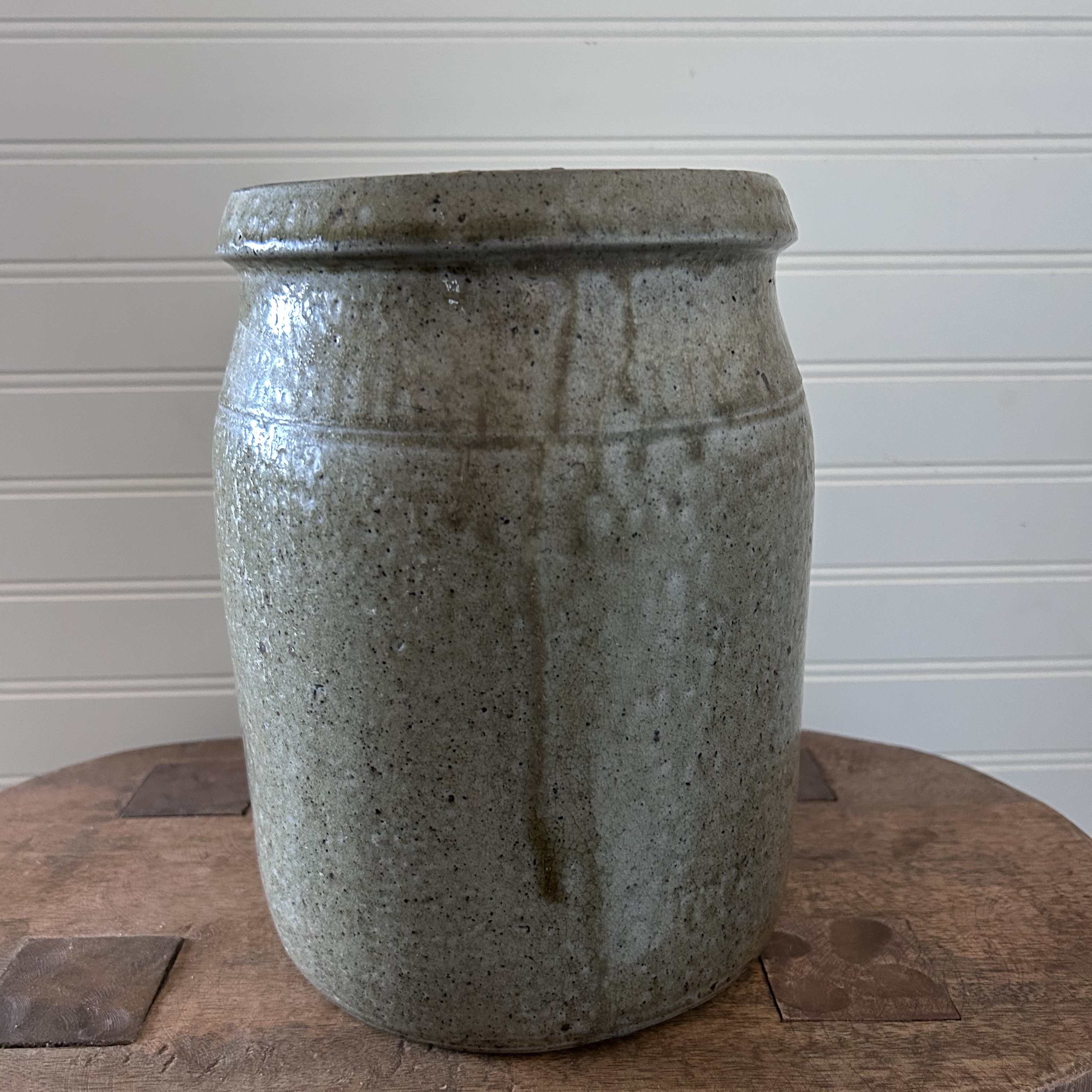


About product: A 19th-century salt-glazed stoneware storage crock jar featuring a classic cylindrical body with a flared rim collar and subtle incised line. The exterior exhibits a characteristic mottled grey-tan glaze surface with natural iron speckling, glaze drips, and an unglazed to dark-flashed base. - Material / Technique: Hand-thrown stoneware with salt glaze - Object Type: Crock / Storage Jar - Marks / Inscriptions: None present - Condition Report: Good antique condition with minor glaze pits, small firing imperfections, and light surface wear consistent with age and traditional use; no visible major structural cracks. History: Utilitarian stoneware crocks were essential household vessels throughout the 19th century in North America and Europe, widely employed for preserving foodstuffs such as butter, salted meats, and pickled vegetables. The high-temperature salt-glazing process reacted with the clay body to form a durable, impervious glaze surface resistant to liquids and acids. Today, these early functional ceramics are valued for their simple form, historical utility, and tactile glaze variations.
$86.00+ shipping
A 19th-century salt-glazed stoneware storage crock jar featuring a classic cylindrical body with a flared rim collar and subtle incised line. The exterior exhibits a characteristic mottled grey-tan glaze surface with natural iron speckling, glaze drips, and an unglazed to dark-flashed base.
- Material / Technique: Hand-thrown stoneware with salt glaze
- Object Type: Crock / Storage Jar
- Marks / Inscriptions: None present
- Condition Report: Good antique condition with minor glaze pits, small firing imperfections, and light surface wear consistent with age and traditional use; no visible major structural cracks.
History: Utilitarian stoneware crocks were essential household vessels throughout the 19th century in North America and Europe, widely employed for preserving foodstuffs such as butter, salted meats, and pickled vegetables. The high-temperature salt-glazing process reacted with the clay body to form a durable, impervious glaze surface resistant to liquids and acids. Today, these early functional ceramics are valued for their simple form, historical utility, and tactile glaze variations.